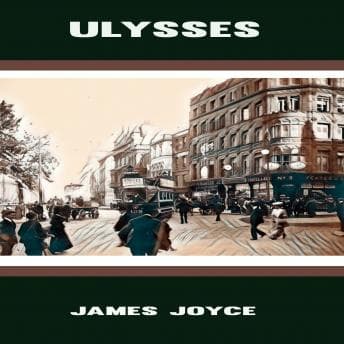

Thirty-one hours. That's how long this audiobook runs. I finished it over three weeks of lakefront walks, late-night grading sessions, and one particularly memorable faculty meeting where Principal Martinez was explaining budget reallocations and I was deep in Nighttown with Leopold Bloom. Worth it.
Let me be direct: Ulysses is the mountain. It's the book English teachers tell students they should read while secretly hoping nobody asks us to explain the Oxen of the Sun episode. I've taught excerpts for years. I've assigned the Molly Bloom soliloquy to seniors who looked at me like I'd lost my mind. But I'd never actually finished the whole thing until this full-cast production forced me to.
Seven Voices for One Day in Dublin
The casting decision here is ambitious and, I think, correct. Joyce wrote Ulysses as a symphony of consciousness—stream-of-consciousness from multiple perspectives, episodes that shift style so dramatically they barely feel like the same novel. Having seven narrators means the 'Sirens' episode (the one built around musical fugue structure) actually sounds different from the newspaper-headline chaos of 'Aeolus.' The cast brings vitality and rhythmic energy, though that description probably undersells it.
What struck me most was how the full cast handles the distinction between Bloom's wandering, sensual inner monologue and Stephen Dedalus's more intellectual, tortured ruminations. These are two men circling each other through Dublin, and hearing them as genuinely different voices—different rhythms, different pauses—makes the eventual meeting land harder. My students would hate this. I love it.
Joyce's Prose at 1.0x (Obviously)
This reminds me of what Hemingway said—that he read Ulysses and found it "a most goddamn wonderful book." Then he spent years trying to write sentences half as complex. Joyce's language isn't meant to be rushed. The narrators understand that pause is punctuation. That same deliberate pacing worked beautifully in Last Thing He Told Me, where the narrator let emotional beats breathe instead of rushing through them. When Bloom thinks about his dead son Rudy, or when Molly's final soliloquy builds through those unpunctuated pages of memory and desire, the pacing respects the weight.
At thirty-one hours, you're making a commitment. I won't pretend every episode held my attention equally—the 'Oxen of the Sun' chapter, where Joyce parodies the entire history of English prose style, is genuinely exhausting even with skilled narration. But that exhaustion feels intentional. Joyce wanted you to work. The audiobook just makes the work... possible.
Who Should Listen (And Who Should Run)
If you've bounced off Ulysses before—and statistically, you probably have—this production might be your way in. The full cast creates clarity where the text alone can feel impenetrable. You'll actually follow the plot (yes, there is one: Bloom walks around Dublin, thinks about his wife's affair, eats a kidney, goes to a funeral, visits a brothel, brings Stephen home, and Molly remembers everything). The narration provides what I'd call "plot delineation," which sounds clinical but matters enormously when Joyce is doing his stylistic gymnastics.
But if you want something light? Background listening while doing dishes? Skip this entirely. Ulysses demands focus. I tried listening while grading essays once and realized twenty minutes later I'd absorbed nothing—not the book, not the essays. This is a dedicated listening experience or nothing.
Worth Pausing the Faculty Meeting For
Here's what I keep coming back to: June 16, 1904. One ordinary day. Joyce spent seven years writing about it, and this audiobook asks for thirty-one hours of your life to experience it. That ratio feels appropriate somehow. Bloom buys soap. Bloom eats lunch. Bloom worries about his marriage. And through it all, Joyce is showing us that consciousness itself—the way we think, remember, desire, grieve—is the great subject.
Denise asked me last week what the book was "about," and I found myself talking for ten minutes about how Bloom represents the ordinary heroism of just... getting through a day. Of staying kind when you know your wife is sleeping with someone else. Of thinking about your dead son while buying a pork kidney. She fell asleep. (This is why we've been married twenty-three years.)
If you loved Portrait of the Artist as a Young Man, this is its spiritual successor—and its apotheosis. If you've always felt guilty about never finishing Ulysses, this production removes the excuse. The narrators do the heavy lifting of differentiation; you just have to show up and listen.
I'm already planning to relisten next June 16th. Bloomsday. Thirty-one more hours with Leopold and Molly and Stephen. My students will think I've finally lost it completely.
They're not wrong. But neither was Joyce.