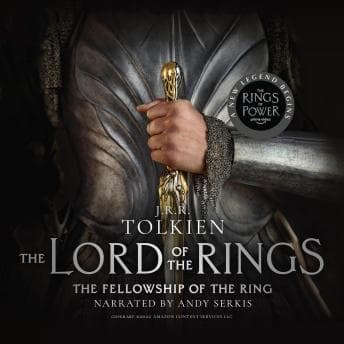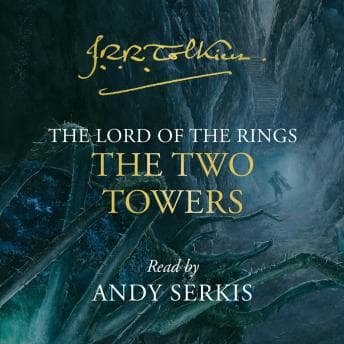
Everyone told me Andy Serkis was the definitive Tolkien narrator. Every podcast guest, every Reddit thread, every well-meaning listener who emails me about fantasy audiobooks. And look—they're not wrong. But they're also not telling you the whole story.
I started this at 2 AM because I couldn't sleep. Shirley was doing her usual nighttime patrol of the apartment, and I figured twenty-plus hours of Middle-earth would either knock me out or keep me company. Reader, it did neither. It kept me wide awake and slightly unhinged.
The Gollum Problem (It's Not What You Think)
Here's the thing about Serkis doing Gollum: he's been living inside that character for over two decades. The motion capture. The voice work. The cultural osmosis of a million memes. When he slips into that split-personality dialogue—the hissing Sméagol versus the scheming Gollum—it's not a performance. It's possession.
And that's where it gets genuinely unsettling. Horror adjacent, if you will. The scenes where Gollum argues with himself? Serkis doesn't just differentiate the voices. He makes you hear the centuries of corruption, the desperate clinging to something that was once human. My cat literally left the room during one of these sequences. Shirley knows what's up.
But here's my controversial take: the Gollum mastery almost works against the rest of the audiobook. Because when Serkis is doing Treebeard's slow, rumbling songs or Aragorn's noble declarations, you're unconsciously waiting for Gollum to come back. It's like watching a horror movie where you know the monster is coming—everything else becomes setup.
When Middle-earth Moves Like Molasses
Let's talk pacing. The first few chapters of The Two Towers are notoriously dense—Tolkien loved his world-building the way I love obscure horror trivia, which is to say: excessively and without apology. Serkis can't fix the structural issue of following multiple storylines that don't converge for hours. He tries. God, he tries. His Merry and Pippin are distinct (Pippin's got this slightly higher, more anxious quality), his Treebeard genuinely sounds like something ancient and wooden is speaking. That same commitment to character work—though in a completely different register—is what makes Ruthless King so compelling.
But twenty hours is twenty hours. If you're coming off Fellowship and expecting immediate momentum, you'll hit a wall. The Entmoot sequences—where trees debate whether to go to war—are as slow as actual tree growth. Serkis commits to the deliberate pace, which is either authentic or torturous depending on your tolerance.
I listened during a late shift at the library, reshelving in the horror section (appropriate), and found myself checking how many hours remained more than once. That's not a narrator problem. That's a Tolkien problem. But it's worth knowing.
The 132-Voice Flex
Serkis reportedly does around 132 distinct voices across the trilogy. That's insane. That's horror-movie-villain levels of vocal possession. And you can hear the craft—his Gandalf has gravitas without becoming parody, his Gimli is gruff but never cartoonish, his Legolas has this ethereal quality that makes the Elf feel genuinely other.
The movie comparison is unavoidable. If you grew up with Jackson's films, Serkis's voices will feel like coming home. His Aragorn echoes Viggo Mortensen's cadence. His Sam has Sean Astin's earnest warmth. This is either a feature or a bug depending on whether you want a fresh interpretation or a nostalgic return.
For me? I wanted fresh. I got familiar. That's not a complaint exactly—it's a heads up. If you're seeking a completely new Middle-earth, Rob Inglis's older recordings might serve you better. If you want the audiobook equivalent of rewatching the extended editions, Serkis is your guy.
The Songs (A Horror of a Different Kind)
Tolkien wrote so many songs. So many. And Serkis sings them all. His Treebeard singing is genuinely affecting—there's this mournful quality that makes you feel the weight of the Ents' long memory. But some of the other musical moments land with a thud. The elvish songs can feel like interruptions rather than enhancements.
This is where audiobook horror meets actual horror: you can't skip ahead easily. You're trapped in the song. Embrace it or suffer.
Who Gets the Ring, Who Gets the Skip
This is essential listening if: you love the films and want that experience in your ears, you're a completionist tackling the trilogy, or you want to hear the definitive Gollum performance outside of cinema.
Skip if: you prefer faster pacing, you want a fresh vocal interpretation, or you're using this as background noise (you will miss too much). Also, apparently the Spotify version has some weird background noise issues—phone notification sounds bleeding through. Haven't experienced it on Audible, but worth noting.
The Episode I'm Already Planning
My listeners are going to hear about this one. Not because it's horror—though Gollum's corruption arc absolutely qualifies as body horror of the soul—but because it's a clinic in how performance can elevate (or occasionally overwhelm) source material. Serkis doesn't just read Tolkien. He inhabits it. Sometimes that's transcendent. Sometimes it's exhausting. Mostly it's both.
Shirley Jackson walked so Tolkien could... well, walk very slowly through forests while singing. But when this audiobook hits its peaks—Helm's Deep, Shelob's approach, Gollum's internal war—it reminds you why this story has endured. The dread is real. The darkness is earned. I've found that same earned darkness in unexpected places—even Taming of the Shrew has moments that feel genuinely unsettling when you're listening alone. And Serkis understands that the best fantasy, like the best horror, isn't about the monsters. It's about what the monsters reveal about us.