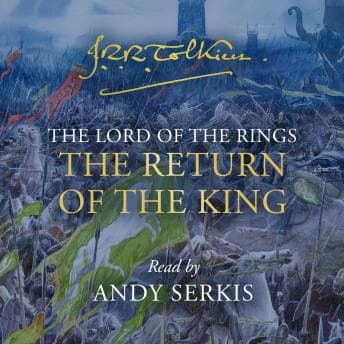

Andy Serkis was born to narrate Tolkien. That's not hyperbole—the man who brought Gollum to life on screen delivers a performance here that feels less like reading and more like channeling Middle-earth itself.
I listened to this over a series of long drives, and I'll be honest: there were moments I sat in my parked car, engine off, just to hear the end of a scene. The Return of the King demands that kind of attention, and Serkis makes sure you give it.
Every Voice Has Its Own Weight
What strikes you immediately is the sheer range on display. Every character sounds distinct—not just different, but inhabited. His Gandalf carries the weight of ages. His Sam radiates stubborn, heartbreaking loyalty. And Gollum? Obviously, Serkis knows that creature inside out, but hearing him switch between the wretched Sméagol and the calculating Ring-slave mid-sentence is genuinely unsettling in the best way. The hobbits feel small and brave, the Rohirrim sound like people who've spent their lives on horseback, and when Aragorn finally steps into his destiny, you feel the crown settle onto his head.
22 Hours That Know When to Sprint and When to Breathe
The pacing here deserves special mention. At nearly 22 hours, this is a commitment, but Serkis understands when to let Tolkien's prose breathe and when to drive forward with urgency. The siege of Minas Tirith crackles with tension. The quieter moments in Mordor—Frodo and Sam's desperate crawl toward Mount Doom—carry an almost unbearable intimacy. He modulates between epic and personal with the skill of someone who genuinely loves this material.
Fair warning: Serkis goes big. This is theatrical narration, full stop. When characters shout, he shouts. When the Nazgûl scream, you'll feel it in your spine. Some listeners have mentioned the dynamic range can be jarring—dialogue delivered at full volume followed by quieter narration. If you're listening at night with a sleeping partner nearby, or in a car where you've got road noise to contend with, you might find yourself constantly adjusting the volume. Not a dealbreaker, but worth knowing.
The singing is another point of contention. Tolkien wrote songs and poems throughout the text, and Serkis performs them rather than simply reading them. Your mileage will vary. I found most of them effective—they add to the mythological texture—but a few broke the narrative momentum. If you're the type who skips songs in fantasy novels, you'll probably reach for that 30-second skip button occasionally.
There's also the question of his Aragorn. For most of the trilogy, it works beautifully, but a few listeners have noted that his deep, husky interpretation in certain scenes feels slightly off. I didn't find it distracting, but no narrator can please everyone with every choice.
Serkis vs. Inglis: Orchestra vs. Fireplace
Compared to Rob Inglis's beloved narration, Serkis offers something fundamentally different. Inglis is a warm fireplace; Serkis is a full orchestra. That orchestral intensity—where every character feels like they're occupying real space—is something I also found in Paris Apartment: A Novel, though in a completely different genre. Neither is wrong—they're different experiences of the same text. If you want to feel like you're being told a story by a wise grandfather, Inglis remains wonderful. If you want to feel like you're inside the story, with the walls of Barad-dûr looming above you, Serkis is your narrator.
The production quality is excellent throughout. Clean audio, no noticeable artifacts, and what listeners describe as "soundscaping"—subtle environmental textures that enhance the immersion without becoming distracting sound effects. It's not a full-cast audio drama, but it's more than a straightforward reading.
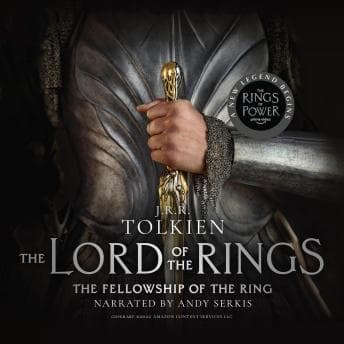
One petty complaint that keeps surfacing in listener discussions: the cover art uses imagery from Amazon's Rings of Power series, which has nothing to do with this book. It's a marketing decision, not an audio quality issue, but if that sort of thing bothers you, consider yourself warned.
For fans of the Peter Jackson films, this narration will feel like coming home. Serkis's interpretation clearly draws from that visual vocabulary while remaining faithful to Tolkien's text. The complete, unabridged novel performed by someone who understands exactly how it should feel.
Who Should Queue This Up (And Who Should Skip)
This is for listeners who want theatrical, immersive narration and don't mind keeping a hand near the volume control. Skip it if you prefer understated readings or if performed songs in fantasy audiobooks make you reach for the skip button.
The Grey Havens Await
This is the conclusion of one of literature's greatest achievements, and it deserves a performance that rises to meet it. Serkis delivers. The destruction of the Ring, the scouring of the Shire, the Grey Havens—each lands with the emotional weight it deserves. I finished the final chapter genuinely moved, which is exactly what Tolkien intended.
If you're going to experience The Lord of the Rings in audio form, this is the version to choose. Just maybe keep your hand near the volume control.