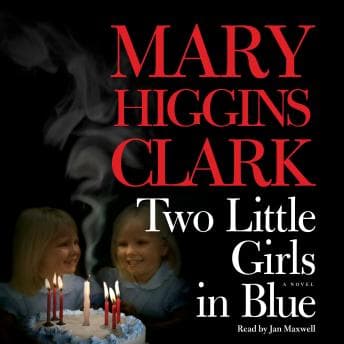

So look, I know what you're thinking. Tom, you're a fantasy guy. Sanderson, Abercrombie, LitRPG with stat blocks. What are you doing reviewing a Mary Higgins Clark thriller about kidnapped twins?
Fair question. Here's the thing - I was three weeks deep into avoiding a chapter revision on procedural dungeon generation, and my usual rotation of epic fantasy was starting to feel like homework. I needed something short, something punchy, something I could burn through during a late-night coding session without needing a wiki to track seventeen noble houses. At under eight hours, Two Little Girls in Blue fit the bill. And honestly? The twin telepathy hook grabbed me. As someone who's homebrewed more than a few psionics systems for D&D campaigns, I'm a sucker for any story that treats psychic connection as a real, tangible plot mechanic rather than hand-wavy nonsense. Instinct: Chronicles of Nick scratches that same itch - supernatural mechanics that actually feel like they have internal logic instead of just vibes.
Twin Telepathy as a Soft Magic System (No, Seriously)
Here's where my brain went immediately: Mary Higgins Clark is running a soft magic system and doesn't even know it. The twin connection between Kathy and Kelly operates on Sanderson's First Law principles - it creates wonder and tension precisely because we don't fully understand its rules. Kelly tugs her mom's arm at what's supposed to be Kathy's memorial and says her sister "wants to come home right now," and that moment hits because we're not sure if it's grief, imagination, or something genuinely supernatural. Clark keeps that ambiguity simmering for most of the book, and it works. The telepathy escalates - Kelly's warnings get more specific, more alarming - and the tension ratchets up because you're never entirely sure if the story is going to validate the psychic element or pull the rug out.
Now, is this Sanderson-level world-building? No. Obviously not. But for a suspense thriller, Clark handles the speculative element with more care than I expected. She doesn't over-explain it, which is the right call.
Jan Maxwell and the Mona Problem
I'd seen people online split pretty hard on Jan Maxwell's narration, and after finishing I get why. Her baseline voice is genuinely pleasant - warm, clear, easy to listen to during long sessions. But her performance of Mona, the kidnapper, is where things get interesting. When Mona sings "Two Little Girls in Blue" - the old song the book takes its title from - Maxwell pitches her voice into this unsettling, almost nursery-rhyme-gone-wrong register that is genuinely creepy. Like, I was debugging a pathfinding algorithm at 1 AM and that scene made me look over my shoulder. Credit where it's due.
But here's the tension: Maxwell leans into melodrama in spots where the story needs restraint. Some of the family scenes - Margaret desperate, Steve conflicted - get pushed into soap opera territory by the delivery. It doesn't ruin anything, but it undercuts the emotional weight of what should be devastating moments. A kidnapping story about toddlers should make you feel sick with dread, and occasionally the narration steers you toward "dramatic" instead. It's a fine line, and Maxwell walks it unevenly.
The Pacing Saves It (Mostly)
At 7 hours and 48 minutes, this thing moves. Clark doesn't waste time. The kidnapping happens fast, the ransom plays out fast, and the fake-out with the suicide note and the body in the car drops early enough that the real question - is Kathy alive? - drives the entire back half. For someone used to 40-hour Stormlight installments, this felt like a sprint. A welcome one.
Where it stumbles is the FBI procedural stuff. Fourth Wing has the opposite problem in a weird way - every side character feels over-engineered, which at least beats feeling like cardboard. The agents investigating feel like they walked in from a different, less interesting book. Generic tough-but-caring law enforcement types doing generic investigative things. My D&D group would call these NPCs "quest givers with no backstory." They exist to move the plot, and you can feel the scaffolding.
But the Margaret-and-Kelly thread? That's the engine. A mother who believes her daughter is alive because her other daughter is literally receiving psychic distress signals, and nobody around her will take it seriously? That's a great hook. Clark knows it's her best material and keeps coming back to it.
Who's Picking This Up (And Who Should Keep Walking)
If you're a thriller reader who wants something tight and focused - eight hours, no bloat, one central mystery with a paranormal twist - this delivers. If you're coming from fantasy like me and you're curious about the telepathy angle, it's handled well enough to scratch that itch without insulting your intelligence.
If you need deep character work, complex villain motivations, or narration that stays consistently grounded, you might bounce off this one. The melodrama in Maxwell's performance is a feature for some listeners and a bug for others.
My Thesis Can Wait Another Day
I burned through this in two coding sessions and a late-night walk around campus. It's not going to reshape how I think about fiction. But it did exactly what I needed - kept me hooked, creeped me out in the right spots, and gave me a twin telepathy concept I'm now absolutely stealing for my next campaign. Dr. Patel would not approve of how I spent my Tuesday. Worth it.