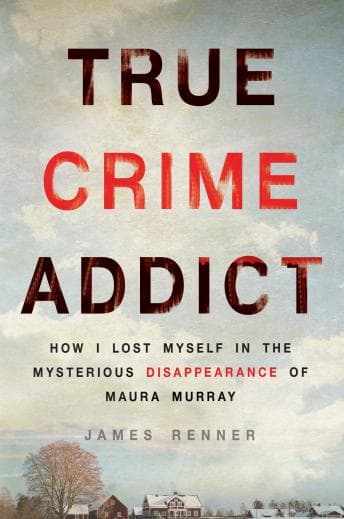

"I lost myself." That's what Renner says early on, and by the time I pulled into my driveway after a brutal night shift - the kind where you lose a patient and the attending won't make eye contact with anyone - I understood exactly what he meant. Not in the same way. But enough.
Here's the thing about this book: it's not really about Maura Murray. I mean, it is. Her disappearance in rural New Hampshire in 2004, the abandoned car on Route 112, the wine spilled across the front seat, the fact that she packed her entire dorm room before she left - all of that is here, and it's genuinely unsettling. But the book Renner actually wrote? It's about what happens when you can't stop picking at something. When the investigation becomes the illness.
The Part Where the Investigator Becomes the Patient
Renner narrates his own book, which is both its biggest strength and its most uncomfortable quality. You can hear when he's proud of himself - those moments when he's uncovered something the cops missed, his voice gets this slight lift, almost eager. And then there are the sections where he's describing his marriage fraying, his PTSD symptoms spiraling, his decisions getting more reckless, and his tone flattens out. It's not polished narration. It's a man reading you his own confession and sometimes not fully reckoning with what he's saying.
As someone who's actually worked a code, I know what adrenaline addiction looks like. I've seen it in residents who volunteer for every trauma that rolls in, who can't sit still during a quiet shift. Renner has that same energy - the high of the chase is so clearly what's driving him that sometimes the actual facts of Maura's case feel secondary. He'll be laying out a legitimate lead and then suddenly he's confronting someone at their front door or making a connection that feels like a stretch, and you can feel the obsession steering.
The author-as-narrator format works here specifically because you need to hear the escalation in his own voice. A professional narrator would've smoothed out the edges that make this book honest.
When the Case Gets Under Your Skin (and Won't Leave)
What Renner does well is make you understand why this particular case grabbed so many people. Maura Murray was a nursing student - that detail stuck with me, obviously - with a string of small crises piling up before she vanished. A credit card fraud issue. A car accident the night before. The phone call to her boyfriend's voicemail that she hung up during. Renner lays these breadcrumbs out with the patience of someone who has literally spent years arranging them on a wall, and by hour three I was doing that thing where I'm sitting in my parked car in the garage because I need to hear what comes next.
But here's where I got frustrated. Renner makes some pretty bold speculations about Maura - about her character, her motivations, her secrets - and sometimes it feels like he's building a narrative rather than following evidence. He'll present a theory with the confidence of a doctor diagnosing from across the room (I've seen that too, and it never goes well). There are moments where he seems more interested in being the one who solves it than in being fair to Maura as a person. Some of his interactions with people connected to the case made me wince. Not because he's malicious - I don't think he is - but because his self-awareness has blind spots the size of the Sonoran Desert.
The pacing is uneven. The chapters about his own childhood obsession with Amy Mihaljevic are genuinely moving and provide real context for why he became who he is. But some of the investigative middle sections drag - there are stretches where it's essentially a log of phone calls and dead ends that might have read better on the page than they sound at 4 AM when you're fighting to stay engaged.
Who Needs This in Their Ears
If you're deep into true crime podcasts and you want something that's honest about the cost of that obsession - not just the victim's story but what it does to the person who can't let go - this is worth your time. At 6 hours 45 minutes, it's a reasonable commitment. If you're looking for a solved case with a satisfying conclusion, this is not that. Not even close.
Carlos asked why I was sitting in the garage for twenty minutes after I got home. I told him I was on the phone with my mom. (She still thinks I should've been a doctor, and that would've been a shorter conversation anyway.)
The Chart Note
Renner wrote a book about losing himself and then read it to you in his own voice, which is either brave or reckless depending on the chapter. The Maura Murray case remains haunting and unresolved. The portrait of obsession is uncomfortably real. I just wish he'd been as careful with Maura's story as he was with his own. That tension between self-examination and subject fairness reminded me of something I noticed reading Bare Bones: I'm Not Lonely If You're Reading This Book — another narrator who is far more comfortable dissecting themselves than the people around them. Night shift approved - but maybe not on a night when you've already seen too much.