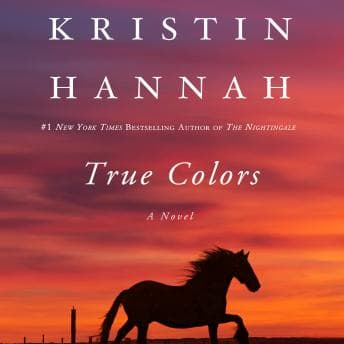

Sibling rivalry is the oldest story in the book. Literally. You've got Cain and Abel, King Lear's daughters, and now the Grey sisters. I see this dynamic in my classroom every semester—the "perfect" older sibling and the chaotic younger one, or vice versa. True Colors takes that energy and drops it on a ranch in the Pacific Northwest.
The "King Lear" of Western Ranches
Here's the setup: Winona and Vivi Anne. Winona is the overweight, bookish dreamer who can't get her dad's approval. (As an English teacher who was a chubby kid with his nose in a book, I felt seen. And attacked. Mostly seen.) Then there's Vivi Anne, the golden child who has everything.
The father is a piece of work. Reminds me of the parents who show up to conferences asking why their kid has a 98% instead of 100%. He pits these girls against each other in a way that's painful to watch—or listen to. The emotional stakes are high. Kristin Hannah knows how to write a scene that makes you want to throw your phone across the room. I was listening to the middle section while grading a stack of sophomore essays on The Great Gatsby, and I honestly had to put the red pen down because the betrayal in this book was stressing me out more than the bad grammar in front of me.
But let's be real for a second. It drags. There's a chunk in the middle where I felt like we were circling the same emotional drain. I might have zoned out while walking the dog and missed a few minutes. I didn't feel the need to rewind. That says something.
When the Voices Don't Match the Room
Okay, we need to talk about Sandra Burr.
I'm picky. I admit it. I listen to audiobooks at 1.0x speed because I believe in the "performance." But this performance? It's... a choice.
When she's doing the internal monologues of the sisters, it's fine. She gets the angst. She nails the insecurity. But the dialogue? Especially the men? Yikes. There were moments where the male voices sounded—and I hate to say this—a bit like cartoons. Or chipmunks. It's hard to take a rugged ranch hand seriously when he sounds like he inhaled helium. Sandra Burr does better work in Finding the Dream, where the male characters aren't quite as prominent.
And the "whiny" tone. Look, I spend seven hours a day listening to teenagers complain about homework. I don't need my audiobook narrator to whine at me during my commute. It made Winona, who is already a difficult character to root for sometimes (she makes some bad choices), feel even more grating. A different narrator might have given her more dignity. Burr plays up the pathetic angle a little too hard for my taste.
Who's This For?
If you loved Firefly Lane and can tolerate imperfect narration for the sake of sweeping family drama, you'll probably push through. Skip it if male character voices in audiobooks are a dealbreaker for you, or if you're already on the fence about Kristin Hannah's melodrama.
Grading This One on a Curve
Is it a bad book? No. Kristin Hannah writes families better than almost anyone. The DNA of Firefly Lane is here. Hannah's Nightingale: A Novel has that same emotional punch, but with a narrator who elevates the material instead of fighting against it. The audio experience? Mixed bag.
The story has that classic, sweeping melodrama that keeps you hooked even when you're annoyed. I finished it. I wanted to know what happened to Winona. But I found myself wishing I was reading the physical book so I could give the characters the voices they deserved in my head.
(Don't tell my audiobook club I said that. They think I'm a purist.)