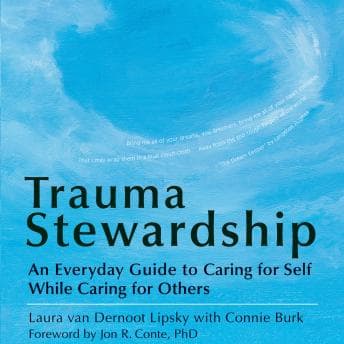

Everyone keeps recommending this book to anyone in helping professions, and I get it — the concept is genuinely important. The idea that trauma workers absorb the suffering they witness, that it reshapes them in ways they don't even recognize? That's not just self-help fluff. The research actually shows that secondary traumatic stress affects everything from decision-making to immune function. Lipsky clearly knows this territory intimately.
But here's the thing nobody warns you about with this audiobook: the author narrates it herself, and it's... complicated.
When the Messenger Undermines the Message
I was making a truly ambitious biryani — the kind that takes three hours and dirties every pot I own — when I started this. Perfect timing, I thought. Eight and a half hours of a trauma expert walking me through compassion fatigue while I layer rice and meat and cry over onions. The content delivered exactly what I needed. Lipsky identifies these sixteen warning signs of trauma exposure response — things like feeling helpless and hopeless, chronic exhaustion, grandiosity, inability to embrace complexity. And I found myself asking: why does she frame these as "responses" rather than "symptoms"? Because it's smart, that's why. The language of stewardship rather than pathology shifts the entire psychological framing. You're not broken. You're having a predictable human response to an impossible situation.
The problem is the delivery. Lipsky narrates with a flatness that borders on — and I'm being generous here — meditative calm. Less generous? She sounds like she's reading her own grocery list. There's a painful irony in a book about staying engaged with difficult work being narrated in a tone that suggests the narrator has already checked out. I kept adjusting the speed, thinking maybe 1.25x would inject some energy. It helped. Somewhat.
The Psychology That Actually Lands
Strip away the narration issue and there's a genuinely useful framework here. Lipsky draws from Buddhist mindfulness traditions, indigenous wisdom practices, and modern trauma research, and she does it without the cringe-inducing cultural appropriation that plagues so many wellness books. The concept of "trauma stewardship" as opposed to "trauma mastery" is a distinction my therapist would have thoughts about — the idea that you don't conquer your exposure to others' pain, you tend it. Like a garden. Not like a battlefield.
What makes this book compelling is her use of real stories from real trauma workers — social workers, environmental activists, animal rescue volunteers, emergency responders. The breadth matters. This isn't just for therapists. She talks about a wildlife rehabilitator who couldn't stop seeing injured animals everywhere she looked, even on days off. That kind of creeping, inescapable dread — where the threat follows you home and rewires how you see the world — reminded me of what I experienced reading Hot Zone, where the horror isn't fictional, it's biological and relentless. The protagonist exhibits classic hypervigilance, but Lipsky doesn't pathologize it. She contextualizes it. That's good psychology.
The "five directions" framework toward the end — choosing your focus, building micro-practices of presence, finding balance between exposure and recovery — is practical without being simplistic. I've read (and assigned) enough self-help that treats complex trauma responses like they can be fixed with journaling and deep breaths. Lipsky doesn't do that. She acknowledges systemic causes. She acknowledges that sometimes the work itself is the problem, not your coping mechanisms.
The Author-Narrator Paradox
Here's my honest assessment: I think this book would be significantly better read by a professional narrator. And I say that knowing it sounds harsh about someone narrating her own deeply personal work. But the disconnect between content urgency and vocal delivery creates this weird cognitive dissonance. You're hearing about a social worker who dissociated so completely she couldn't remember driving home, and the narration sounds like a late-afternoon conference presentation where the speaker knows they're the only thing standing between the audience and the hotel bar.
This is a fascinating case study in why author-narration can backfire. Lipsky's expertise is unquestionable. Her written prose has warmth and precision. But audiobook narration is a performance skill, and knowing your material deeply doesn't automatically translate to engaging vocal delivery. My biryani, for the record, turned out beautifully. The audiobook experience was more... mixed.
Who Needs This (and How to Get It)
If you work in any caregiving, advocacy, or emergency response field — read this book. Genuinely. The framework is too important to skip because the audiobook narration is flat. But here's my actual recommendation: get the print copy, or listen at 1.25x speed during something mildly engaging like driving or cooking. Don't try this on a quiet evening expecting to be riveted. The ideas will stay with you. The delivery will test your patience.
If you've ever wondered why you feel simultaneously overwhelmed and numb about the suffering you witness professionally — Lipsky has the vocabulary for what's happening to you. That alone is worth something. Just maybe not a full Audible credit.