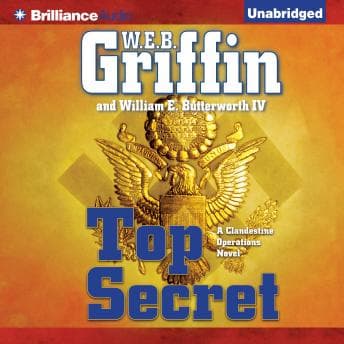

Look, I wanted to love this one. Griffin's been a staple on my shelf - well, in my earbuds - for years. The Brotherhood of War series practically got me through my second deployment's downtime. So when I saw a new Griffin series tackling the birth of the CIA in post-WWII Germany, I figured this was purpose-built for guys like me. The reality? More complicated than that.
I was up late finishing a threat assessment for a client - corporate espionage stuff, ironically - and figured I'd let this run while I worked through spreadsheets. Ranger was asleep on his bed in the corner. Neither of us were as engaged as we should've been.
The Setup Is Solid, the Execution Is Griffin on Autopilot
Let me cut to the chase: the premise is genuinely interesting. Young Second Lieutenant James Cronley Jr. getting scooped up into what would become the CIA, right in that messy transition period between hot war and cold war - that's rich territory. Griffin clearly did his homework on the occupation-era command structure, the competing intelligence fiefdoms, and the general chaos of trying to pivot from fighting Germans to spying on Soviets. The bureaucratic infighting between Army intelligence, the OSS remnants, and everyone else jockeying for position? I've seen this scenario play out in real life, and Griffin captures that institutional turf war better than most.
But here's where it lost me. Griffin has this habit - and it got worse in his later work with his son co-writing - of repeating information. Characters will explain something to another character that the reader already knows. Then a third character will show up and get the same briefing. It's like sitting through three consecutive PowerPoint presentations with the same slides. At 13 hours, this book could've been 9 and been tighter for it. The pacing drags, especially through the middle third, where Cronley's seven-day deadline to crack a Soviet agent should feel urgent but instead gets buried under bureaucratic back-and-forth.
The distracting groping scenes are worth mentioning too - there are moments where Cronley's romantic entanglements read like they were written by someone who learned about intimacy from a 1970s airport paperback. It pulls you right out of an otherwise serious intelligence thriller.
Alexander Cendese Is Not Dick Hill, and That's a Problem
Here's where I need to be straight with you. The narrator listed on the book info says William E. Butterworth IV, but the actual narrator is Alexander Cendese. And I know a lot of Griffin listeners came up on Dick Hill's performances - Hill practically defined how these books sound in your head. Cendese is a different animal entirely.
Some folks find his character voices over the top. I'll say this: they're inconsistent. When he's just reading narrative prose, he's competent enough. But when he tries to differentiate between officers, the voices swing from flat to cartoonish without much middle ground. For a book that's wall-to-wall dialogue and military conversation, that inconsistency is a real liability. There were stretches where I couldn't tell which colonel was talking without context clues from the text itself. I bumped it up to 1.25x, which honestly helped - tightened the delivery and smoothed out some of the more theatrical character reads.
I didn't stop listening, which puts me ahead of some reviewers who apparently bailed. But I won't pretend I wasn't occasionally gritting my teeth.
Who This Briefing Is Actually For
If you're a completist Griffin fan who needs every series in the collection, you'll listen regardless of what I say. And the historical backdrop genuinely rewards attention - the post-war intelligence community was a fascinating mess, and Griffin knows it cold. But if you're new to Griffin, don't start here. Go back to the Brotherhood of War or the Corps series first.
If bad narration is a dealbreaker for you, this might be a skip in audio format. The print version might serve you better. And if slow pacing makes you check your phone, be warned - this book takes its sweet time getting where it's going.
Ranger slept through the whole thing. I'm not sure that's a review, but it might be.
Mission Debrief: Mixed Results
Worth your time? Here's the debrief. Good bones, mediocre execution, and narration that works against the material about as often as it works with it. Griffin's institutional knowledge of the military is the real draw, and the Cronley character has potential that I suspect pays off in later books. The kind of measured, substantive writing that rewards patience is something Charles Krauthammer also delivers in Things That Matter - different subject entirely, but the same sense that the author has lived close enough to power to write about it without flinching. But this first entry feels like a setup mission - lots of briefings, not enough action. If you're going in, go in knowing it's a slow burn with a narrator who won't make you forget Dick Hill anytime soon.