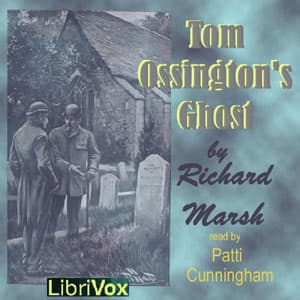

Okay, I need to rant about something before we get into this. Victorian mystery writers had zero chill when it came to plot setup. Zero. A man shows up for a piano lesson, sees a sketchy guy outside, and immediately vaults over the back hedge? Then sketchy guy runs when he sees a shabby woman? And THEN the shabby woman marches inside and announces she's married to a ghost? All of this happens in like the first twenty minutes. Richard Marsh said "pacing" and then threw that concept directly into the Thames.
I'm not complaining. I'm genuinely impressed. This is chaos energy from 1905 and I'm here for it.
When Your Post-Shift Brain Needs Exactly This
I found this one on a night when the unit was mercifully quiet—just me, my charting, and that particular 3 AM brain fog where everything feels slightly unreal anyway. Tom Ossington's Ghost matched that vibe perfectly. Madge and Ella are just trying to live their lives in Clover Cottage, and instead they get a parade of suspicious characters, an attempted burglary, and cryptic notes. It's like the universe decided their quiet domestic life was boring and threw a Victorian true crime podcast at them.
At just over five hours, this is a perfect length for the kind of mystery that doesn't require you to take notes. The plot twists are genuinely surprising but not so convoluted that you lose track during a commute. I finished it over three drives home, and each time I was genuinely curious about what new nonsense Marsh was going to throw at these poor women.
The ghost element—without spoiling too much—plays out in a way that's more grounded than you'd expect from the title. This isn't supernatural horror. It's a mystery with gothic atmosphere, and the "ghost" situation has a very human explanation that actually makes sense. That same grounded approach to supposedly supernatural events shows up in Gingerbread Cookie Murder, where the mystery stays firmly in cozy territory despite the dramatic setup. (As someone who's seen plenty of patients claim they've seen ghosts in the ICU, I appreciate when stories acknowledge that "haunting" usually has a practical source.)
Patti Cunningham Does the Heavy Lifting
This is a LibriVox recording, which means volunteer narration, which means your mileage may vary. But Patti Cunningham is genuinely pleasant to listen to. Her reading is clear, well-paced, and she handles the dialogue without making me cringe—which, trust me, is not a given with Victorian prose. The formality of 1905 English can sound ridiculous in the wrong hands, but Cunningham makes it work.
Is it a professional studio production? No. There's no full cast, no sound effects, no dramatic music. Just one narrator reading a story the way someone might read to you in a library. And honestly? That's exactly what this book needs. The plot is dramatic enough without production flourishes.
I will say—and this is minor—the character differentiation isn't dramatic. You're not getting wildly different voices for each person. But Cunningham's pacing and emphasis make it clear who's speaking, and for a five-hour mystery, that's enough.
The Medical Accuracy Is... Non-Existent (But That's Fine)
Look, this is 1905. Any medical references are going to make me twitch. But mercifully, Marsh keeps the focus on the mystery and the domestic drama rather than trying to explain anything scientific. No one gets defibrillated incorrectly. No one performs CPR on a conscious person. My dashboard remained un-yelled-at.
What Marsh does get right is the claustrophobic tension of two women trapped in a situation they don't understand. Madge and Ella aren't helpless—they're resourceful and smart—but they're also limited by their circumstances in ways that feel authentic to the era. The mystery works because you're genuinely worried about them.
Who Should Queue This Up (And Who Should Skip)
If you like cozy mysteries with gothic atmosphere and don't mind Victorian prose, this is a solid listen. It's free on LibriVox, which means zero commitment. Perfect for night shift workers who need something engaging but not stressful, commuters who want a complete story in a reasonable timeframe, or anyone who appreciates a mystery that doesn't rely on gore.
Skip it if you need high production value, you want something modern, or you're looking for genuine supernatural horror. This is more Agatha Christie's grandmother than Stephen King.
Night Shift Approved, Dashboard Unharmed
Carlos asked why I was smiling during breakfast prep after my last shift. I told him a Victorian ghost story made me happy. He's learned not to ask follow-up questions. Tom Ossington's Ghost is exactly the kind of weird, charming, slightly chaotic mystery that makes those 3 AM shifts bearable. It's not going to change your life, but it'll keep you company—and sometimes that's exactly what you need.









