
Look, I'll be honest - cozy mysteries aren't usually my thing. I'm the person who listens to horror audiobooks in the dark at 2 AM and judges people who need the lights on. But sometimes a book shows up and reminds you that dread isn't the only way to keep someone hooked.
The Thursday Murder Club got me. And I'm still processing that.
The Setup That Shouldn't Work (But Does)
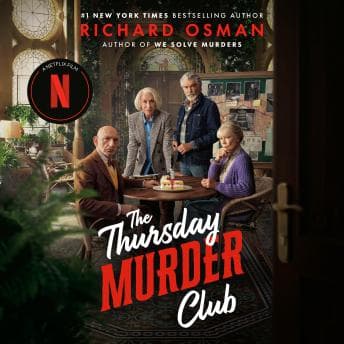
Four septuagenarians solving crimes in a retirement village? On paper, this sounds like something my grandmother would recommend while handing me a cup of tea I didn't ask for. But Richard Osman understands something crucial: the best mysteries aren't about the bodies. They're about the people poking at them.
Elizabeth, Joyce, Ibrahim, and Ron are genuinely clever. Not "cute old people playing detective" clever - actually, properly sharp. Elizabeth has a past that Osman doles out in careful pieces, and every reveal made me pause the audiobook just to sit with it. Joyce's diary entries are deceptively simple, and Ibrahim's methodical approach to evidence would make any procedural fan happy. Ron's the wildcard, and every group needs one.
The murder mystery itself? Solid. Multiple bodies, red herrings that actually work, and an ending I didn't see coming - which, after 200+ episodes of dissecting plot twists on my podcast, is saying something. That same satisfaction of a well-constructed mystery hit me with Lock and Key: The Gadwall Incident, though that one leans harder into the procedural elements. But the real hook is watching these four navigate friendship, mortality, and the particular loneliness of being old in a world that's forgotten you're still a whole person.
Lesley Manville Is Doing Something Special Here
Okay, so. The narration.
Lesley Manville doesn't just read this book. She inhabits it. Every character has a distinct voice - not in a cartoon-y, over-the-top way, but in the way that real people sound different from each other. Elizabeth's clipped authority. Joyce's warmth. The way she shifts between the four leads without ever losing track of who's speaking.
There's this moment - I won't spoil it - where the emotional weight lands entirely on Manville's delivery. The words on the page are probably fine. But the way she reads them? I was walking my dog at the time and had to stop on the sidewalk like an absolute weirdo because I needed a second.
She captures the humor too, which is harder than people think. Comedy in audiobooks is tricky - the timing has to be perfect, and the narrator has to trust the material enough not to oversell the jokes. Manville gets it. The funny bits land because she plays them straight, letting Osman's wit do the work.
(Shirley was unimpressed by my enthusiastic recommendation of this audiobook. She's more of a psychological horror cat.)
The Cozy Mystery Question
Here's where I have to be honest about genre. This is a cozy mystery. There's death, yes - multiple murders, actually - but it's not graphic. The violence happens mostly off-page. The stakes feel real, but the vibe is warm. You're not going to finish this feeling unsettled or disturbed.
For some of you, that's a feature. For others - my people, the ones who want their fiction to leave marks - it might feel too gentle.
But here's the thing: cozy doesn't mean toothless. Osman weaves in themes of aging, dementia, grief, and the particular horror of watching your body and mind betray you. There's a scene involving a character with memory issues that hit harder than most explicit horror I've consumed this year. The quiet horror of losing yourself is something It explores too, just with more literal monsters doing the forgetting for you. The dread is there. It's just quieter.
Who Gets the Tea, Who Gets Shown the Door
This is perfect for commutes, long drives, or any situation where you want to be engaged but not devastated. It's the audiobook equivalent of a really good British TV drama - the kind where terrible things happen but you still feel okay at the end.
If you need your mysteries dark and your body counts bloody, this probably isn't it. If you're looking for breakneck pacing, you might get frustrated - Osman takes his time with character development, and some sections are more about the relationships than the investigation. Skip it if you can't handle warmth without irony.
But if you want clever plotting, genuinely lovable characters, and a narrator who elevates already strong material into something special? Yeah. This one's worth your time.
The Horror Fan's Confession
I'm already eyeing the sequel, which apparently has a different narrator. That feels like a crime in itself - Manville's performance is so definitive that I can't imagine anyone else in her place. But that's a problem for future me.
For now? The Thursday Murder Club reminded me that horror isn't the only genre that understands how to make you feel something. Sometimes warmth is its own kind of power.