
What makes a 150-year-old children's book feel more surreal than most modern sci-fi?
I was stuck on a delayed train somewhere past Millbrae, 6:47 AM, coffee already cold, when the Red Queen started explaining that you have to run as fast as you can just to stay in place. And I thought: Carroll literally invented the tech industry treadmill in 1871. The man was a prophet.
The Original Fever Dream Logic
Look, I've read a lot of sci-fi that tries to be weird. Authors who clearly sat down and thought "how can I make this strange?" Carroll wasn't trying. He was a mathematician who understood that the most unsettling thing you can do is apply perfect logic to absurd premises. The chess game structure isn't just a framing device—it's a distributed system where the rules are consistent but the implementation is bonkers.
The Jabberwocky poem hits different in audio. You're hearing these nonsense words—"brillig" and "slithy toves"—and your brain starts pattern-matching them to real meaning. By the third stanza, you're nodding along like "yeah, obviously you'd outgrabe a mome rath." It's basically machine learning but for linguistics, and it works.
The Walrus and the Carpenter sequence is genuinely dark. These oysters get sweet-talked into their own consumption, and the poem just... moves on. No moral. No lesson. Just vibes. That same unsettling "things just happen" energy shows up in Golden Girl, though with significantly more emotional weight. Peak Victorian chaos energy.
Adrian Praetzellis and the LibriVox Question
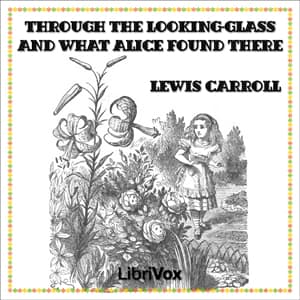
Here's where I have to be honest: this is a LibriVox recording, which means volunteer narrator, no production budget. Praetzellis reads it clean and clear—no weird audio artifacts, no jarring cuts. His delivery is straightforward, almost academic. He's not doing theatrical voices for Tweedledee and Tweedledum, not hamming up the Queen of Hearts. More like a well-read professor than a performance.
For some people, that's a feature. You want the text, you get the text. For others—especially if you're comparing this to professional productions with full sound design—it'll feel flat. The talking pudding scene that should be peak absurdist comedy lands as just... described events.
At 3 hours 25 minutes, it's basically two commutes. The ROI calculation here is: free audiobook, competent reading, classic text. Not bad math.
The "Jam Yesterday, Jam Tomorrow" Problem
Carroll's logic puzzles haven't aged. The White Queen explaining she can remember things that haven't happened yet, or the concept of living backwards in time—these ideas show up in serious physics discussions now. The man was writing about temporal paradoxes while also including a talking egg with opinions about semantics.
Humpty Dumpty's "when I use a word, it means just what I choose it to mean" speech? That's basically every API documentation I've ever read. Every. Single. One.
The pacing is episodic by design—Alice moves square to square on the chess board, each encounter self-contained. This actually works great for commute listening. Dozed off through the Lion and Unicorn bit? You'll pick right back up with the White Knight. No continuity required.
Queue It or Skip It?
Perfect for: train, gym, any context where you might zone out and zone back in. The episodic structure forgives inattention. Also great if you want to finally "read" the classics you skipped, or if you're a parent previewing before reading to kids (heads up: some of it is genuinely weird in ways that might spawn questions).
Skip if: you want an immersive narrator performance—this is functional, not theatrical. Or if you're expecting Alice in Wonderland vibes. This sequel is weirder, more structured, and honestly more interesting if you're into logic puzzles. Less whimsy, more "what if chess pieces had existential crises."
The Free Tier Calculation
This is a free LibriVox recording of a public domain classic. The narrator does the job without embarrassing himself or the material. The text itself is legitimately brilliant—Carroll's wordplay and paradoxes hold up better than most "weird fiction" published last year.
Could've been a better production? Sure. But for zero dollars and a short time commitment, you get genuine literary value. I've paid for audiobooks that gave me less.
Finished it in two commutes. Would've done 1.25x speed but honestly, the wordplay benefits from normal pace. Let "Jabberwocky" breathe. Your brain needs the extra milliseconds to process "vorpal sword" anyway.