
Thirty-nine minutes. That's it. That's the entire audiobook.
I'll be honest—when I downloaded this during a particularly brutal faculty meeting about standardized testing metrics, I thought I'd accidentally grabbed a sample chapter. But no. This is the whole thing. And here's my complaint: why does profound Buddhist teaching have to be so... brief? I've spent more time listening to colleagues debate whether we should switch to a new gradebook software.
When Less Isn't Quite Enough
Look, I teach literature. I believe in economy of language. Hemingway built cathedrals with monosyllables. But there's a difference between elegant brevity and feeling like you just got the SparkNotes version of enlightenment.
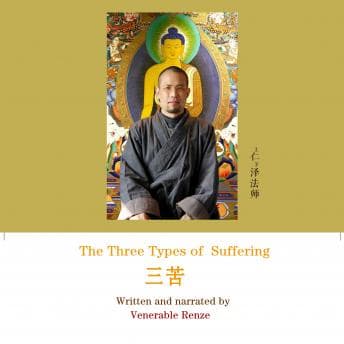
Ven. Renze covers the Three Types of Suffering—dukkha-dukkha (the suffering of suffering), viparinama-dukkha (the suffering of change), and sankhara-dukkha (the suffering of conditioned existence)—which are foundational to understanding the Four Noble Truths. This is genuinely important material. The kind of framework that, if you really sit with it, changes how you understand everything from your morning commute to your existential dread at 2 AM.
But at 39 minutes, you're essentially getting a podcast episode. A good podcast episode, sure. But I kept waiting for the deeper exploration that never came. Compare this to Thich Nhat Hanh's audiobooks where you get hours of gentle unpacking, stories, meditation guidance. I had a similar frustration with For the Love: Fighting for Grace in a World of Impossible Standards—good ideas, but I wanted more time to sit with them. This feels more like a lecture outline than the lecture itself.
Two Voices, One Short Journey
Chowang Khandro and Ven. Renze share narration duties here, which is an interesting choice for something this short. Having two voices does help distinguish between—I'm assuming—the teaching itself and perhaps commentary or translation context. (The title includes Chinese characters, suggesting this may bridge traditions or audiences.)
The delivery is appropriately measured. This isn't the kind of material that benefits from dramatic interpretation. You want clarity, you want space for reflection. And that's what you get. Neither narrator is trying to perform Buddhism at you—they're transmitting it. Which I respect, even if it means there's not much to analyze from a pure audiobook-craft perspective.
The production is clean. No weird audio artifacts, no jarring transitions. Professional, if minimal.
A Gateway, Not a Destination
If you're completely new to Buddhist philosophy and want a digestible introduction to one of its core concepts before committing to something longer—this works. It's the equivalent of reading the first chapter of a textbook before buying the whole thing. If you're already familiar with the Four Noble Truths and want a refresher or a different teacher's perspective—also useful. Sometimes hearing familiar concepts in a new voice unlocks something.
But if you're hoping for the kind of deep, contemplative audiobook experience that rewards multiple listens with new insights? This probably isn't it. Not because the content lacks depth, but because there simply isn't enough runway for that depth to develop.
My students would probably love this, actually. They'd appreciate that it respects their time. (They'd still complain it was too long. They always do.)
Class Dismissed—But Did We Learn Anything?
Barely. And I mean that literally—it's so short that by the time Principal Martinez finished explaining the new attendance tracking system, I was done.
The content itself is solid Buddhist teaching. The Three Types of Suffering is a genuinely useful framework for understanding why we struggle with existence—not just obvious pain, but the subtle suffering of impermanence and the dissatisfaction baked into conditioned experience. If you've never encountered these concepts, they might genuinely shift something in how you see the world.
But the format leaves me wanting. At this length and depth, I'd almost rather read an article or listen to a dharma talk on YouTube for free. The audiobook format implies a certain... commitment. A certain substance. This feels more like a supplement than a standalone work.
If you've got a streaming subscription that includes this, absolutely give it a listen during your next walk around the block. It won't waste your time. But spending a credit on 39 minutes of introductory material? That's a harder sell. Wait until you find it included in a subscription service or bundled with other teachings from the same source.