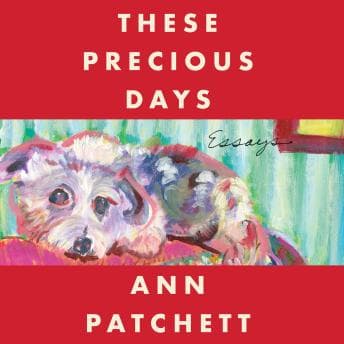
Everyone kept telling me this was a warm, intimate, deeply personal collection. And it is. But here's what nobody warned me about: Ann Patchett will make you feel simultaneously inspired and inadequate, and she'll do it in the most pleasant conversational tone imaginable.
I was up late waiting for a client's pitch deck revisions - the kind of midnight limbo where you're too wired to sleep but too fried to do real work. So I put this on. Eleven and a half hours of essay collection from a woman who opened a bookstore because she believed in books. My parents opened a dry cleaning business because they believed in feeding their kids. Different stakes, same conviction. I respected her immediately.
The Getaway Car Is Worth the Entire Toll
Bottom line: if you listen to nothing else, listen to "The Getaway Car." It's Patchett's essay on the craft of writing, and it's the most honest, useful thing I've heard about creative work in years. She talks about the gap between the book in your head and the book you actually produce - and she does it without the usual MFA hand-wringing. It's practical. It's blunt. This is what my parents did instinctively - showed up, did the work, didn't romanticize the grind. Now it has a TED talk. Except Patchett did it better than any TED talk because she's not performing insight, she's just... sharing it.
Then there's "The Wall" - her essay about attempting the LAPD police academy fitness tests. Ann Patchett. At the police academy. Running obstacle courses. It's absurd and wonderful and the kind of essay that makes you realize this woman will throw herself into anything just to understand it. That's a consultant's instinct, honestly. Immersion over observation. I've pitched that approach to clients who wanted market research. Most of them just ran focus groups instead.
When the Author IS the Narrator, You Get the Real Invoice
Patchett reads her own work, and this is where it gets complicated. Her voice is clear, steady, companionable - like sitting across from someone at a dinner party who's had exactly the right amount of wine. Not performing. Not dramatic. Just talking. For the first five or six hours, it's wonderful. You feel like you're getting the director's cut of her life.
But somewhere around hour seven, something shifted for me. Her emotional register stays pretty level, even when she's discussing her first failed marriage or her complicated friendship with Lucy Grealy. The Grealy essay in particular - there's real grief in the words, but the delivery stays so controlled that it almost undercuts the content. I found myself wanting her to crack, just a little. She doesn't. Jenny would say I'm being harsh. Jenny is right. But also - when you're narrating your own divorce, a little vocal tremor isn't weakness. It's credibility.
That said, author-narrated memoirs are a gamble, and this one mostly pays off. You get inflections and pauses that a hired narrator would never find. Patchett knows where her own jokes land. She knows which lines need breathing room. That's not something you can direct in a studio.
The 45-Minute Problem, Essay Edition
Here's my issue with essay collections as audiobooks: they're inherently uneven. Some essays here are knockout pieces of writing. Others feel like magazine assignments she completed competently but without the same fire. The ones about her dog, her grandmother, her Nashville life - they're lovely but they don't all earn their runtime. At 11 hours 35 minutes, there's maybe 7 hours of genuinely essential listening here.
The key takeaway is worth the listen. The other 4 hours? Not so much.
I kept it at 1.5x for this one instead of my usual 2.0x, because Patchett's pacing is already efficient. She writes lean sentences. Speeding through them felt like disrespecting someone who'd already done the editing work. That's rare for me to say.
Who Gets the Invoice
If you're a writer, a reader who thinks about writing, or anyone who's ever tried to build something from scratch - a bookstore, a marriage, a career that doesn't follow a straight line - this lands. If you want dramatic narration with vocal fireworks, look elsewhere. If you need every essay to be a banger, you'll get frustrated by the back half.
If you're a business person who thinks creative work is soft - listen to "The Getaway Car" and then tell me about your productivity framework. I've seen this fail at three different companies. Road gave me a similar gut-check about what real discipline looks like when stripped of any institutional scaffolding. Patchett's approach to her craft has more operational discipline than half the startups I advise.
Skip to "The Getaway Car" and "The Wall" first. Thank me later. Then go back and listen to the rest if those two hook you. They probably will.