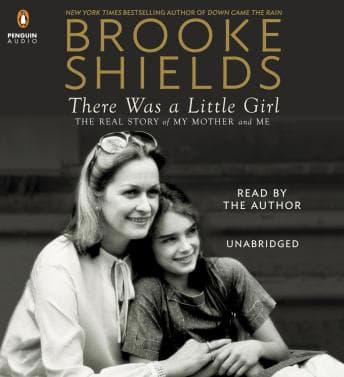

"She was my mother and my manager, my protector and my greatest vulnerability."
That's not a direct quote — it's more the distilled thesis I kept circling back to somewhere around hour seven, standing over a pot of dal that had gone from simmering to scorching because I couldn't stop listening. The thing about Brooke Shields narrating her own memoir about her mother Teri is that it functions less like a celebrity tell-all and more like someone sitting across from you at a kitchen table, trying to explain a person who defied simple explanation. And as someone who studies how people construct narratives about the formative relationships in their lives — this one got under my skin.
The Pathology of Unconditional Love (and Its Limits)
Teri Shields is a fascinating case study in enmeshment. Here's a woman who launched her infant daughter's modeling career at eleven months old, who was both fiercely protective and dangerously dependent, who drank herself into oblivion while simultaneously being the most devoted stage mother in the industry. Brooke doesn't flinch from this contradiction, and that's what makes the book work. She doesn't resolve Teri into a villain or a saint. She holds both truths simultaneously — my mother loved me desperately, and my mother's love was often indistinguishable from control. That same collision between love and psychological suffocation is what makes All My Sons so devastating — Miller understood that the people who damage us most are usually the ones who believed, genuinely, that everything they did was for us.
The protagonist exhibits classic parentification patterns. Brooke became the caretaker of her caretaker impossibly early. And what's psychologically interesting is how Brooke narrates this without the clinical distance I just used. She tells it warm. She tells it with the confusion still intact. There's a moment where she describes Teri's drinking getting worse during Brooke's transition to adulthood — when the daughter no longer needed the manager — and you can hear something shift in Brooke's voice. Not dramatic sobbing. Just... a thinning. A pulling back. My therapist would have thoughts about this character, and also about the daughter who spent decades trying to love her into sobriety.
When the Subject Is the Narrator (and That's Both the Strength and the Problem)
Here's where I have to be honest. Brooke narrating her own story creates an intimacy that no hired voice actor could replicate. When she talks about Teri, you're hearing the actual daughter. The actual grief. The actual ambivalence. That matters enormously for a memoir about a relationship this complicated.
But — and this is where the 2-star reviewers aren't entirely wrong — Brooke is not a trained narrator. The pacing is chronological in a way that sometimes feels like she's reading a detailed timeline rather than telling a story. There are stretches in the middle hours where she walks through career milestones and social connections with the same emotional register she uses for the devastating personal moments. It flattens things. I found myself asking: why does the Calvin Klein controversy get roughly the same vocal energy as her mother passing out drunk at an event? The research actually shows that when people narrate their own trauma, they often unconsciously modulate to a neutral tone as a protective mechanism. Which is psychologically authentic. But it doesn't always make for riveting audio.
At nearly thirteen hours, the book could've used a tighter edit. Some passages feel like Brooke needed to say everything to make sense of it — which, honestly, is how real processing works. It's just that what's therapeutic for the writer isn't always paced well for the listener.
Who This Is Really For (and Who Should Run)
If you've ever had a parent whose love felt like weather — sometimes warm, sometimes destructive, always inescapable — this book will hit you somewhere you weren't expecting. It's not a beach read. It's not background listening for your commute. This requires the kind of attention you give a long, honest conversation with someone who's finally ready to talk.
If you're coming for celebrity gossip or Hollywood dish, you'll be disappointed. There are glimpses of that world, sure, but they're always filtered through the mother-daughter lens. Brooke is less interested in name-dropping than in understanding why Teri needed the spotlight so badly that she'd push her daughter into it before the kid could walk.
Skip it if slow, emotionally heavy memoirs aren't your thing. No judgment. But don't mistake the quietness for emptiness.
The Diagnosis I'd Write in the Margins
This is an imperfect audiobook about an imperfect relationship told by someone still figuring out what it all meant. And I think that's exactly what makes it worth the listen. Brooke Shields didn't write a polished celebrity memoir. She wrote a case study of codependency, grief, and the impossible math of loving someone who can't stop hurting themselves. The audio experience has its flat stretches. The pacing tests your patience. But the honesty — the willingness to sit in the mess without tidying it up — that's rare.
I scraped the burnt dal off the bottom of my pot and kept listening. That should tell you something.