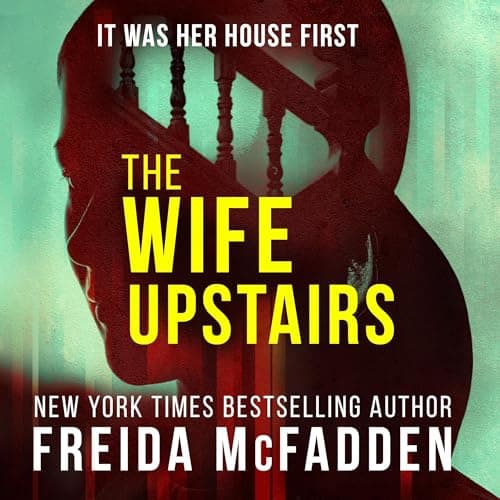

Look, I need to rant about something. Victoria is a nurse practitioner. She's supposed to be smart, competent, someone who understands the medical system from the inside. And then McFadden actually gets the medical details right - the way a locked-in patient experiences care, the dependency, the humiliation of needing someone to feed you and position you and wipe your face. As someone who's actually run a code and watched patients lose autonomy in real time, the accuracy here hit different. I was listening at 1.5x on the F train after a brutal 14-hour shift, and when Victoria's internal monologue described the specific frustration of having words trapped behind a body that won't cooperate, I almost missed my stop. Because I've seen that. I've held the hand of someone living that.
So yeah, I was invested from the jump. And then I got mad.
The Medical Details Are Accurate. Finally. But Then There's Victoria's Voice.
Angie Kane makes a choice with Victoria that I genuinely can't decide if I respect or hate. She pitches Victoria's voice high - almost whiny, like a petulant child stuck in a woman's broken body. And here's the thing: it doesn't match who Victoria is on the page. Victoria is sharp. She's a clinician. She understands exactly what's happening to her, and her diary entries prove she's calculating and deliberate. So why does she sound like she's about to cry into her pillow at a sleepover? I think Kane was trying to convey vulnerability and helplessness, but it created this weird dissonance where I kept forgetting Victoria used to run her own practice. That said - Kane's Sylvia is solid. Grounded, a little guarded, the kind of voice you'd trust to take your vitals but maybe not your secrets. The contrast between the two women carries the audiobook even when the plot wobbles.
When Your Patient Can't Speak But Has a Diary Full of Secrets
The setup is what got me. A woman trapped in her own body, confined to the top floor of her house, completely dependent on the people around her - and she can't tell anyone what she knows. That's not just thriller fuel. That's a real nightmare I've watched play out in neuro wards. McFadden understands that the horror isn't the monster under the bed. It's being conscious and aware while everyone around you decides your reality. Victoria's desperation to communicate with Sylvia - those scenes where she's fighting her own body just to push a single word out - that's the emotional core of this book, and it works because McFadden doesn't sensationalize it. She just lets it be awful.
The diary reveal is where things get twisty in classic McFadden fashion. And I'll say this: if you've read a few of her books, you'll probably clock at least one of the turns before it lands. I had the husband figured out pretty early (honestly, in a McFadden book, when is the husband NOT the problem?). But the final twist in the last couple hours genuinely caught me off guard, and I was sitting in the gym between sets just staring at my phone like an unhinged person.
The pacing is tight for 9 hours and 46 minutes. No dead weight. It moves like a shift that's going wrong - you don't have time to breathe, and by the time you realize you should've eaten something, you're already three crises deep.
Who Gets This Book and Who Walks Away
If you love psychological thrillers where the domestic space becomes the crime scene, and you can handle a narrator voice choice that might grate on you - this is a solid listen. If you need your twists to be completely unpredictable, or if you've burned through McFadden's catalog and feel like you've cracked her formula, you might find the middle section predictable. And if high-pitched character voices are a dealbreaker for you in audio, know what you're signing up for.
The content warnings are real here - domestic abuse, gaslighting, miscarriage, medical trauma. This isn't cozy thriller territory. McFadden is writing about power and control in a marriage, and she's not gentle about it. Between shifts and salah - this kept me going through a week where I needed fiction that understood the weight of helplessness without romanticizing it.
My Mom Would Be Proud of This Book. Almost.
It respects the intelligence of medical professionals. It doesn't turn the nurse into a saint or a villain - it lets her be a whole person who made choices, some good, some terrible. That's rare. The audiobook format works well here because the intimacy of a single narrator means you're trapped in these women's heads the same way Victoria is trapped in her body. Kane's dramatic delivery during the suspenseful moments genuinely earns the tension. I just wish she'd given Victoria a voice that matched her brain. Island has a similarly frustrating narrator mismatch where the voice undersells a sharp protagonist - so apparently this is a whole thing now.
Solid McFadden. Not her absolute best, but better than half the medical thrillers I've rage-listened to this year. And the medical accuracy matters. Lives depend on getting these details right, even in fiction.