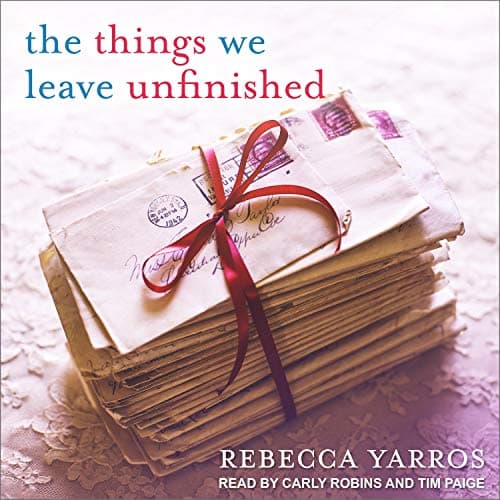

Everyone kept telling me this was the Rebecca Yarros book to start with - not Fourth Wing, not the military romances, but this one. I'll be honest, I went in skeptical. Dual-timeline romance with a WWII love story? I've been burned by books that use wartime as aesthetic wallpaper. Pretty dresses, vague danger, zero accuracy. Matrix: A Novel is one of the few that actually earns its historical setting - the kind of book that made me trust this genre again after too many disappointments. So when I hit play at 3:47 AM during a rare quiet stretch on the unit - my patients stable, my charting caught up, the kind of silence that makes you superstitious - I figured I'd give it maybe an hour before I started arguing with my phone.
I did not argue with my phone. Not once.
Scarlett and Jameson Wrecked Me at a Volume That Was Probably Unprofessional
Here's the thing people get right about this book: the WWII timeline between Scarlett Stanton and Jameson is where the real gravitational pull lives. Yarros writes their wartime love story through letters and desperate choices with the kind of emotional precision that made me forget I was sitting in a break room under fluorescent lights. Scarlett's story unfolds like a wound being slowly uncovered - you know it's going to hurt, you can see where the narrative is heading, and you lean in anyway because the woman on the page demands it.
The contemporary storyline with Georgia - Scarlett's granddaughter - and Noah, a bestselling author tasked with finishing Scarlett's unfinished manuscript, is where the book gets wobbly. And I'm going to side with the listeners who flagged this: Noah and Georgia don't get enough runway. Their attraction goes from bristly to inevitable too fast, like Yarros was so in love with the WWII timeline (understandable) that the present-day romance got compressed. Georgia's grief over her failed marriage and her complicated relationship with her grandmother's legacy are genuinely interesting threads. But Noah? He needed more pages. More time. More breathing room to be a person and not just a romantic inevitability.
That said - and this is where I break from the skeptics - the dual-timeline structure works because the unfinished manuscript becomes the connective tissue. It's not just parallel love stories happening to share a book. Georgia reading her grandmother's words while Noah pushes her to confront the ending Scarlett couldn't write? That's structurally clever in a way I didn't expect from a romance novel. (My mom would love this. She still thinks I should've been a doctor, but she's a sucker for wartime love stories and women who make impossible choices.)
Tim Paige and Carly Robins Know What They're Doing
The dual narration is the right call for this book. Carly Robins handles Scarlett's timeline and Georgia's present-day sections, and she shifts between them with enough tonal difference that you're never confused about when you are. Scarlett gets a slightly more formal, measured delivery - a woman narrating her own story with the composure of someone who's already survived it. Georgia is rawer, more contemporary, more uncertain. Tim Paige takes Noah's POV chapters and gives him a restrained warmth that keeps him from tipping into generic love interest territory - which, honestly, the writing sometimes risks.
No weird pronunciation issues. No pacing problems. At 14 and a half hours, this is a commitment, but I never felt like it dragged in the audio - even when the contemporary romance timeline needed more substance on the page, the narrators kept me locked in.
The Ending Made Me Cry in the Hospital Parking Lot
I'm not going to spoil it. But the way the two timelines converge - the way the question of Scarlett's unfinished manuscript gets answered - Carlos asked why my eyes were red when I got home. I blamed allergies. In July. In Phoenix. He didn't buy it.
What got me wasn't the romance. It was the idea that some stories don't get finished because the person living them couldn't bear to write the ending they knew was coming. That's not just a plot device. As someone who's actually worked a code, who's watched families in waiting rooms trying to write endings they never wanted - that hit different. Saved brushed up against that same territory for me - not as quietly devastating, but there's a moment in it where grief and unfinished business land in a way that felt honest rather than decorative.
Who Should Listen (And Who Should Skip)
If you love dual-timeline fiction and can forgive a contemporary romance that moves faster than it earns, the WWII storyline alone is worth your time. If you need both love stories to be equally developed and convincing, you'll spend the modern chapters wishing you were back in 1940. Skip this if you're a Yarros fan coming from Fourth Wing expecting dragons and action - recalibrate. This is quiet and devastating in a completely different register.
Night Shift Prescription
Perfect for that post-shift decompression. This is the kind of book that makes you feel something real on the drive home, and then you sit in your driveway for an extra five minutes because you're not ready to go inside and be a functioning person yet. The WWII timeline carries this book hard enough to forgive the contemporary shortcomings, and the narrators elevate everything. Not flawless. But the parts that work? They really, really work.