
"If you could go back, would you do it differently?" That question hit me somewhere around hour three, 2:47 AM on a Tuesday, the warehouse humming that low drone it makes when the conveyor belts are cycling empty. I'd just set down a pallet of returns and climbed back on the forklift when Wilbur started talking about Maggie - really talking about her, not just remembering but aching - and I had to sit there for a second with the engine idling because it caught me off guard.
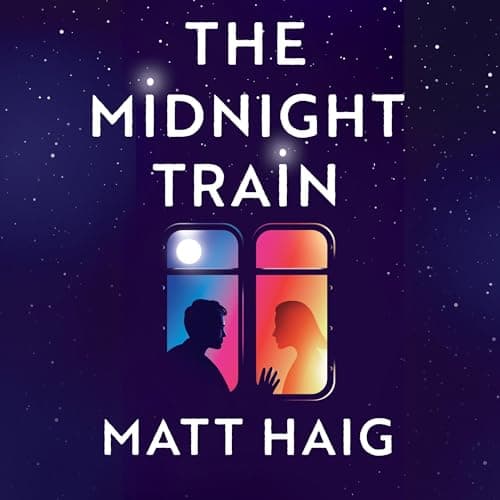
Matt Haig wrote The Midnight Library a few years back and it did numbers. This is the companion piece, set in the same universe but following Wilbur, a man who gets to ride a train back through the moments of his life. Not to change them. Just to re-live them. To watch himself love Maggie, lose Maggie, and understand - maybe for the first time - what kind of man he actually was.
A Train That Runs on Regret, Not Rails
Look, the premise is simple. Man gets old. Man looks back. Man wishes he'd been better. We've all heard that story. But Haig does something specific here that got under my skin: Wilbur doesn't just revisit the big dramatic moments. He goes back to a random Tuesday morning in Venice on his honeymoon where Maggie was reading on the balcony and he almost said something beautiful but didn't. He goes back to a night where Malik - sorry, where his kid was sick and he chose work over being there. (Yeah, that one hit personal. Real personal.)
The time-travel mechanic isn't sci-fi complicated. The train shows up, you pick a stop, you're there. Cheshire Crossing plays with familiar story logic in a similarly stripped-down way - no rules, just emotional consequence - and it works for the same reason this does. No paradoxes, no butterfly effect nonsense. It's more like emotional archaeology - digging through layers of a life to find where the cracks started. Haig keeps it grounded in feelings rather than plot mechanics, which means if you're looking for a thriller with twists, this ain't it. But if you've ever sat in your truck at 5 AM after a shift wondering where the years went, this book will find you.
James Norton Behind the Mic
James Norton narrates, and I'll be straight with you - I don't have a ton to compare him to since this is the first thing I've heard him read. He's got a steady, warm delivery that fits Wilbur's reflective older-man voice well. Not flashy. Not doing character gymnastics. Just a man telling you about his life like you're sitting across from him at a bar.
At 1.6x he holds up fine - his pacing is measured enough that speeding it up doesn't lose anything important. There were a couple of the Venice scenes where I actually dropped it back to 1.4x because the quietness of the moment felt intentional, like Norton was leaving space for you to feel something. That's a good sign. When a narrator makes me slow down voluntarily, they're doing their job.
No sound effects, no music, no full-cast tricks. Single narrator, clean audio. The production is simple and it works for a story this intimate.
Where It Wobbles
Here's my issue, and it's the same issue I had with The Midnight Library: Haig sometimes writes like he's stitching inspirational quotes onto throw pillows. There are passages where Wilbur reflects on life and love that feel like they belong on an Instagram post more than in a grown man's mouth. Lines about how "the only real time travel is memory" - which, fine, that's pretty, but it also made me roll my eyes a little at 3 AM surrounded by shipping labels and the smell of cardboard.
The pacing dips in the middle too. Around hours five and six, the train stops start to feel repetitive. Another memory, another moment of Wilbur realizing he messed up. I get the pattern. I lived the pattern. But the book doesn't need ten examples when five would've hit harder. Jamal and Malik would call this the "are we there yet" stretch, and they wouldn't be wrong.
But then Haig pulls you back. The ending - the last stop on the train - is genuinely earned. Without spoiling it, Wilbur's final choice isn't what I expected, and it reframes everything that came before. I was pulling into my driveway, F-150 still running, just sitting there letting it finish.
Who Gets a Ticket (And Who Stays on the Platform)
If you loved The Midnight Library, this is the same emotional neighborhood with a different address. If you're a working parent who's ever felt the weight of time slipping - the missed bedtimes, the conversations you should've had - this book will find the bruise and press on it. But if you need action, if you need plot turns every chapter, if you listen while hauling freight and need something to keep your brain firing, this is going to feel too quiet for the job.
Clocking Out on This One
From the warehouse floor straight to you: The Midnight Train is a good book wrapped in a great premise with about 90 minutes of fat that should've been trimmed. Haig respects working people - Wilbur isn't some millionaire looking back on yacht parties, he's a regular man who let regular life slip through his fingers. That matters to me. Norton's narration is solid and human. It's not going to change your life, but it might make you call someone you've been meaning to call. I texted my boys' mom when I got home. Didn't say why. She probably thought I was crazy. That's fine.