
"Magic is really only the word people give to anything that is really and truly amazing." Somewhere around the two-hour mark, that line landed while I was walking the lakefront with Denise on a freezing December evening, the kind where Lake Michigan looks like hammered pewter and your breath comes out in little clouds. I had to pause and repeat it. Because Matt Haig - a guy who writes bestselling adult novels about depression and anxiety - just snuck a working definition of wonder into a children's book, and it hit harder than most of the literary theory I studied in grad school.
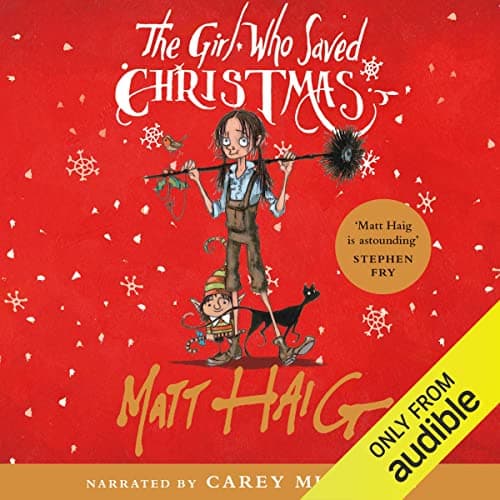
This is the sequel to A Boy Called Christmas, and you should know that going in. Haig picks up with Amelia, a chimney sweep's daughter in Victorian London whose mother has died and whose father is in debtor's prison. She writes a letter to Father Christmas asking for her family back. Simple premise. But Haig does something I genuinely admire here - he refuses to make it simple. The magic is literally dying. Elves are unhappy. Reindeer are falling out of the sky. And the reason? People have stopped believing. It's not a new idea, but Haig roots it in something real: grief makes it hard to believe in anything, let alone flying reindeer.
When Charles Dickens Shows Up and You Don't Even Blink
The Victorian London setting is doing a lot of work. Haig throws in Queen Victoria, Prince Albert, and Charles Dickens as actual characters, which should feel gimmicky but somehow doesn't. Captain Soot - a cat who belongs to Amelia - gets more personality in five hours than most human characters get in trilogies twice this length. There's a troll subplot that my students would love and that I found genuinely funny, and a goofy voice Carey Mulligan pulls out near the end for one character that almost broke me on a public path. (Denise asked if I was okay. I was not okay. I was giggling at a children's audiobook.)
The sad stuff is real, though. Amelia's lost her mother, and Haig doesn't sugarcoat it. There's a stretch in the middle where the story goes quiet and sits with that loss, and it reminded me of what the best children's literature has always done - it trusts kids to handle hard things. Let's talk about what Haig is really saying here: belief isn't about naivety. It's about choosing hope when the evidence points the other way. That's not a children's theme. That's a human theme. I found that same stubborn-hope undercurrent in Happy Place — completely different setting, completely different stakes, but the same argument running underneath: choosing to believe in something good is an act of will, not wishful thinking.
Carey Mulligan Understands That Pause Is Punctuation
Here's where it gets interesting. Mulligan's narration is polarizing, and I get why. She doesn't do the standard audiobook thing of smoothing everything into pleasant background noise. Her Queen Victoria is clipped and imperious. Her Albert is warm and slightly bumbling. She commits to every voice with the energy of a stage actor, and if you're not ready for that level of performance, it can feel like too much. Some listeners bounced off her entirely - I read the reviews, and a few people gave up within the first chapter.
But I think those listeners wanted a reader. Mulligan is a performer. Her comedic timing on the troll scenes is genuinely sharp, and her emotional delivery when Amelia talks about her mother is restrained in exactly the right way - she doesn't push the tears, she lets the words do the work. The narrator understands that pause is punctuation. At five and a half hours, the pacing never drags. This is a sprint, not a marathon, and Mulligan runs it well.
My one knock: the production is clean but bare. No music, no sound effects. For a book this whimsical, a little atmospheric production would've elevated it. It's a minor thing, but worth noting.
Who Gets the Most Out of This
If you loved A Boy Called Christmas, this is its spiritual successor - literally and narratively. If you're a parent looking for something to play on a road trip that won't make you want to drive into a ditch, this works for the whole car. And if you're a grown adult who sometimes needs a story that argues for hope without being stupid about it - yeah. This one's for you.
Skip it if you need your children's fiction to stay light and uncomplicated. The dead mother stuff is handled gently but it's there, and younger kids might have questions. Also skip if animated narration grates on you - Mulligan goes big, and she doesn't apologize for it.
My Students Would Hate This. I Love It.
At five hours and change, this is the kind of audiobook I'd have dismissed as "cute" ten years ago. But Haig writes about magic the way good teachers talk about learning - like it's something fragile that needs protecting, something that dies when people stop caring. The prose deserves to be savored. I listened at 1.0x because the author chose those words, and Mulligan chose how to deliver them, and rushing either felt wrong.
Worth pausing the faculty meeting for. Principal Martinez, I promise the next one I'll pay attention. (I won't.)