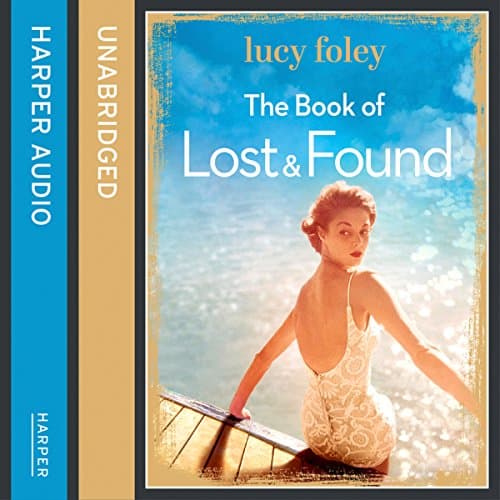

"In many ways, my life has been rather like a record of the lost and found."
That opening line hit me somewhere around hour one, sitting in the waiting room at my audiologist's office in Capitol Hill, captions scrolling on my phone while Jessica Ball's voice filtered through my hearing aids. There's something about a book that announces its own thesis so nakedly — and then actually delivers on it — that I respect. Lucy Foley's debut isn't the thriller machine she'd later become known for. This is her quieter, more romantic self, and honestly? It caught me off guard.
Three Timelines, One Portrait, and a Lake That Won't Let Go
The structure here is ambitious for a debut. You've got Kate in 1986 London inheriting a mysterious portrait from her grandmother. You've got Alice and Tom meeting in 1928 Hertfordshire by that silvery lake — young, reckless, the kind of golden-hour romance that feels almost too cinematic. And then Paris 1939, where Alice resurfaces in a city about to be swallowed by war, and Tom Stafford is now this famous artist she can't escape.
Foley toggles between these three threads, and the pacing is — well, it's a slow burn. Really slow. The 1986 sections drag Kate across Corsica, Paris, and back again, breadcrumb by breadcrumb. If you're the kind of listener who needs plot acceleration every twenty minutes, this will test you. But the 1928 and 1939 threads carry genuine emotional weight. The scene where Alice encounters Tom's paintings in wartime Paris, seeing herself through his eyes after years of silence — as a hard-of-hearing listener, this hit different. The emotional layers come through even without sound. Ball's delivery in those moments slows just enough to let the recognition land.
Jessica Ball — Pleasant Voice, Rough Edges
Here's where I have to be honest, because clarity over speed — always. Ball has a genuinely warm, appealing voice. She's well-suited to the genteel Englishness of the material, and her pacing through the romantic scenes is patient in a way that serves the text. When she's in the 1928 timeline, there's an ease to her reading that works.
But — and this is a real problem — she stumbles over basic pronunciation multiple times. Not obscure French place names (though those trip her up too). Simple English words. The emphasis lands wrong in spots, stressing the wrong syllable or flattening a sentence that needed a tonal shift. There's a moment late in the Paris sections where Alice is processing grief, and Ball reads it with the cadence of someone ordering coffee. Missed opportunity for tone shift here. I caught it because my hearing aids force me to pay closer attention to vocal inflection than most people — when emphasis is off, I lose the emotional thread entirely.
This narrator reads competently but doesn't truly perform. The distinction matters. In a book that spans decades and asks you to feel the weight of lost time, the voice needs to age, to carry scars. Ball gives you the same pleasant register whether Alice is twenty or forty, whether it's peacetime or Paris under threat. For casual listening, this is fine. For anyone parsing emotion through assistive tech, it's a gap.
Caption sync was decent on the Audible version — no major drift issues I noticed across twelve hours, which is actually rare for older catalog titles. Small win there.
Who Should Listen (And Who Should Skip)
If you love Kate Morton's multi-timeline mysteries — the slow uncovering of family secrets through letters and paintings and geography — you'll feel at home here. Platform Decay scratches a similar itch — that same layered sense of something buried resurfacing across time, though it leans harder into unease than romance. Foley clearly studied that template. The Corsica sections have that sun-drenched travel-memoir quality that makes for perfect beach or garden listening. This is not a book that demands your full cognitive attention (I finished several chapters while signing for clients between sessions, which tells you something about the cognitive load).
But if you came to Foley through The Guest List or The Hunting Party expecting that propulsive thriller energy — recalibrate completely. This is a different writer. The mystery element (who is the woman in the portrait?) is more of a gentle pull than a hook, and the resolution is exactly what you think it'll be about three hours in. Skip this if you need tight pacing or if narrator consistency is non-negotiable for your accessibility setup — Ball's uneven emphasis will frustrate more than it rewards.
The Accessibility Read
Accessibility done right would mean a narrator who treats emphasis as information — because for listeners like me, it literally is. Ball's inconsistency on that front drops what could've been a solid four-star listen. The story itself is lovely and earned, the kind of sweeping historical romance that rewards patience. Foley's prose is clean and visual, which translates well to audio. But the performance is the delivery mechanism, and this one has cracks.
I'd still say it's worth your time if you adjust expectations. Put it on at 1.25x to tighten the slower Kate sections, find a sunny afternoon, and let the 1928 timeline do its work. That lake scene will get you. It got me, sitting in that waiting room, watching the captions scroll while Ball — for just a few minutes — stopped reading and started feeling it.