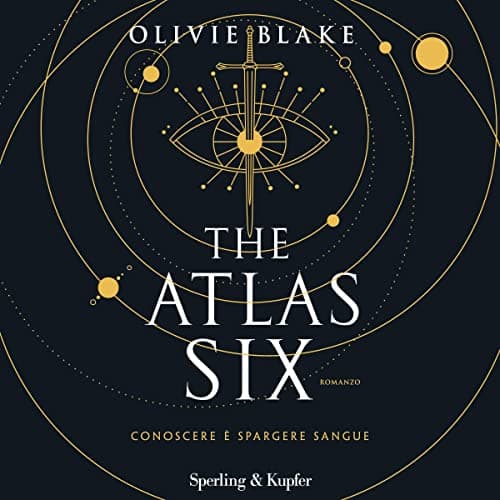

Look, I need to complain about something before we get into this. Six mages, a secret society, academic rivals, betrayal, only five spots — this book has every single ingredient for the kind of dark academia fantasy that should've had me fist-pumping in my desk chair at 2 AM instead of working on my thesis. And yet. AND YET. I spent a solid chunk of the first five hours wanting to shake every character by the shoulders and yell "just DO something already."
I was coding a procedural dungeon generator (yes, for my thesis, Dr. Patel, I promise) when I started this, and I kept pausing the audio not because something incredible happened, but because I'd realize I'd zoned out for ten minutes and the characters were still... philosophizing. About magic theory. Which — okay, I'm the guy who will happily explain Allomancy to strangers at a board game night, so you'd think I'd be all over that. But there's a difference between a magic system with clear rules that click together like LEGO bricks and six characters taking turns monologuing about the metaphysical nature of their powers without ever really showing you what those powers look like in action.
Six Characters in Search of a Plot
Here's the thing — the premise is genuinely great. You've got Libby and Nico as dueling physicists who manipulate the physical world and have this rivalry that crackles with energy whenever they're in the same scene. Parisa the telepath is deliciously manipulative; she's basically the party's face character who rolled a 20 in Charisma and a 3 in ethics. Callum's empathic manipulation is the most unsettling power of the bunch because Blake actually explores how messed up it is to just... make people feel things. Tristan sees through illusions, Reina talks to plants (basically). On paper, this is a killer adventuring party.
But instead of a dungeon crawl, you get a graduate seminar. The Alexandrian Society is essentially "what if the Library of Alexandria survived and was run by the most elitist academic gatekeepers imaginable" — which, as someone currently drowning in academia, felt a little too real. The six candidates do research presentations. They form study groups. They have interpersonal drama about who's smarter. That elitist-gatekeepers-hoarding-secret-knowledge vibe also runs through Ship of Magic, though Hobb at least throws some sea monsters at her characters to keep things moving. It's like listening to my own life but with magic, and I'm not sure that's a compliment.
The slow burn does eventually pay off in the final act when the true cost of admission becomes clear and the betrayals start landing. But we're talking hour 12+ before the stakes feel genuinely dangerous.
Giada Bonanomi and the Italian Edition Question
So this is where I have to be honest — this is the Italian edition narrated by Giada Bonanomi, and I went in knowing I was getting a single narrator handling six very distinct magical academics plus Atlas Blakely's whole mysterious benefactor vibe. I don't have strong evidence of how Bonanomi differentiates the cast vocally, which is a problem when so much of this book is characters talking AT each other in rooms. With a book this dialogue-heavy and this reliant on interpersonal tension between six people who all sound like they went to the same pretentious wizard grad school, vocal distinction matters a LOT. The production is clean, no audio issues I caught, and Bonanomi's pacing is steady — but "steady" in a 16-and-a-half-hour slow burn can start to feel like "monotone" if you're not locked in.
For comparison, the English edition has multiple narrators, which frankly seems like the right call for a book structured around six rotating POVs. Single narrator here means you're trusting one voice to carry a LOT of internal monologue across six different headspaces.
Who Gets a Seat at This Table (And Who Should Leave)
If you're the kind of fantasy reader who wants your magic systems explored through theory and character study rather than combat — if you'd rather watch six brilliant people circle each other like wolves than watch them fight actual monsters — this has a lot to offer. The interpersonal dynamics are where Blake shines. Parisa and Callum's scenes together are like watching two chess grandmasters who both know the other is cheating.
But if you need your fantasy to MOVE, if you want Sanderson-level world-building with Sanderson-level momentum, this ain't it. Skip it, or at least wait until you're in a patient mood. The progression is satisfying but it takes its sweet time getting there. My D&D group would love the character concepts but would absolutely start checking their phones during the pacing valleys.
Roll for Initiative (Eventually)
I read this instead of writing my thesis, which means it held my attention enough to keep going — but not enough to make me forget I was procrastinating. It's a 3-star audiobook experience: intriguing concept, characters with genuine teeth, but a pacing problem that the single-narrator Italian format doesn't do any favors. If you're going to commit to 16+ hours, maybe bump the speed to 1.25x and settle in with some patience. The last quarter earns a lot of goodwill. Just... get there first. That patience-rewarded payoff structure reminded me of Die Kaiserin, another slow-builder where the final act redeems a lot of sitting around waiting for brilliant people to stop circling and actually stab each other.