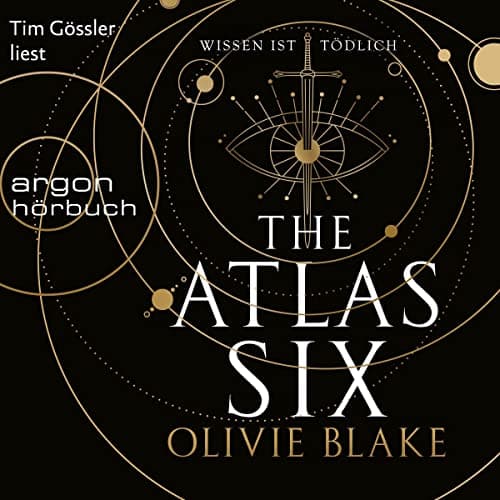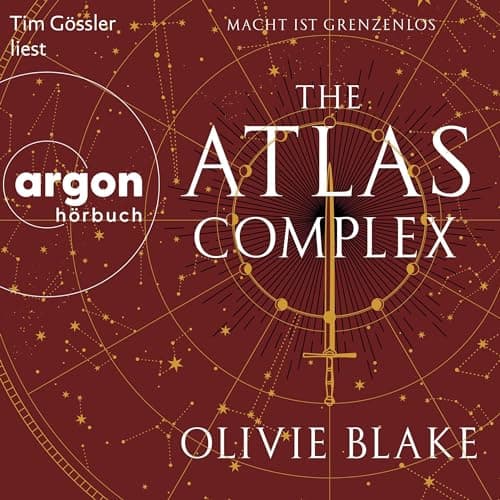

Everyone told me this was the payoff. The grand finale. The big swing. I'd been saving it for the right moment — curled up on my couch at 11 PM, Shirley purring against my leg, rain doing that thing Oregon rain does where it just commits to being atmospheric. Twenty-one hours of German-language fantasy finale. I was ready to be wrecked.
I was not wrecked. I was... bored? And that genuinely surprised me.
The Library of Alexandria Deserves Better Than This
Look, I came into the Atlas trilogy as someone who champions dark academia with teeth. The premise — six dangerously powerful magicians, a secret society guarding forbidden knowledge, moral rot dressed in intellectual finery — that's my exact brand of horror-adjacent fantasy. The Atlas Six had genuine menace. It understood that the scariest thing about power isn't what it does to the world, it's what it does to the people wielding it. The philosophical underpinning was real.
But The Atlas Complex lost the thread somewhere around hour eight, and I'm not sure it ever found it again. The six characters who were once sharp and distinct have become recursive. They think about thinking about their choices. They monologue internally about whether they should act, then don't act, then think about the not-acting. For a book whose German subtitle translates to "power is limitless," the actual exercise of power is remarkably limited. The pacing isn't slow-burn — slow-burn implies building toward combustion. This is slow-simmer-then-someone-turns-off-the-stove.
And that ending. I sat there in the dark after the final chapter, waiting for... something. A twist. A gut-punch. A moment that justified twenty-one hours of psychological circling. What I got felt like Blake ran out of runway. Not lazy, exactly, but incomplete — like the final movement of a symphony where the orchestra just stops mid-phrase and the conductor walks offstage.
Tim Gössler Carries Weight the Story Won't
Here's where I have to be honest about the limits of what I can assess. This is a German-language production, and my German is — let's be generous — functional at best. So I can't speak to the subtleties of Gössler's pronunciation or whether his character voices differentiate six morally compromised magicians with the precision this cast demands. What I can say is that his pacing and tone do heavy lifting that the source material doesn't always earn. There's a gravity to his delivery, a seriousness, that kept me engaged through stretches where the plot gave me nothing to hold onto.
But twenty-one hours is a lot to ask of a single narrator handling this many internal monologues. By the back half, the characters' voices — their philosophies, their spiraling thoughts — started blending together in a way that might be the text's fault more than Gössler's. When every character is having an existential crisis about the nature of power, even a committed narrator can't make the sixth variation feel as urgent as the first.
I genuinely can't tell you if his character differentiation holds up under native-speaker scrutiny. That's a gap in my assessment and I'd rather flag it than fake expertise I don't have.
Horror-Adjacent Fantasy That Forgot the Horror
This is where it gets personal for me. The Atlas series was pitched to me by podcast listeners who know I love fiction that examines what happens when smart people make monstrous choices and convince themselves it's rational. That's horror. That's the real kind — not jump scares, but the slow recognition that the protagonist is the thing you should be afraid of.
The Atlas Complex gestures at this constantly but never commits. Characters betray each other, sure, but the betrayals feel weightless because the stakes have become so abstract. Who are these people to each other by the end? What have they actually lost? The book tells you it matters. It doesn't make you feel it.
Shirley Jackson walked so dark academia could run, but this third book is walking in circles. If you're hungry for dark academia that actually commits to the rot at its center, Gifted & Talented does exactly that — I found myself thinking about it more than once while waiting for this one to finally bite.
Who Should Listen (And Who Should Skip)
If you've already invested in the first two books and need closure — even imperfect closure — this will scratch that itch. If you love character interiority so much that you'll happily spend hours inside someone's philosophical spiral without external plot momentum, there's genuine craft in the prose (credit to translators Heide Franck and Alexandra Jordan for what reads as a faithful adaptation). But if you need your fantasy finales to actually conclude with force? If twenty-one hours demands a proportional payoff? You're going to feel cheated. Skip this and wait for the next trilogy that earns its runtime.
Shelving This One With a Sigh
My podcast listeners are going to love arguing about this. I can already feel the Discord notifications. But I can't pretend the finale of a trilogy I wanted to champion left me anything but deflated. The ambition is there. The execution isn't. And at twenty-one hours, that gap between ambition and execution feels wider with every passing chapter. I listened in the dark. Mistake? Maybe. Worth it? For once, I'm not sure.