
What happens to a neighborhood's stories when the wrecking ball shows up?
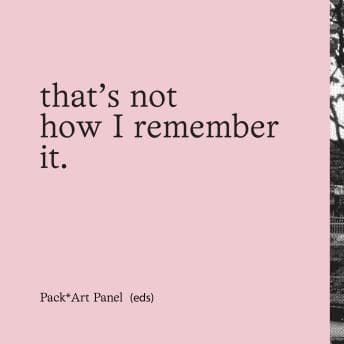
Here's the debrief: That's Not How I Remember It is an oral history of the Packington Estate—a demolished London council estate locals called "the Pack." Nine former residents narrate their own memories. No actors. No polish. Just people who actually lived there, telling you what it was like.
At two hours and twenty-two minutes, this thing is lean. No fat. The Pack*Art Panel, a collective of community members who put this together, made smart choices about what to include. You get wallpaper colors. Sugar sandwiches during hard times. Which stairwells were trouble. The unwritten rules that kept a community functioning even when it was rough around the edges.
The narrators—Charise Johnson, Donna Roe, John Okolo, Kim Stanton, Sheyma Buali, Susana Smith, Theresa Okolo, Toni Lee, and Yasemin Der—aren't trained voice actors. Good. That's the whole point. When someone describes the exact layout of their childhood flat, you can hear they've walked those rooms a thousand times in their head. This isn't acting. It's remembering.
I listened to this over a few evening walks, and the format suited it. The structure is deliberately choppy—memories bump into each other, sometimes contradict each other. One person recalls community solidarity; the next remembers violence. The title isn't cute wordplay. These people genuinely remember things differently, and the audiobook lets that tension sit there without trying to resolve it.
Compared to something like Friday Night Lights, which also gives voice to working-class communities often ignored by mainstream media, this one is rawer. Less narrative arc, more fragments. Bissinger had a journalist shaping the story. Here, the community shaped itself. Both approaches work. This one just asks more of you as a listener.
The production is clean—no background noise, no volume problems, no dramatic music trying to tell you how to feel. Just voices. The multiple-narrator format creates something you can't get on the page: when two speakers give slightly different versions of the same event back-to-back, you feel memory's unreliability in real time. Smart use of the audio format.
Fair warning: this isn't for everyone. If you need plot momentum, if you want a clear through-line, you'll be frustrated. This is oral history, not narrative nonfiction. The book doesn't romanticize estate life—there's frank talk about violence and hardship—but it refuses to reduce these people to statistics in some regeneration report.
Who should listen? Anyone interested in British social history from ground level. Anyone who's watched their own neighborhood get "improved" and wondered what got bulldozed along with the buildings. Anyone tired of hearing working-class communities talked about instead of heard from. Who should skip? Listeners who need narrative drive or a journalist's shaping hand—you'll find this too fragmented.
The brevity is a feature, not a bug. You could knock this out in one sitting, but I'd suggest spreading it over a few sessions. The emotional weight needs room to settle.
Bottom line: this is a community speaking its own history before it gets paved over and forgotten. For the right listener, it's a small treasure. For the wrong one, it'll feel like eavesdropping on conversations you don't have context for. Know which one you are before you hit play.