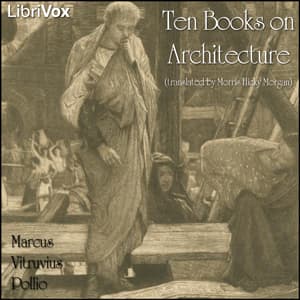

Everyone told me this was THE foundational text for understanding architecture. The original source material. The thing every architecture student has to suffer through. So naturally, I expected it to be dense, dry, and useful only as a sleep aid.
I was half right.
When Your 6AM Train Becomes a Roman Construction Site
Look, I started this at 5:47 AM on a Tuesday, wedged between a guy with a massive backpack and someone who apparently bathed in cologne. And you know what? Vitruvius describing the ideal proportions for temple columns somehow made the whole situation bearable. There's something almost meditative about listening to a 2,000-year-old Roman explain why your building's foundation needs to account for soil composition.
The thing is—this isn't really a book in the modern sense. It's a treatise. A technical manual. Written for Emperor Augustus as essentially a "here's everything I know about building stuff" document. Once I adjusted my expectations from "engaging narrative" to "historical technical documentation," it clicked.
The Archimedes Bathtub Story Is Actually In Here
Okay, this genuinely surprised me. That famous "Eureka!" story about Archimedes figuring out how to detect gold fraud by displacement while taking a bath? This is the original source. THE source. Vitruvius just casually drops this anecdote while discussing how to detect when craftsmen are cheating you on materials. It's buried in there like an easter egg, and I actually laughed out loud on the train (earning me some looks from the cologne guy).
What's fascinating is how practical this whole thing is. Vitruvius covers everything from "how to pick the right site for a city" to "here's how sundials work" to "this is why your aqueduct is failing." It's basically ancient Roman Stack Overflow, except instead of debugging distributed systems, you're debugging why your amphitheater has bad acoustics.
The closest modern parallel I've found to that kind of deep, obsessive field knowledge delivered as primary source material is American Buffalo: In Search of a Lost Icon—different subject entirely, but that same feeling of someone dragging you into a world you never knew you needed to understand.Fredrik Karlsson Does What He Can
Here's the thing about narrating a 2,000-year-old technical treatise: there's not much room for vocal pyrotechnics. Karlsson reads it clearly, which is honestly what you need. This isn't a novel with characters to differentiate—it's one Roman guy explaining construction principles for nine and a half hours. The narration is clean, the pacing is steady, and he handles the Latin terminology without making it sound like he's showing off.
Is it Ray Porter? No. But Ray Porter isn't narrating ancient Roman architectural manuals, so we work with what we have.
The real challenge is the content itself. Vitruvius goes DEEP on things like the proper ratios for mixing mortar, the geometry of theater design, and the mechanics of water-lifting machines. If you're not actively interested in how Romans built things, your attention will wander. I'll admit—around hour 6, during an extended section on military siege engines, I zoned out and missed my stop. Not Karlsson's fault. Just... a lot of catapult specifications.
Ancient Rome's Stack Overflow
The ROI on this audiobook is weird to calculate. If you're an architecture student, history nerd, or someone who wants to understand why Western buildings look the way they do—genuinely useful. Vitruvius's principles (firmitas, utilitas, venustas—strength, utility, beauty) literally shaped architecture for two millennia. Every time you see a building with columns in a specific ratio, that's this guy.
But if you're looking for entertainment? This is not it. This is reference material. The kind of thing you listen to once, absorb the key concepts, and then never revisit unless you're writing a paper or trying to win a very specific bar argument.
Queue it up if: You've got long commutes where you want to feel productive. You need background listening while doing something semi-mindless. You want to impress your architect friends.
Hard pass if: You need emotional engagement to stay focused. You're looking for bedtime listening (you'll either fall asleep or get weirdly invested in Roman concrete mixtures at 2 AM—no in-between).
Deploying to Production
Bottom Line: Worth your commute if you're into history, architecture, or understanding why things are built the way they are. Not worth it if you need narrative momentum to stay awake.
I finished this in about 5 commutes, running at 1.25x. At normal speed, Karlsson's steady pace might drag for modern ears. The content is legitimately important—this is a primary source that influenced literally everything built in the Western world for centuries. But it's also a technical manual from 25 BC, and it reads like one.
Would I recommend it? To the right person, absolutely. To Kevin, who asked what I was listening to and then immediately lost interest when I said "Roman architecture treatise"? Probably not.




![Steve Jobs [unabridged audiobook] audiobook cover](/_next/image?url=https%3A%2F%2Fcovers.audiobooks.com%2Fimages%2Fcovers%2Ffull%2F9788499923406.jpg&w=1920&q=75)