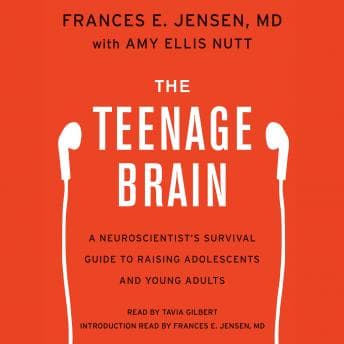

"The teenage brain is only about 80 percent of the way to maturity."
I was jogging through Cambridge when Dr. Jensen dropped that line, and I literally stopped on the path. 80 percent. That's not a fully-formed adult with less experience—that's a fundamentally different cognitive architecture. As someone who spends her days analyzing why people do what they do, this reframing hit me hard. We've been treating adolescent behavior as a character flaw when it's actually neurobiology.
Why This Book Changed How I Think About Development
Look, I've read a lot of developmental psychology. It's basically my job. But Dr. Jensen brings something different to the table—she's not just synthesizing research, she's translating decades of neuroscience that was buried in journals nobody outside academia ever reads. (Trust me, I know how that feels.) The core insight that kept coming back: the prefrontal cortex—the part responsible for judgment, impulse control, planning—is literally the last thing to finish developing. Sometimes not until age 25.
This explains so much. The research shows that teens aren't being dramatic when they seem overwhelmed by stress. Their brains process emotional experiences differently, and those experiences can have lasting effects on mental health. I found myself asking: why have we been blaming teenagers for behavior that's neurologically predictable?
What makes this book compelling is Jensen's dual perspective. She's a neuroscientist, yes, but she's also a mother who raised two sons through adolescence. That combination keeps the science grounded. When she talks about her own kids making questionable decisions, you feel the tension between "I understand the brain science" and "but why did you do that." Refreshingly honest.
The Addiction Chapter That Should Be Required Reading
The section on addiction genuinely unsettled me. Here's the thing—teen brains are better at learning. Their synapses are more plastic, more ready to form connections. Sounds great, right? Except that same plasticity means they can get addicted faster, harder, and longer than adults. The marijuana research alone—showing memory problems lingering days after use, and long-term IQ impacts—is the kind of data I wish more parents had access to.
Jensen doesn't moralize about it. She presents the neuroscience and lets you draw conclusions. That restraint actually makes the information more powerful. My therapist would have thoughts about why we prefer to believe teens are just being rebellious rather than accepting their brains are genuinely vulnerable. The same neuroscience-meets-relationship lens shows up in Wired for Love, which applies brain science to adult attachment patterns with similar precision.
Two Voices, One Clear Message
Frances Jensen herself reads portions—there's something about hearing a scientist explain her own research that adds credibility. Her delivery is clear and precise, though I'll be honest, some sections felt a bit lecture-hall. Tavia Gilbert handles other portions with more vocal variety, which helps during the denser material.
The pacing works for what this is. It's not a thriller. It's a science book that respects your intelligence while remaining accessible. I listened at 1.25x during my morning runs without missing anything, which is my personal test for whether narration is well-paced.
Some listeners have found the delivery dry—and I get that. If you're expecting the high-energy approach of some pop-science audiobooks, this isn't it. But honestly? I appreciated the measured tone. It felt like sitting in on a really good university lecture rather than being sold something.
Where the Science Gets Practical
The book does offer practical advice, though some reviewers wanted more of it. I actually think the balance is right. Jensen gives you the "why" so thoroughly that the "what to do" often becomes obvious. Understanding that multitasking genuinely reduces learning capacity in teen brains—not just annoys parents—changes how you approach homework battles.
The sleep research hit close to home. Teenagers aren't being lazy when they can't wake up—their circadian rhythms are biologically shifted. Schools starting at 7:30 AM are basically fighting against neuroscience. (Good luck getting school boards to listen, but at least now you have the data.)
Who This Is (and Isn't) For
If you're parenting a teenager, teaching one, or just trying to understand why you made certain decisions at 16, this audiobook delivers. It won't solve every conflict at your dinner table. But it might help you see those conflicts differently.
Skip it if you want quick tips without the neuroscience foundation—Jensen takes her time building understanding. For me, that's the point. You can't really apply the advice without understanding why it works.
The Psychologist's Prescription
Would I recommend it? Yes, with one caveat: approach it as education, not entertainment. Put it on during chores, commutes, those times when you can give it attention but don't need it to be gripping. The information is valuable. The delivery serves the content. That's enough.