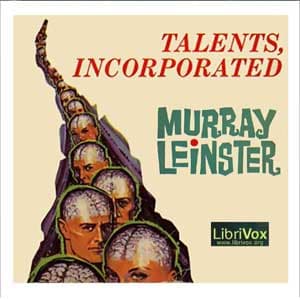

What happens when you build your entire military strategy on intel from a guy with a hazel twig and a paranoid dude who just feels things? That's the central tension of Murray Leinster's Talents, Incorporated, and honestly, it's a premise that hit different for me as someone who spends her days trusting monitoring dashboards that are basically just fancier versions of dowsing rods.
I picked this one up on a Sunday night when Kevin was out and I was doing laundry, sorting socks, brain running at maybe 40% capacity. At just over six hours, it's basically a two-commute book, and I figured a golden-age space opera would be the right kind of low-stakes palate cleanser after a brutal week of incident reviews.
When Your Observability Stack Is Just Vibes
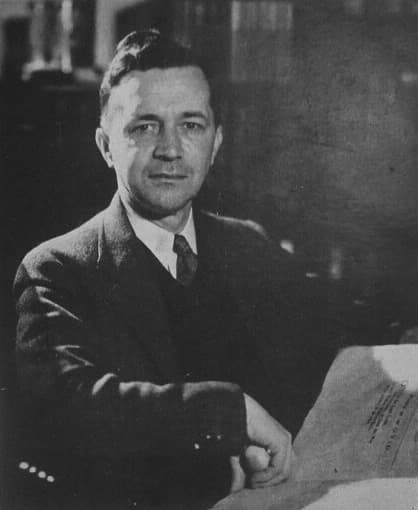
So here's the setup: Captain Dorl Doris Dorlisson (yes, Leinster went with that name and no, I will not be getting over it) - though most people just call him Bors - ends up working with a ragtag group called Talents, Incorporated. Their "talents" are basically psychics, dowsers, and people with hunches. And Bors has to use their intel to fight an actual interstellar war. It's like if someone told you to deploy to production based on a Tarot reading. The fun part is that it works, and Bors spends the whole book being deeply uncomfortable about why.
Leinster wrote this in 1962, and you can feel it. The prose has that mid-century sci-fi efficiency - no worldbuilding bloat, no 300-page magic system appendix. Things just happen at a clip. Bors gets information, Bors is skeptical, Bors acts on it anyway because there's a fleet bearing down on his planet, rinse and repeat. The contrast with something like Dune is pretty stark — Herbert took a similar "trust the unverifiable intel" premise and buried you in 400 pages of appendix before the real action started, which is its own kind of commitment I have complicated feelings about. The structure is almost episodic - mission, doubt, success, bigger mission. It works as an audiobook because you never lose the thread, even when you're half-zoned-out folding fitted sheets.
But here's where the "mediocre" criticism from some listeners lands fair: the characters are basically archetypes with name tags. Bors is Reluctant Hero. There's a love interest whose primary trait is Being There. The villains are generically menacing. Nobody has an arc so much as a trajectory. If you need character depth to stay engaged, this will feel thin.
Mark Nelson Doing the Heavy Lifting
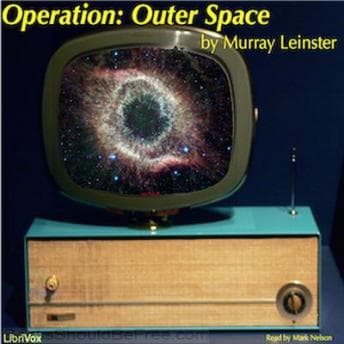
Mark Nelson is doing real work here, and he's the reason this doesn't slide into forgettable territory. His voice has this warm, authoritative quality that suits golden-age sci-fi perfectly - like a really good uncle telling you a story he's told before but still enjoys. He shifts between characters with enough tonal variation that you can track who's speaking without backtracking, which for a single-narrator production on a classic text is exactly what you need. One listener nailed it when they said he uses "a rich voice that he can use as several different characters." It's not showy differentiation - no wild accents or vocal gymnastics - but it's clean and consistent.
He's no Ray Porter (I mean, who is), but Nelson has the kind of steady, engaging delivery that makes a 6-hour listen feel like 4. I bumped this to 1.5x and it held up perfectly. No weird compression artifacts, no rushed dialogue sections.
The Actual Interesting Part That Leinster Almost Buries
What frustrated me - and this is where I started actually thinking instead of just folding laundry - is that the premise is genuinely interesting and Leinster doesn't quite dig into it enough. The idea that unverifiable, irrational-seeming information can be operationally useful? That's fascinating! That's basically the history of every gut-call decision in tech (and warfare, and business). There's a real philosophical question here about when you trust data that has no legible provenance.
But Leinster keeps the story at the military-adventure level. The battles are fine. The strategy is fine. Everything is... fine. The book is described as "a thoroughly enjoyable romp through the impossible, told through the eyes of an incredulous and largely unwilling hero," and yeah, that's accurate. It romps. It doesn't linger.
For a 1962 space opera, that's not a dealbreaker. It's just a ceiling.
Who Gets Value Here (And Who Doesn't)
Perfect for: train, gym, chores. Anything where you want narrative momentum without cognitive load. If you're into classic sci-fi and want to hear what the genre sounded like before it got complicated, this is a nice short dive. Also genuinely good if you're doing a Murray Leinster survey - it's not his best, but it shows his knack for fun premises.
Skip for: anyone expecting modern character work, hard science, or anything longer than surface-level exploration of its own premise. If you need your sci-fi to ask hard questions and answer them, this isn't it.
The ROI Calculation
The ROI on this audiobook is decent but not great. Six hours, solid narration, a premise that's smarter than the execution. It's free on LibriVox, which changes the math significantly. If you're spending a credit on this when you could grab a 20-hour epic? Bad trade. But as a free listen or streaming pick to fill a couple of commutes? It's a perfectly pleasant way to hear a classic author do his thing, elevated by a narrator who clearly cares about the material more than the material might deserve.