
Denise and I were walking the lakefront last Saturday — one of those rare October mornings where Chicago pretends it's not about to betray you with winter — and she asked what I was listening to. I pulled out an earbud and said, 'A romance novel about a billionaire and a widow with three sons.' She gave me the look. The one that says, 'You have a Faulkner podcast, Marcus.' But here's the thing. I was genuinely enjoying myself.
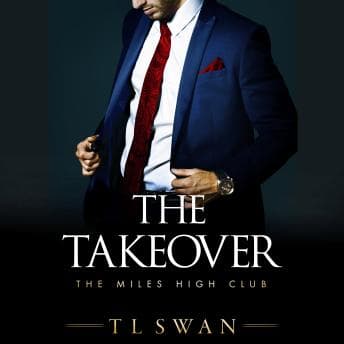
Look, I teach Austen. I teach the Brontës. I know what a well-constructed enemies-to-lovers arc looks like when the bones of it trace back two hundred years. And T L Swan's The Takeover — the second book in her Miles High Club series — is not Pride and Prejudice. Let's get that out of the way. But it knows exactly what it wants to be, and it executes with confidence. Claire, a widow still carrying the weight of losing her husband, meets Tristan Miles when he's literally trying to acquire her late husband's company. The power dynamics are loaded from the first scene. This isn't just 'oh no, he's hot and I hate him.' There's real grief underneath the banter, and the book earns its emotional beats because it doesn't rush past the hard stuff to get to the fun stuff.
When Grief Walks Into a Romance Novel
What surprised me most — and I say this as someone who spends his professional life thinking about how stories handle emotional complexity — is how Swan handles Claire's widowhood. It's not a backstory accessory. It's present. It sits in scenes where you don't expect it, the way grief actually works. Claire's three sons aren't just plot devices either; they're chaotic, funny, and the source of some of the audiobook's best moments. Sebastian York narrating Tristan's internal reactions to these kids? Genuinely funny. There's a warmth in how York voices those domestic moments that caught me off guard. His read on Tristan shifts from corporate predator to something almost tender when the boys are around, and the transition doesn't feel forced.
CJ Bloom, meanwhile, carries the comedic weight of this thing on her shoulders and doesn't break a sweat. Her timing is sharp — there are moments of Claire's internal monologue where Bloom lands a beat with the precision of someone who understands that comedy is rhythm, not just words. She differentiates every character clearly, including the sons, who each feel distinct. (My students would probably say she 'ate.' I'm told that's a compliment.)
The Dual Narration Question
Here's where I have to be honest. The dual narration works well, but the split isn't even. CJ Bloom carries the majority of the book, and there were stretches — particularly through the France conference scenes — where I found myself wanting more of York's perspective on Tristan. When he's on, he's excellent. That low, controlled delivery when Tristan is scheming versus the slight crack of sincerity when he's actually vulnerable with Claire — it's good performance work. The narrator understands that pause is punctuation. York knows when to let a silence sit. But the imbalance means his sections feel like treats you're rationed rather than a true fifty-fifty partnership.
The production is clean. No audio hiccups, no jarring transitions between narrators. At twelve and a half hours, it's a comfortable listen — long enough to develop the relationship properly, not so long that you're checking how much time is left. I listened at my usual 1.0x because — and my students will roll their eyes at this — the comedic timing from Bloom specifically depends on her pacing. Speed it up and you flatten the jokes.
The Plot Problem Nobody Wants to Talk About
Is the plot predictable? Yes. You know where this is going from chapter two. Tristan will wear Claire down. The corporate takeover will resolve in a way that doesn't destroy the relationship. The sons will love him. This is genre convention, and I don't penalize it any more than I'd penalize a sonnet for having fourteen lines. I've said the same thing about Thief: A Novel of the Black Dagger Brotherhood — the formula isn't the flaw; the execution is what separates good from forgettable. The structure is the point. What matters is whether the execution makes you care about the journey even when you know the destination. And mostly, it does. The France setting adds energy to the middle act, and Swan writes banter that actually sounds like two smart adults sparring rather than reading quips off cue cards.
But — and this is the English teacher in me talking — there are moments where the prose leans on telling rather than showing, where a scene that should breathe gets summarized instead. The narrators cover for this more than they should have to. Bloom and York are doing some heavy lifting in spots where the writing goes flat.
Who's Going to Love This (And Who Won't)
If you loved The Hating Game or you're already in the Miles High Club series, this is the strongest entry. If you want enemies-to-lovers with actual emotional stakes — not just manufactured conflict — Claire's grief gives this one weight that elevates it above the formula. If you need literary prose or unpredictable plotting, this isn't your book, and that's fine.
My students would hate that I listened to this. I loved it. Not in the way I love Middlemarch — which, Principal Martinez, I was definitely not listening to during your last budget meeting — but in the way I love a well-performed story that knows its audience and delivers exactly what it promises.
The Assignment I'd Actually Give This One
Worth the credit. Not because it's going to change your life, but because Bloom and York turn a solid romance into a genuinely entertaining twelve-hour listen. I finished it on the lakefront, Denise walking beside me, and when I told her how it ended, she stole my earbud and said, 'Start it over.' That's the review, really.