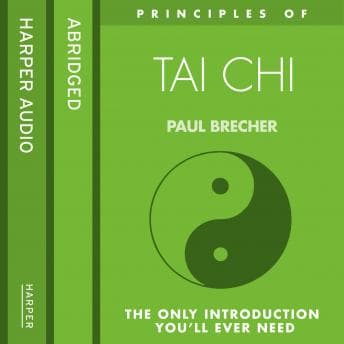

Can you actually learn Tai Chi from an audiobook? I mean, really learn it - a practice that's fundamentally about physical movement and body awareness - through sound alone?
I found myself asking this question about fifteen minutes into Paul Brecher's introduction, standing in my kitchen stirring dal and feeling slightly ridiculous trying to visualize "flowing movements" while my hands were covered in turmeric. The research actually shows that visualization can activate similar neural pathways to physical practice, but still. It's a weird format choice for a martial art.
The Psychology of Stillness (Or: Why This Works Better Than It Should)
Here's the thing about Brecher narrating his own work - there's an authenticity that comes through that a hired voice actor simply couldn't replicate. When he talks about chi and energy flow, you're hearing someone who has spent decades in this practice. His voice has this genuinely calming quality, almost hypnotic, which makes sense given what he's teaching. My therapist would have thoughts about how the cadence itself becomes a form of meditation.
The pacing is deliberate. Slow. Some might say too slow. But psychologically, this tracks - you can't rush someone into relaxation. That's not how the nervous system works. Brecher seems to understand this intuitively, giving listeners space between concepts to actually absorb what he's saying.
Now, I've heard some people find his accent a bit much. Honestly? I didn't notice it as a problem, but I grew up code-switching between New Jersey and my parents' Hindi-inflected English, so maybe I'm just more adaptable to vocal variations. Your mileage may vary.
What This Is (And What It Isn't)
Let's be real for a second. At 90 minutes, this isn't going to make you a Tai Chi master. It's not even going to make you competent. What it does is something different - it provides a conceptual framework, an understanding of the philosophy behind the movements, and a surprisingly effective relaxation tool.
I listened to this during my morning jog through Cambridge (yes, I see the irony of jogging while learning about slow, flowing movements) and found myself slowing down, breathing more deliberately. That shift in awareness—how mindfulness can infiltrate even contradictory activities—is something Mindful Athlete explores in depth, particularly around performance under pressure. The audio quality is clean and crisp, which matters when someone's voice is supposed to be guiding you toward inner peace. Nothing ruins a meditation faster than crackling audio.
Brecher covers the basics: proper practice methods, how Tai Chi theoretically increases energy, the health and spiritual development angle. It's introductory material, clearly adapted from a book, and sometimes you can feel that adaptation strain. Certain sections feel repetitive - he circles back to concepts in ways that probably worked better on the page where you could skim.
The Verdict (Or: Who Should Listen and Who Should Skip)
This is a fascinating case study in format mismatch, honestly. The content is solid for absolute beginners who want to understand what Tai Chi is about before committing to classes. But if you're expecting to learn actual movements? You'll need video or an in-person instructor. That's just the reality.
What makes this audiobook worth your time is its utility as a relaxation tool. I've started putting it on while cooking dinner (post-turmeric incident, I've learned to just listen rather than attempt poses). Brecher's voice genuinely does have that soothing quality reviewers mention, and there's something pleasant about learning the philosophy of stillness while chopping vegetables.
If you've read Benjamin Hoff's "The Tao of Pooh" and wanted something more practical but in the same philosophical neighborhood, this might work for you. Mindful Athlete occupies a similar space—bridging Eastern philosophy with Western practice, though focused on sports rather than Tai Chi specifically. It's not as charming, but it's more directly applicable.
Who should skip this? Anyone who already knows Tai Chi basics. Anyone who thinks 90 minutes will substitute for actual practice. Anyone who needs high-energy content to stay engaged. This is definitively a slow burn - but for the right listener in the right mood, that's exactly the point.
I found myself surprisingly relaxed after finishing it. Whether that's the content, the delivery, or just the placebo effect of expecting relaxation... well, does it matter? Sometimes the outcome is the outcome.
Just don't try to actually do the movements while cooking. Trust me on this one.