
"I have been in too many shield walls."
That line hit me somewhere around hour three, while I was sitting in my apartment at 1 AM with my thesis document open in one tab and absolutely zero intention of touching it. Uhtred of Bebbanburg is old now - not ancient, but the kind of old where every battle could be the last one, and he knows it. Twelve books in, and Cornwell still finds ways to make that weight land.
Uhtred Is Basically a Retired Level 18 Fighter Who Keeps Getting Dragged Back to the Table
Here's what I love about where we are in the Saxon Stories. Uhtred doesn't want to be here. He wants Bebbanburg. He wants to sit in his hall, drink ale, and watch the sea. But oaths - man, oaths in this world are basically unbreakable geas effects. His bond with Aethelstan pulls him south like a plot hook he can't refuse, and the resulting political chaos is genuinely interesting because Cornwell doesn't simplify it. The grief layered into that kind of obligation - watching something you built start to fracture - hit me similarly in Two Lives of Lydia Bird, which sounds like a wild comparison but the emotional mechanics of being pulled toward a life you can't fully commit to are surprisingly universal. Edward is dying, there are multiple heirs circling, and the question of whether Wessex and Mercia stay unified feels like real stakes, not just set dressing for the next sword fight.
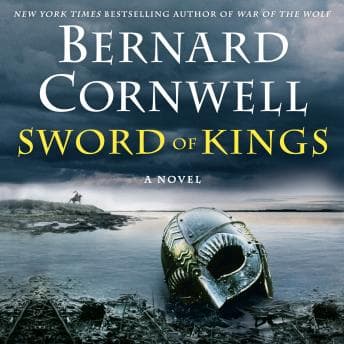
But let's be honest - the sword fights are why most of us are here, and Cornwell delivers. The battle sequences in Sword of Kings are unrivaled. I mean that literally. Nobody writes shield wall combat like this. You can feel the press of bodies, the mud underfoot, the moment when a wall starts to buckle. Cornwell understands something that a lot of fantasy authors miss: combat isn't choreography, it's chaos and terror and exhaustion. My D&D group would love this - it's basically what happens when your party tries to hold a choke point at level 18 and the DM throws wave after wave at you.
The cliffhanger chapter endings are genuinely evil, by the way. I kept telling myself "one more chapter" and then it was 3 AM and I had a meeting with Dr. Patel in six hours. (I read this instead of writing my thesis. Again. I regret nothing.)
Matt Bates Walked So Other Historical Fiction Narrators Could Run
Matt Bates has been doing Uhtred for enough books now that he is Uhtred in my head. His voice for the character has aged with him - there's a weariness there that wasn't present in the earlier books, and it works. The Danish characters get a rougher, more guttural treatment versus the clipped precision he gives the West Saxon nobles, and that vocal distinction does real work establishing the cultural divides that drive the plot.
Where Bates really shines is the battle narration. He doesn't go full dramatic - he stays controlled, almost matter-of-fact, which paradoxically makes the violence hit harder. When Uhtred describes killing a man in a shield wall, Bates delivers it with the flatness of someone who's done it a hundred times. That's character work through vocal performance, and it's genuinely impressive.
Bernard Cornwell is also credited as narrator, though his contribution is minimal - likely an author's note or introduction. Bates carries the full weight of the story.
Who Should March South With Uhtred
If you've been listening to the Saxon Stories, you already own this. You know what you're getting. But if you haven't - do NOT start here. This is book twelve. There's political context, character history, and emotional weight that requires the foundation of earlier installments. Go back to The Last Kingdom and start from the beginning. Yes, it's a massive time commitment across the whole series. Yes, it's worth it.
If you watched the Netflix show and want more - the books are deeper, messier, and better. The show is good. The books are the real thing.
If you don't like info-dumps about Anglo-Saxon politics, this isn't for you. (But you're wrong.) Cornwell weaves historical detail into the narrative naturally, but there IS a lot of it, and it matters. This is Sanderson-level world-building except the world is 10th-century England and the magic system is political obligation and sharp iron.
Skip this if you need fast pacing at all times. There are stretches of political maneuvering and travel that require patience. The progression is satisfying, but Cornwell makes you earn the payoff.
My Thesis Can Wait, Bebbanburg Cannot
Twelve books deep and Cornwell hasn't lost a step. Uhtred aging into his final campaigns gives the series an emotional gravity that the early books - good as they were - couldn't have. Matt Bates continues to be the definitive voice of this world. At 13 hours, it's a solid listen that rewards attention but won't destroy your weekend.
I should really write my thesis now. I will not.