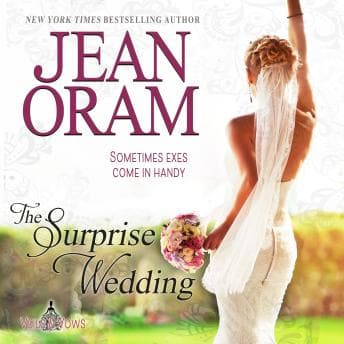

Look, I need to address the elephant in the room before we go any further: this audiobook is narrated by a robot. Not a person doing a robotic voice. An actual AI-generated voice called "Digital Voice Madison G." And I sat through all eight hours and eighteen minutes of it.
Principal Martinez, if you're somehow reading this review instead of preparing another budget meeting, yes, I listened to a romance novel narrated by artificial intelligence during your last presentation about standardized testing metrics. The irony of a literature teacher consuming AI-generated narration is not lost on me. My grad school professors are rolling in their tenure.
The Uncanny Valley Has a New Resident
Here's the thing about Jean Oram's second-chance romance—the story itself is perfectly serviceable small-town fare. Fake relationship trope, ex-lovers reconnecting, the kind of emotional stakes that should have me pausing my lakefront walk to catch my breath. Should. The problem is that every time the male love interest speaks, I'm yanked out of Blueberry Springs and dropped into a Black Mirror episode.
The female digital voice attempting male dialogue is—how do I put this charitably—strange. Other listeners have called it "creepy," and I won't argue. It's that particular uncanny valley effect where something is almost human but not quite, like watching a mannequin try to deliver a marriage proposal. The voice maintains this synthetic consistency that never wavers, never breathes, never stumbles. And that's precisely the problem.
I've spent twenty years listening to teenagers read Shakespeare aloud. I've heard Hamlet delivered in monotones that would make a GPS navigation system sound passionate. But even my most disengaged sophomore understands that pause is punctuation. Digital Voice Madison G does not understand this. The pauses are algorithmic. The emphasis is... present, technically, but it's the emphasis of a very smart calculator trying to understand why humans cry at weddings.
What We Lose When We Lose the Human
This is why we still read the classics, folks. This is why I've always maintained that great narration is performance art. A good narrator doesn't just read—they interpret. They make choices. When Juliet Stevenson narrates Middlemarch (yes, I'm comparing a romance audiobook to Middlemarch, fight me), you can hear her thinking through Dorothea's choices, judging Casaubon, rooting for Will Ladislaw. That same interpretive depth shows up in Firekeeper's Daughter, where the narrator brings genuine emotional weight to every family conflict.
Digital Voice Madison G makes no choices. She processes text. And romance—particularly second-chance romance where every loaded glance and awkward reunion carries the weight of shared history—demands interpretation. When your ex walks back into your life and you're pretending to be engaged to someone else, the narrator needs to convey seventeen conflicting emotions in a single "hello." Madison G conveys... words. Accurate words. Properly pronounced words. Soulless words.
Denise asked me why I was sighing so heavily during our evening walk. I told her I was mourning the future of audiobooks. She said I was being dramatic. She's not wrong.
The Silver Lining (Such As It Is)
I'll give credit where it's due: the voice is consistent. No pronunciation shifts, no audio quality variations, no narrator getting tired at hour seven. If you're someone who finds human narrator quirks distracting—the occasional breath, the slight change in energy between recording sessions—Madison G offers something almost meditative in its uniformity.
And look, the story underneath is fine. Jean Oram knows her tropes. The fake relationship escalates predictably, the small-town gossip provides comic relief, the emotional beats land where they should land. If you've read the print version and loved it, maybe—maybe—you could tolerate this version while doing dishes or grading papers at 11 PM when you're too tired to care about vocal nuance.
But I care about vocal nuance. I care deeply. I once made my sophomores listen to three different actors read the "To be or not to be" soliloquy so they could understand how interpretation changes everything. This audiobook is what happens when interpretation gets replaced by processing.
Who Should Press Play (And Who Should Run)
If you're curious about AI narration as a technological experiment, this is... an example of it. If you're a Jean Oram completist who needs the audio format for accessibility reasons and human-narrated versions don't exist, I understand. Sometimes we work with what we have.
But if you have options? If you can read print, or wait for a human-narrated version, or find literally any other romance audiobook with a pulse behind the microphone? Do that. Skip this one. The prose deserves to be savored by someone who understands what savoring means.
My students would probably be fine with this. They listen to everything at 2x speed anyway and think I'm ancient for caring about delivery. Maybe they're right. Maybe I'm a dinosaur watching the meteor approach and complaining about the color of the flames.
Mr. Williams's Final Grade
Not this time. This is a case study in what we lose when we prioritize efficiency over artistry. Jean Oram wrote a perfectly adequate romance. Someone—or something—read it aloud. But reading and performing are different verbs, and audiobooks are supposed to be the latter.
I'll keep listening to my human narrators at 1.0x speed, thank you very much. The author chose those words. A human should choose how to say them.