
Okay so look - I need to be upfront about something. This is not my usual lane. I'm the guy who listens to 45-hour epic fantasies about magic systems and political intrigue. My Audible library looks like a medieval armory. So when I tell you I listened to a 27-minute summary-of-a-self-help-book while waiting for my laundry to finish at the apartment complex's one functioning dryer, understand that this was an act of pure desperation born from a dead phone battery and a Bluetooth speaker that was already connected.
And honestly? I have thoughts.
The CliffsNotes of CliffsNotes Problem
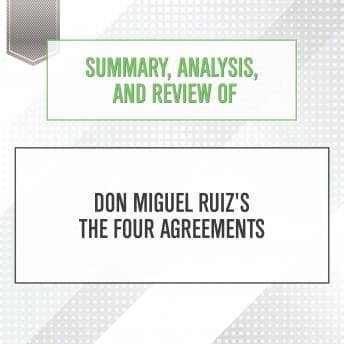
Here's my fundamental gripe with this whole concept: The Four Agreements by Don Miguel Ruiz is already a short book. Like, it's barely over 150 pages. It's not The Way of Kings. You don't need a sherpa to get through it. So a 27-minute summary-analysis-review of an already concise book feels like... someone summarizing a tweet? The Four Agreements are literally four sentences: Be impeccable with your word. Don't take anything personally. Don't make assumptions. Always do your best. I just saved you 27 minutes.
But okay, I'll be fair. Start Publishing Notes is trying to do something specific here - they're not just summarizing, they're layering in analysis and context. They draw parallels between Ruiz and Deepak Chopra, both medical doctors who pivoted to spiritual teaching. That's actually kind of interesting framing. The comparison to Chopra's publishing timeline in the mid-90s gives you a sense of the cultural moment that made The Four Agreements land the way it did. My D&D group would appreciate this level of lore context - understanding the setting before the campaign starts, you know?
The problem is the audiobook can't decide if it's a summary, a book report, or an opinion piece. It lurches between recapping Ruiz's Toltec wisdom framework and injecting the reviewer's own takes, and that tonal whiplash in a 27-minute runtime is pretty jarring. There's no room to breathe. It's like cramming a long rest into a short rest - you're technically resting but you're not getting your spell slots back.
Michael Gilboe Does His Job (Mostly)
Gilboe has a calm, even delivery that works fine for nonfiction summary content. His pacing is steady - almost metronomic, which is a double-edged sword. For 27 minutes of analytical content, that consistency keeps you tracking. But some of his pauses between sections feel a beat too long for how short this thing is, and at this runtime, every wasted second is noticeable. It's not Steven Pacey - but nothing is Steven Pacey, so that's not really a criticism. (Steven Pacey walked so other narrators could run.) For what this is - one guy reading an analytical breakdown - Gilboe is perfectly competent. Clean audio, no weird mouth sounds, professional production. I bumped it to 1.25x and it felt much more natural.
I've heard him bring the same steady professionalism to the 5 Second Rule summary, though that one left me equally unmoved.Here's the thing though: if you've heard Don Miguel Ruiz narrate his own work, Gilboe's performance feels clinical by comparison. Ruiz has this warmth and personal authority that comes from, well, being the guy who lived this philosophy. Gilboe is reading someone else's analysis of someone else's wisdom tradition. There's an inherent distance baked in.
Who Actually Needs This?
I've been thinking about this, and I genuinely can't figure out the target audience. If you've read The Four Agreements, you don't need a 27-minute recap. If you haven't read it, why would you start with someone else's interpretation instead of the original? Maybe it's for people who want to sound informed at a dinner party without doing the reading? (I'm the last person who should judge - I've definitely Wikipedia'd books my advisor recommended so I could nod convincingly in meetings.)
I guess the "analysis" angle is the value proposition. And to be fair, the Chopra comparison and the publishing context stuff is genuinely useful framing that you wouldn't get from the original text. But that's maybe 5 minutes of material stretched across a production that also tries to be a summary AND a review.
If you're the kind of person who watches YouTube video essays about books instead of reading them - no judgment, I watch three-hour lore breakdowns of fictional magic systems instead of writing my thesis - then this might scratch that itch. But at 27 minutes, you're paying for less content than a single podcast episode.
The Real Agreement You Should Make
Just read the actual book. Or listen to the actual audiobook. It's short. It's accessible. You don't need the SparkNotes version of a book that's already SparkNotes-length. I read this instead of writing my thesis, and even by my extremely low bar for productive use of time, this felt like a detour from a detour. Gilboe is fine, the production is clean, and there are a few genuinely interesting analytical points buried in here. But the format is solving a problem that doesn't exist.