
I was supposed to be debugging my procedural dungeon generator at 2 AM. Instead, I'm seventeen hours deep into Urian's millennia-spanning tragedy, stress-eating Cheez-Its, and genuinely considering if my thesis can wait another week. (It cannot. Dr. Patel will email me again. I will ignore it.)
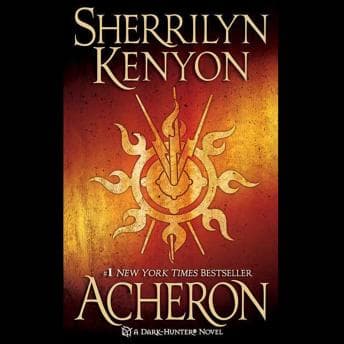
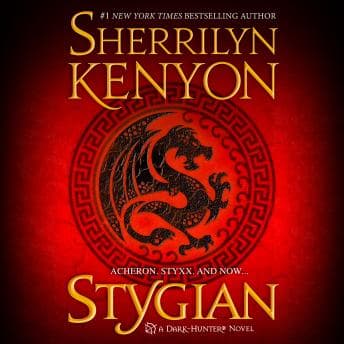
Look, the Dark-Hunter series is basically paranormal romance with a magic system complex enough to make Sanderson nod approvingly. Stygian is book 29, and Sherrilyn Kenyon has built something genuinely impressive here—we're talking thousands of years of interconnected mythology, gods, demons, Daimons, and enough tragic backstory to fuel a dozen D&D campaigns.
Twenty-Six Hours of Daddy Issues (Cosmic Scale)
Urian is the kind of character my tabletop group would spend three sessions debating. Son of the Daimon king Stryker, raised to be a weapon, falls in love with the wrong woman, loses everything, rinse and repeat for several thousand years. The emotional beats hit hard—his relationship with his wives, the discovery that Styxx and Bethany are his biological parents, the constant push-pull between monster and man.
But here's the thing. Kenyon does this weird cut-and-paste thing where she pulls passages directly from previous books. Like, entire scenes. If you've been with this series, you'll recognize chunks of Styxx and Acheron showing up here, and it creates this disjointed feeling. The timeline gets wonky. Character development sometimes contradicts what you remember. It's like watching a really ambitious D&D actual play where the DM keeps retconning their own lore.
Holter Graham: A Tale of Two Performances
Graham does genuinely impressive work with the female characters. Urian's first wife gets this shrill, almost brittle quality. Sarraxyn sounds loving, warm. Phoebe has this youthful energy that shifts as she matures. He ages Urian's voice across millennia in a way that actually tracks emotionally.
But then there's Simi.
Oh god, Simi.
Her voice is this shrieking, whiny thing that had me literally turning down my volume. In a 26-hour audiobook, every Simi scene became an endurance test. And Styxx? He sounds drunk. Not tortured, not regal—just... drunk. It's inconsistent in a way that pulled me out of otherwise solid emotional moments.
The Lore Dump Dilemma
If you don't like info-dumps, this isn't for you (but you're wrong). Nightfall does similar heavy lifting with its mythology, though at least that one doesn't assume you've read 28 prior books. Kenyon's world-building is genuinely ambitious—the interconnection between Greek gods, Atlantean mythology, and her own Daimon/Dark-Hunter cosmology rewards the dedicated reader. But Stygian assumes you've read... everything. The references to prior books are constant. Characters appear expecting you to know their entire history.
This is not a jumping-on point. This is the kind of book where I had to pause and pull up the wiki three separate times, and I've read like eight of these. For series veterans, it's a payoff book. For newcomers, it's homework.
Who's Rolling Initiative Here
This is for you if: You've been with the Dark-Hunters since the beginning, you love tragic anti-heroes with complicated family trees, and you're willing to commit 26 hours to emotional devastation.
Skip it if: You want a standalone, you're new to the series, or high-pitched character voices make you want to yeet your earbuds into traffic.
The progression is satisfying if you're invested. Urian's arc from weapon to wounded soul to something approaching redemption genuinely moved me. But the structural issues—the recycled passages, the timeline inconsistencies, Graham's uneven performance—keep this from being the definitive Dark-Hunter experience.
My Thesis Can Wait (It Really Can't)
Stygian is a 26-hour commitment that rewards series loyalty but punishes casual listening. Graham's performance ranges from emotionally gutting to genuinely irritating, sometimes in the same chapter. The magic system is chef's kiss when Kenyon's firing on all cylinders, but the cut-and-paste structure undermines what should be an epic character study. Ready Player One has that same ambitious world-building energy, though Wheaton's narration holds together way better than Graham's uneven work here.
My D&D group would love Urian as an NPC. Complex motivations, tragic backstory, morally gray decisions. But they'd also spend half the session arguing about timeline contradictions.
I'm giving this a solid recommendation for the faithful, with serious caveats. Now if you'll excuse me, I have a thesis to pretend to work on while actually queuing up the next Dark-Hunter book.