
I was up past midnight on a Tuesday - not grading papers for once, but sitting at the kitchen table with a cup of tea that had gone cold an hour ago, listening to a psychologist from 1896 try to explain why people find God. Denise had already gone to bed. The house was quiet. And honestly, that was the right way to hear this.
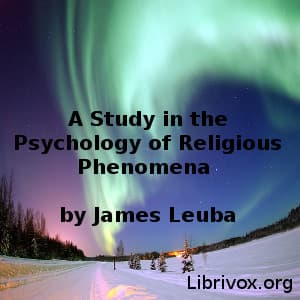
James H. Leuba's A Study in the Psychology of Religious Phenomena is not a book people stumble into. It's an academic essay from the late nineteenth century, written when psychology was still trying to prove it deserved a seat at the grown-up table alongside theology and philosophy. Leuba wanted to understand religious conversion - not as a spiritual event, but as a psychological process. And he was doing this in 1896, decades before anyone had a vocabulary for cognitive science. The ambition alone is worth your attention.
The Anatomy Lab of the Soul
What struck me immediately is how Leuba structures his analysis like a dissection. He breaks conversion into six phases: the Sense of Sin, Self-surrender, Faith, Joy, the Appearance of Newness, and the Role of the Will. Each gets its own careful treatment. He's not hostile to religion - he's genuinely curious about the mechanism. Why does the convert feel crushing guilt before the breakthrough? Why does surrender feel like dying and waking up at the same time?
The case studies carry the weight here. Leuba draws on figures like St. Augustine, John Bunyan, John Wesley, and Jonathan Edwards - names my AP students would recognize from their American lit textbooks - alongside lesser-known converts like Samuel H. Hadley and Colonel James Gardiner. Each story serves as evidence for a particular phase. Bunyan's prolonged spiritual agony illustrates the grinding machinery of guilt. Wesley's Aldersgate experience becomes a specimen for the sudden joy that follows surrender. Leuba isn't dismissing these experiences. He's asking: what's happening in the mind when this occurs?
This reminds me of what Hemingway said about writing true sentences - Leuba is trying to write true sentences about something most people in his era considered beyond the reach of science. Whether he succeeds is debatable, but the attempt is fascinating.
Curt Walton and the Challenge of Reading Someone Else's Century
Now, let's talk about the audio. This is a LibriVox recording, which means volunteer narration, and Curt Walton handles it with steady competence. He reads clearly, maintains an even pace, and doesn't try to dramatize what is essentially a scholarly monograph. That's the right call. You don't want theatrical flourishes in academic prose from 1896 - you want clarity.
But here's the thing: Leuba's prose is dense. Victorian academic English has sentences that run for entire paragraphs, subordinate clauses nesting inside each other like Russian dolls. Walton reads them faithfully, but there are moments where the syntax is so knotted that I had to rewind and parse the sentence myself. That's not really Walton's fault - it's the nature of the text. A more interpretive narrator might have used pacing to untangle some of those syntactic knots, adding breath where Leuba didn't bother with commas. But for a free recording of a century-old academic text, this is solid work.
At three hours and forty-five minutes, it's a manageable commitment. I'd recommend dedicated listening, though. This isn't background material. I tried listening while sorting through a stack of sophomore essays and caught myself reading a student's paragraph about The Great Gatsby while Leuba was explaining Jonathan Edwards's theology of grace. Those two things should probably not occupy the same brain space.
Who This Is Actually For
If you're looking for spiritual comfort or devotional reading, this isn't it. Leuba is analyzing faith the way a biologist analyzes tissue samples. Some believers will find that reductive. Some will find it illuminating. If you loved William James's The Varieties of Religious Experience - published six years after this essay - Leuba is the appetizer course. James actually cites Leuba, and you can see the intellectual lineage clearly. This is its spiritual successor in reverse: the predecessor that laid groundwork for the more famous work.
My students would hate this. I love it. Not because it's easy or entertaining, but because it represents a moment in intellectual history when someone looked at the most private human experience - the encounter with the divine - and said, "But what's actually happening here?" That question still matters.
The prose deserves to be savored, even when it fights you. Especially when it fights you. I had a similar feeling reading Jesus on Trial — another book that approaches faith as something to be examined rather than simply received, though from a very different angle and with a very different conclusion.
Worth Pausing the Faculty Meeting For?
Honestly? Only if you're a specific kind of listener. If you're interested in the history of psychology, the psychology of religion, or the intellectual culture of the 1890s, this is a quiet gem. The LibriVox production is clean and functional. The text is demanding but rewarding. And at under four hours, it respects your time more than most academic works from this period.
But I can't pretend this has broad appeal. It's a scholarly essay from 1896 read by a capable volunteer. The audience is narrow. If you're in that audience, though - and you probably know if you are - this is well worth the listen.