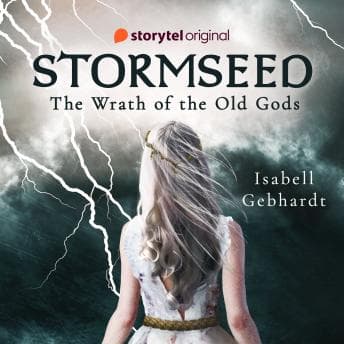

Look, I'll be honest—I started this one expecting generic fantasy romance and ended up genuinely invested in the world-building. That doesn't happen often with books that lead with "passion and power" in the description. (Yes, I judged the book by its blurb. We all do it.)
Stormseed: The Wrath of the Old Gods sits in this interesting space between romantic fantasy and elemental magic system fiction. Princess Dandara discovering she's half-goddess with wind powers? That's basically a character concept I'd approve for my D&D table. The magic system here isn't Sanderson-level with hard rules and limitations, but it's got enough structure that you understand what's at stake when Dandara starts manipulating the elements.
A Kingdom That Feels Lived-In
Here's where Isabell Gebhardt surprised me. The kingdom she's built has texture. You've got the old gods versus... well, whatever's opposing them (good and evil are at war, as the description says, though it's more complicated than that once you're in it). The mythology layers in gradually rather than dumping everything in chapter one. Ship of Magic takes a similar approach to world-building, though Hobb gives you way more pages to absorb it all. And honestly? If you don't like info-dumps, this approach will work for you—but I'm the guy who reads Silmarillion appendices for fun, so I wouldn't have minded more lore.
The half-human, half-divine heritage thing has been done before—we've all read our Percy Jackson, we know the tropes—but Dandara's struggle with identity feels grounded. There's more emotional weight here than the chosen-one setup in Midnight Line, where Reacher's just inherently capable without the existential baggage. She's not just "special" for the sake of being special. There are consequences to what she is, and those consequences drive the plot forward.
Antonia Whillans Behind the Mic
Okay, so here's the thing about the narration. Antonia Whillans does solid work differentiating characters, and her pacing keeps the 11-plus hours moving. I listened to most of this while pretending to work on my thesis (sorry, Dr. Patel), and I didn't zone out during the slower romantic moments—which is saying something, because romance-heavy sections can drag for me if the narrator doesn't sell the emotional beats.
That said, there are moments where the tone feels slightly off. Not enough to pull me out of the story completely, but noticeable. It's like when a narrator is clearly reading a scene differently than how I imagined it in my head. Minor complaint, really. She nails the important moments—the confrontations, the reveals, the scenes where Dandara's powers manifest.
Where It Gets Complicated
I can't pretend this book is perfect. The romance feels rushed in places. Like, we go from tension to emotional declarations faster than I'd like. My D&D group would call this "speedrunning the relationship arc." Some readers will love that—they're here for the payoff, not the slow burn. But if you're the type who wants fifty chapters of pining before anyone admits feelings? This isn't that.
The characters also stay a bit surface-level. Dandara has depth, sure, but some of the supporting cast feel more like plot devices than people. It's not a dealbreaker, especially at 11 hours—you don't have the runtime of a Stormlight Archive to develop everyone—but it's worth knowing going in.
World-building confusion hits early, too. The first couple hours require some patience as you figure out the cosmology and political landscape. I stuck with it because I'm a sucker for pantheon-based magic systems, but I could see someone bouncing off the opening.
Roll for Initiative (Or Don't)
If you liked A Discovery of Witches or The Night Circus—that blend of romance and supernatural world-building—this is in your wheelhouse. It's not as literary as Morgenstern, but it's got that same atmospheric quality where the setting becomes a character. Fantasy romance readers who want actual stakes beyond "will they get together" should give this a shot. There's a war happening. Gods are involved. People might die. (I won't spoil whether they do.)
Skip it if you need your magic systems explained with scientific precision, or you want deeply developed side characters. The progression is satisfying once you're in it, but it asks for patience early.
I listened to this instead of writing my thesis, and I don't regret it. At 11 hours, it's a solid week of commute listening. Not life-changing, but genuinely enjoyable. Sometimes that's exactly what you need.