
The "One Idea" Problem
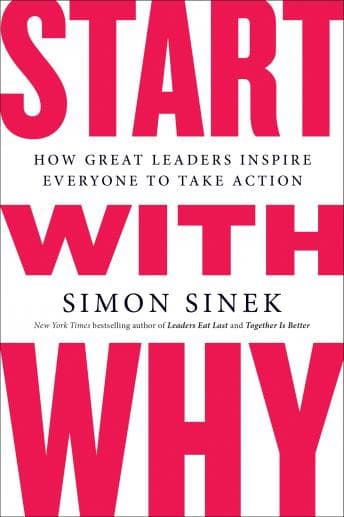
I was sitting in an Uber at 11 PM, staring at a client's pitch deck that used the word "synergy" six times on one slide. I needed a palate cleanser. Something fundamental. So I re-downloaded Start with Why. (Yes, re-downloaded. I first listened to this when I was a junior associate trying to impress a partner who wore vests to work.)
Here's the thing about Simon Sinek: The man is a hammer, and everything looks like a nail that needs a "Why."
And honestly? He's not wrong.
But listening to this again, fully caffeinated and cynical, I realized something. This is the most successful stretched-out blog post in history. The core concept—the Golden Circle—is brilliant. It's essential. It's what I scream at my startup founders when they start rambling about features before telling me why anyone should care.
But does it need to be 7 hours and 18 minutes? Absolutely not.
Apple, MLK, and the Wright Brothers Walk Into a Bar...
Let's talk about the repetition. If I hear one more business book use Apple, Martin Luther King Jr., and the Wright Brothers as the only examples of success, I'm going to lose it.
Sinek leans on these crutches so hard I was worried they'd snap.
We get it. Steve Jobs thought differently. The Wright Brothers had passion.
At 1.0x speed, this would be torture. I cranked it to 2.5x just to get through the redundancy. It feels like Sinek had a tight 45-minute thesis and a publisher who said, "Great, Simon, now give me 200 more pages."
This is where my parents would roll their eyes. They didn't have a "Why" written on a whiteboard. Their "Why" was "pay the rent" and "send David to a good school." Sinek's philosophy is a luxury product. It works for branding, sure. But for survival? It's a bit fluffy.
Author Narration: The Saving Grace
That said—and Jenny tells me I need to be nicer—Sinek is a fantastic narrator.
Since he wrote it, he sells it. You can hear the conviction. He's not reading a script; he's preaching a gospel. His voice has this earnest, optimistic cadence that makes you want to nod along even when he's repeating himself for the fourth time. He brings that same conviction to Leaders Eat Last, though that one at least has more varied examples.
He sounds like that one friend who just got back from a silence retreat and really, really wants you to know about mindfulness. It's engaging. It's polished. If you've never heard the concept before, his delivery will likely fire you up.
Bottom Line
Here's the ROI calculation:
The Concept: 5/5 stars. Critical for leadership.
The Book Length: 2/5 stars. Way too much padding.
The Solution: Watch his TED Talk. It's 18 minutes. It covers 90% of the value of this book. It's free.
Who should listen: First-time founders, new managers, or anyone who's never encountered the Golden Circle concept and needs long-drive material. Who should skip: Anyone who's already seen the TED Talk or read a summary—you've got the goods.
If you absolutely must listen to the book (maybe you need to kill time on a long drive and want to feel productive), buy it. But don't feel bad about zoning out during the middle three hours. You aren't missing anything new.
(Don't tell Simon I said that. The man is an institution. But institutions are usually slow.)