
So here's the thing. I've spent my entire academic career studying why people believe what they believe — the narratives we construct around identity, behavior, self-image. And diet books? Diet books are some of the most psychologically fascinating documents in modern publishing. They're not really about food. They're about control, shame, belonging, and the desperate human need to find One Simple Answer.
I was chopping onions for a chana masala at 9 PM on a Tuesday when I started this one, and I almost want to say the experience of cooking a starch-heavy Indian dish while listening to a book that essentially validates that exact meal was... deeply satisfying on a level my therapist would probably want to unpack.
The Psychology of "You've Been Lied To"
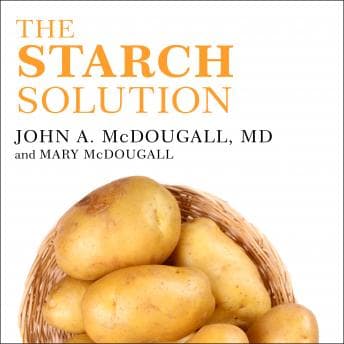
Dr. McDougall's central argument is straightforward: starches — potatoes, rice, corn, beans — should be the foundation of your diet, not the enemy. He points to populations worldwide (Okinawans, rural Chinese, indigenous Peruvians) who thrived on starch-heavy diets and experienced dramatically lower rates of heart disease, diabetes, and obesity. The protagonist of this book — because yes, I'm calling McDougall a protagonist, he's constructed himself as one — exhibits classic whistleblower framing. He positions himself as the lone truth-teller against a corrupt system of meat and dairy industry propaganda.
And honestly? The research he cites isn't fringe. The epidemiological data on plant-based populations is well-documented. Where I found myself asking: why does McDougall frame everything so absolutely? There's almost zero acknowledgment of individual variation, metabolic complexity, or the psychological barriers to dietary change. He mentions people who've reversed Type 2 diabetes on his program, and he presents case studies from his residential program in Santa Rosa, California — patients arriving on medications and leaving weeks later without them. Powerful stuff. But the narrative is so clean, so frictionless, that my BS detector starts pinging. Real behavioral change is messy. The research actually shows that sustained dietary shifts require addressing emotional eating patterns, social pressures, food access issues. McDougall breezes past all of this like willpower is just... a switch you flip.
The 7-Day Sure-Start Plan and the recipe section (nearly 100 recipes, though obviously you're not flipping through them in audio format) feel more useful in print. Listening to ingredient lists while jogging through Cambridge the next morning was — not ideal. "One cup of diced celery, half cup of..." No. Just no.
Stephen R. Thorne and the Adequate Problem
Here's where I have to be honest. Thorne is a professional narrator with AudioFile Earphones Awards to his name, and his delivery is clean, well-paced, and clear. He sounds like a competent newscaster reading you a very long health segment. And that is precisely the problem.
McDougall's writing already has a somewhat clinical, lecture-style quality. It needs a narrator who can inject some warmth, some conversational energy — someone who sounds like they actually enjoy eating potatoes rather than describing them from a podium. Thorne doesn't do that. There were stretches, particularly through the middle chapters where McDougall is debunking protein myths and walking through biochemical pathways, where the combination of dense content and flat delivery genuinely threatened to put me to sleep. I caught myself zoning out during a section on calcium absorption and had to rewind twice. And I was actively moving — I can't imagine trying this on a couch.
It's not bad narration. It's adequate narration applied to material that desperately needed more than adequate.
Who This Is (and Isn't) For
If you're already plant-curious or vegan-adjacent and want validation with medical credentials behind it, McDougall delivers that in spades. If you're looking for a nuanced — sorry, a complex exploration of nutritional science that acknowledges competing evidence? This isn't it. McDougall is building a case, not conducting a seminar. He's persuading, not educating. And psychologically, that's a fascinating distinction. He knows exactly what narrative he's constructing. The construction of a personal narrative that rewrites identity around a single truth — I kept thinking about how Viola Davis does exactly that in Finding Me, and why that kind of evangelism, whether it's about diet or self-reclamation, lands so differently when it's grounded in genuine vulnerability rather than certainty.
But I'll say this: the core message — that populations eating starch-centered diets have historically been healthier than populations eating Western diets — isn't wrong. It's the absolutism that made me squint. My mother has been making rice and dal every night for forty years and she's doing just fine, so maybe McDougall and my maa are on the same page. She'd like that.
My Clinical Notes
This is a fascinating case study in health evangelism — a book that's part medical argument, part conversion narrative, delivered with the fervor of someone who genuinely believes they've found The Answer. The audio format strips away the recipe utility (get the print version for that), and Thorne's narration doesn't compensate with enough personality to carry the drier sections. Worth hearing if you want the argument. But maybe bump it to 1.25x and keep your hands busy.