
I was walking the lakefront with Denise last Saturday - one of those rare late-spring Chicago mornings where the lake actually looks blue instead of angry gray - when Jyn Erso's mother got murdered in the first fifteen minutes and I had to pretend the wind was making my eyes water. Denise gave me a look. She knows.
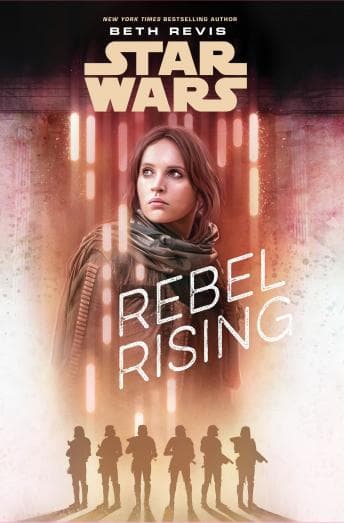
Here's the thing about Rogue One: it's the best Star Wars movie that nobody's protagonist got enough screen time. Jyn Erso shows up already hardened, already cynical, already ready to die for something, and we're just supposed to... accept that? Beth Revis clearly felt the same frustration, because Rebel Rising is essentially the missing homework assignment - ten hours filling in every scar, every betrayal, every reason Jyn became the woman who stared down a Death Star.
The Education of a Child Soldier
This is a coming-of-age story wearing Star Wars armor, and I mean that as genuine praise. Revis structures Jyn's childhood with Saw Gerrera as a slow radicalization - she's five when he takes her in, and by her teens she's running missions, building explosives, living in caves. The book doesn't flinch from the moral ugliness of that. Saw is simultaneously her savior and the man who stole her childhood, and Revis lets that contradiction breathe without ever resolving it neatly.
What got me - what really got me, grading a stack of sophomore essays at midnight with this playing - is how the book handles Jyn's shifting understanding of loyalty. She doesn't learn one clean lesson. She learns that the people who love you can also use you, that causes eat people whole, that being abandoned by someone who claims to protect you is worse than being abandoned by an enemy. My students would hate this. I love it. There's no clean arc. There's just a kid getting harder and harder until the softness is so far buried she forgets it exists.
If you loved Ender's Game for its unflinching look at what adults do to children in wartime, this is its spiritual successor - just with blasters and kyber crystals. I kept thinking about Wielding a Red Sword too - another book where a good person gets ground down by a war that was never really theirs to fight, and where the moral cost accumulates so quietly you almost miss it happening.
Rebecca Soler and the Trouble With Men
Let's talk about the narration, because it's genuinely split down the middle for me. Soler's Jyn is excellent. She captures the progression from frightened child to wary teenager to emotionally shutdown young woman with real precision - the voice doesn't just age, it closes off. You can hear Jyn building walls. The emotional delivery during the betrayal sequences hit harder than they had any right to for a Star Wars tie-in novel.
But the male voices. Look, I've listened to enough audiobooks to know this is the universal trap for solo female narrators doing genre fiction with lots of male characters, and Soler falls right into it. Saw Gerrera sounds like a stern uncle rather than a guerrilla warlord. Other male characters blur together - there were stretches in the second half where I genuinely lost track of which resistance fighter was speaking. Compared to someone like Mark Thompson, who can shift between alien species and make you buy every one, Soler's range just doesn't extend far enough for this particular cast.
The narrator understands that pause is punctuation - she's good at the silences, the held breaths, the moments where Jyn is processing something terrible. That emotional intelligence in the performance is real. It's the character differentiation that lets her down.
The production itself, though? The Star Wars sound effects layered throughout - lightsaber hums, blaster fire, that unmistakable Imperial alarm klaxon - are genuinely well deployed. They don't overwhelm the narration. They just keep you anchored in the universe. Worth pausing the faculty meeting for. (Sorry again, Principal Martinez.)
The Pacing Problem in the Back Half
Revis front-loads the emotional weight beautifully. The first five hours are tight, propulsive, heartbreaking in spots. But somewhere around hour six, when Jyn is on her own and drifting through the galaxy's underworld, the book sags. It's doing necessary work - showing us how isolation changes a person - but the pacing loosens in a way that made me reach for my phone more than once. The prose deserves to be savored in those early chapters. The later ones... could've used an editor with a sharper knife.
This is a book that made me care about Jyn Erso more than the actual movie did - and then tested my patience getting her to where Rogue One begins.
Who This Is Really For
Star Wars fans who left Rogue One wanting to understand why Jyn was the way she was. People who appreciate character-driven stories that happen to have blasters in them. Parents of teenagers, honestly - there's something uncomfortably real about watching a young person get radicalized by someone who genuinely loves them. If you're looking for space battles and action set pieces, this isn't your book. If you want to sit with the quiet devastation of a childhood stolen by war, pull up a chair.
Skip it if you need strong male voice performances to stay immersed. That's a dealbreaker for some listeners, and I get it.
The Grade I'd Write in the Margin
B+. Strong thesis, excellent emotional evidence, needs tighter pacing in the body paragraphs. Soler's performance carries the heart of it even when her range can't carry the full cast. I listened at 1.0x for the first half - because the author chose those words - and bumped to 1.15x for the back stretch. No shame. The story earned my attention. The middle third just had to work a little harder to keep it.