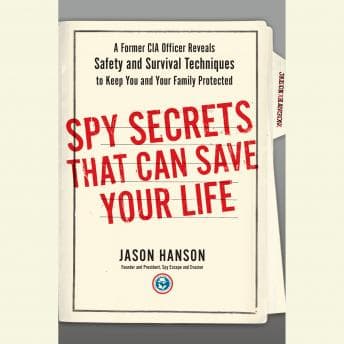

I was halfway through my morning jog along the Charles River when Jason Hanson casually explained how to escape from zip ties. Just... casually. Like he was telling me about the weather. And I'm standing there on the path, probably looking suspicious to passersby, genuinely wondering if I should practice this later. (I did not. My therapist already has enough to work with.)
Look, here's the thing about self-help books that promise to teach you spy secrets: they're usually either wildly impractical or so basic they're insulting. This one? It's neither. Hanson walks this fascinating line between legitimate CIA tradecraft and suburban dad energy, and honestly, it works way better than it should.
The Psychology of Preparedness (And Why It Actually Matters)
What makes this book compelling from a behavioral perspective is that Hanson isn't really teaching you to be a spy. He's teaching you to think like one. The concept he calls "positive awareness"—basically a heightened attentional state toward environmental threats—is legitimate psychology dressed up in tactical clothing. It's the kind of deliberate skill-building that Mastery explores in depth, though Greene applies it to creative fields rather than threat detection. We know from research that most people operate on autopilot, filtering out enormous amounts of sensory information. Criminals know this too. They're looking for the person scrolling their phone in the parking garage, not the one who's scanning exits.
Hanson breaks down threat assessment in ways that feel accessible without being paranoid. There's a section on reading body language and detecting deception that, okay, isn't exactly cutting-edge research (Paul Ekman did this decades ago), but he translates it into practical scenarios. Job interviews. Car dealerships. First dates. The man understands his audience isn't conducting interrogations—they're trying to figure out if their contractor is lying about the timeline.
Some of the content is genuinely useful. The home security stuff? Practical. The escape techniques? Probably overkill for 99% of listeners, but fascinating from a pure "how does this work" standpoint. The travel safety protocols? I found myself mentally cataloging which hotels I've stayed in that violated his rules. (Most of them. Yikes.)
When the Suburban Dad Starts Selling
Now. Here's where I have to be honest. The first chapter has some self-promotion that made me wince. Website mentions, references to his other products, the whole thing. It's not egregious, but if you're sensitive to that kind of marketing-embedded-in-content approach, you'll notice it. I noticed it. I kept listening anyway, because the actual information was solid enough to justify pushing through.
The other thing—and this is more of a personality mismatch than a flaw—Hanson narrates his own book, which brings authenticity but not exactly theatrical dynamism. He sounds like a competent guy teaching a seminar, not a voice actor bringing drama to every sentence. For instructional content, this actually works. I wasn't looking for entertainment; I was looking for information I could actually use. But if you want your audiobooks to feel cinematic, this isn't that.
Agency in an Unpredictable World
Psychologically speaking, this book serves a specific need: the desire for agency in an unpredictable world. Anxiety about safety is often about feeling powerless. Hanson's approach—teaching specific, actionable skills—addresses that powerlessness directly. Whether you ever need to pick a lock or escape from a car trunk (god, I hope not), knowing you could provides genuine psychological benefit.
The research actually shows that perceived self-efficacy reduces anxiety more effectively than reassurance. Hanson seems to understand this intuitively. He's not saying "don't worry, you're probably fine." He's saying "here's exactly what you'd do if you weren't fine." Different approach. More effective one.
Who should listen: Anyone who wants practical safety skills without the doomsday prepper vibes. Frequent travelers, people living alone, parents wanting concrete protocols rather than vague worry. Who should skip: If you already struggle with hypervigilance or anxiety disorders, this might tip you toward obsessive threat-monitoring rather than healthy awareness. Hanson doesn't address that distinction, and it's worth considering.
Reference Material, Not a One-Time Listen
Probably won't revisit this cover to cover, but I've already mentally bookmarked sections. The travel security chapter before my next conference. The home security stuff when I eventually move. It's the kind of book that functions better as a reference than a single playthrough.
At six hours, it's a reasonable time investment for the practical value. Hanson's credibility is real—the man was actually CIA, not some internet survivalist—and that expertise comes through in the specificity of his advice. He knows what he's talking about. He's just not always the most dynamic person to listen to.
But honestly? I'd rather have boring-but-credible than entertaining-but-useless. And now I know how to escape zip ties. So there's that.