
"The reliability of numbers: This Jess understands."
That line hit me somewhere around hour two, while I was pretending to review lesson plans during my prep period. (Sorry, Principal Martinez. Again.) Because here's the thing—I'm a literature guy. I believe in the messy, unquantifiable nature of human connection. The idea that an algorithm could predict love? My inner romantic wanted to scoff.
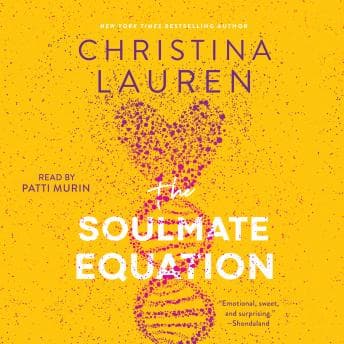
But Christina Lauren—and honestly, Patti Murin's delivery—made me a believer. At least for ten and a half hours.
When Statistics Meet the Heart
Look, I teach high school English. I've watched teenagers fall in love over shared earbuds and cafeteria pizza for two decades. Love doesn't follow formulas. Except... what if it kind of does? That's the tension this book plays with so well, and it's smarter than your average rom-com.
Jess is a single mom, a data scientist, and deeply skeptical of anything she can't measure. River Peña is the founder of GeneticAlly, the DNA-matching company that says they're 98% compatible. He's also—in Jess's initial assessment—insufferably cold. The enemies-to-lovers setup isn't new, but the execution here is warm without being saccharine. The Viscount Who Loved Me pulls off that same trick—enemies who become lovers through wit rather than contrivance. Christina Lauren knows how to write banter that actually sounds like two intelligent people circling each other, not just trading quips from a screenwriter's notebook.
My students would probably call this "low-stakes." They'd be wrong. There's real tension here—financial precarity, family wounds, the terror of trusting someone after you've been abandoned. But it never becomes heavy. Little Fires Everywhere walks that same tightrope—serious themes handled with a light enough touch that you keep turning pages. It's the literary equivalent of a really good cup of coffee. Comforting, but with depth.
Patti Murin Nails the Landing
I've listened to a lot of romance audiobooks. (Don't tell my podcast listeners. They think I only consume Faulkner and Hemingway.) And narration can make or break the genre. Too breathy, and it becomes parody. Too flat, and the chemistry dies.
Murin finds the perfect register. Her Jess is smart and guarded but not cold. Her River starts stiff—intentionally so—and you can hear the thaw in his voice as the story progresses. That's not easy to do. That's performance art.
The secondary characters shine too. Jess's daughter Juno is adorable without being cloying—Murin gives her this earnest, slightly too-wise quality that rings true for any kid raised by a single parent who talks to them like a person. And the grandparents? Pops and Nana Jo feel like people I've met at parent-teacher conferences. Real. Lived-in.
The comedic timing deserves its own paragraph. There's a moment—I won't spoil it—involving a romance author character that had me actually laughing out loud during a faculty meeting. (Worth pausing the budget presentation for. Definitely.)
The Slow Burn That Actually Burns
Christina Lauren understands pacing. The romance builds through proximity, through forced interaction, through those small moments where you realize someone isn't who you thought they were. It's not rushed. It's not dragged out for artificial tension. It just... unfolds.
This reminds me of what Hemingway said about writing—the iceberg theory. What's unsaid matters as much as what's on the page. There are scenes here where Jess and River don't say the important thing, and you feel the weight of it. Murin lets those silences breathe. The narrator understands that pause is punctuation.
Is it predictable? Sure. You know where it's going. But so is a Beethoven symphony, and we still listen. The pleasure is in the journey, in the execution, in the small surprises along the way.
Who This Algorithm Matches (And Who It Won't)
If you want high drama, love triangles, or dark emotional turmoil—skip this. That's not a criticism. It's just not what this book is doing.
But if you want something warm and witty, something that respects both its characters and its readers, something you can listen to while grading papers at 11 PM without wanting to throw your headphones across the room? This is it.
My wife Denise and I walked the lakefront three days in a row to finish this. She doesn't usually do audiobooks, but she kept asking "what happened next?" That's the test, isn't it?
The prose deserves to be savored. I listened at 1.0x, obviously. But I could see 1.25x working if you're in a hurry. The production is clean, Murin's delivery is crisp, and the story moves.
If you loved The Rosie Project—and I did, back when it came out—this is its spiritual successor. Different premise, same heart. Smart people learning that love can't be fully understood, only experienced.
Class Dismissed
Worth pausing the faculty meeting for. Every time.