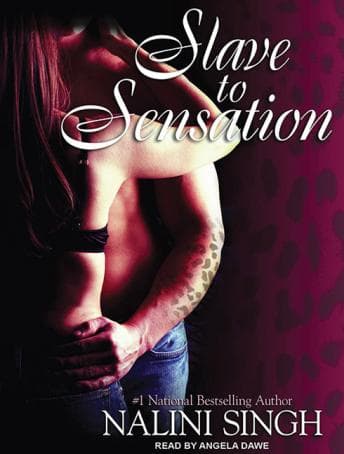

Look, I need to rant for a second about paranormal romance world-building. Half these books throw you into some supernatural society with zero explanation, like you're supposed to just know that vampires run the DMV or whatever. So when Nalini Singh drops you into the Psy-Changeling universe with its three distinct races—the emotionless psychic Psy, the shapeshifting Changelings, and regular humans caught in between—and actually takes the time to establish how this society functions? The magic system is chef's kiss. This is Sanderson-level world-building, except with more sexual tension and fewer bridge battles. Dune pulls off that same trick of making you believe in an entire society before the plot even kicks in.
I was supposed to be debugging my procedural generation code at 2 AM. Instead I'm seven hours deep into a romance between a psychic woman who has to hide her emotions or face "rehabilitation" (read: lobotomy) and a leopard alpha who's basically a walking pheromone. My thesis advisor would be so disappointed. Worth it.
When Your Narrator Understands the Assignment
Angela Dawe gets something crucial here: the entire book hinges on the contrast between Psy coldness and Changeling passion. Her voice for Sascha starts controlled, almost clinical, with this measured cadence that makes you feel how exhausting it must be to suppress every emotion. Then Lucas speaks and suddenly there's this low, seductive warmth that—okay, I'm a fantasy nerd, not typically a romance guy, but even I got it.
The differentiation between the two races is genuinely clever. Psy characters have this clipped, precise delivery. Changelings run warmer, more playful. You can hear the cultural divide before anyone explains it. That's good audio storytelling.
But here's where it gets messy: the DarkRiver pack has like a dozen named members, and by hour six I genuinely could not tell Dorian from Vaughn from Clay. They all blur into "generic protective leopard dude." Dawe handles the leads beautifully, but the supporting cast becomes audio wallpaper. Not a dealbreaker, but if you're the type who tracks every side character (hi, that's me with my D&D notes), prepare for some confusion.
The Pacing Problem Nobody Wants to Admit
At 9 hours 40 minutes, this isn't a massive commitment—I've listened to Stormlight books that are literally five times longer. But Singh front-loads a LOT of world-building exposition, and some listeners bounce hard off that. Me? I'm the guy who reads wiki pages for fun. Info-dumps are my love language. If you don't like info-dumps, this isn't for you (but you're wrong).
The middle third drags slightly—there's a murder mystery subplot that feels like it exists mainly to justify the romance leads spending time together. Which, fine, I get it, you need a plot. But the investigation itself never quite lands with the same intensity as the forbidden-attraction stuff. The payoff in the final two hours though? Satisfying. Singh clearly planned this as a series opener, and she plants seeds that I'm now genuinely curious about.
My D&D Brain Won't Shut Up About the Magic System
Okay so the Psy have this thing called the PsyNet—basically a psychic internet that connects all Psy minds, and if you get cut off from it, you die. That's such a good constraint! It's not just "they have mind powers," it's "they have mind powers but they're literally networked into a surveillance state that monitors their emotions." The worldbuilding implications are wild. What happens to Psy criminals? How do you have privacy? Can you have subversive thoughts? These are the same questions that made Dune so compelling—when your magic system has political consequences, suddenly everything matters.
Singh doesn't answer all of this in book one, but she clearly knows her own rules. The Changeling pack dynamics also feel internally consistent—there's hierarchy, there's territory, there's politics between different animal groups. My D&D group would love this. I'm already thinking about how to adapt the Psy-Changeling conflict into a campaign setting.
Who Gets the Character Sheet
This is for: romance readers who want actual world-building, fantasy fans curious about urban paranormal, anyone who likes the "emotionally repressed person learns to feel" trope (it's a classic for a reason). The audiobook format works well for immersive listening—I'd save it for a long coding session or road trip rather than background noise.
Skip if: you need action-heavy plots, you hate romance tropes, or you're allergic to slow-burn tension. Also maybe skip if you need perfect character differentiation in the audio—the pack members really do blend together.
Rolling Initiative on Book Two
I finished this at 4 AM. I have a thesis meeting in six hours. I'm already looking up the next book in the series because I need to know what happens with the PsyNet and whether certain side characters get their own stories. (They do. There are like fifteen books. My advisor is going to kill me.)
Dawe's narration isn't flawless—the inflection occasionally flattens during exposition-heavy sections, and those pack members remain stubbornly indistinct—but her handling of the central romance carries the whole thing. When Sascha finally starts cracking, when the emotional walls come down, you can hear it in Dawe's voice. That's the good stuff.
Yes, it's 40 hours. Yes, it's worth it. Wait, no, this one's only ten hours. But the series is 40+. Same principle applies.