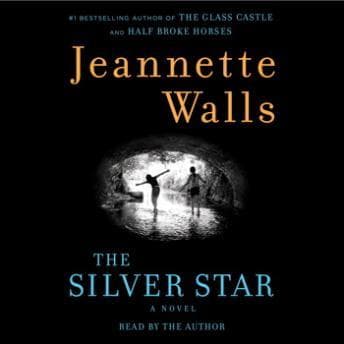

Jeannette Walls wrote a novel about abandoned kids, and it reads like she couldn't quite shake the ghost of her own memoir.
Let me explain. I picked this up because The Glass Castle wrecked me - Carlos found me in the driveway at 6:45 AM once, engine off, just sitting there with tears on my face because of that book. So when I saw Walls had written a novel with similar DNA - mother who abandons her kids, poverty, resilience, the whole survival-against-the-odds thing - I figured it'd hit the same way. It doesn't. But that's not entirely a bad thing.
Bean Holladay Is the Kind of Kid I'd Want on My Unit
The story is told through twelve-year-old Bean's voice, and Walls nails that specific brand of kid optimism that's half genuine and half survival mechanism. Bean and her older sister Liz get left behind in 1970 California when their mother Charlotte - an artist who's basically a watered-down Rex and Rose Mary Walls hybrid - takes off to "find herself." The girls end up on a bus to Virginia, moving into their Uncle Tinsley's crumbling family mansion, and that's where the story really starts breathing.
What got me was the dynamic between Bean and Liz. Bean adjusts. She makes friends, navigates the small-town politics of Byler, Virginia, figures out how to charm people. Liz - whip-smart, loves Poe, invents word games - can't. She withdraws. And if you've ever watched someone you love slowly dim while you're busy adapting, that contrast will gut you. As the oldest of five, I've been both of these sisters at different points. That recognition hit hard.
The Jerry Maddox storyline is where things get dark and where Walls shows real restraint. Maddox is the mill foreman - a bully with power over the whole town. When something happens to Liz in his car, the book doesn't sensationalize it. It just... lets the weight of it sit there. The way the town closes ranks around Maddox, the way people who should protect these girls choose not to - that's the part that made me grip my steering wheel until my knuckles went white.
When the Author Is the Narrator - The Trade-Offs
Here's the thing about Walls narrating her own novel: you get authenticity, but you lose some range. Her voice carries this quiet, steady quality that works perfectly for Bean's first-person narration. There's a warmth there, a matter-of-factness that feels earned from someone who lived through her own version of childhood chaos.
But - and I say this with respect - the character differentiation is thin. Uncle Tinsley, Charlotte, Maddox, the various townspeople... they all kind of sound like variations of Walls talking. It's not a dealbreaker because Bean is telling the story and filtering everyone through her perspective, but there were moments in dialogue-heavy sections where I had to rewind a few seconds to figure out who was speaking. Compared to The Glass Castle memoir, where Walls was narrating events she lived through and every voice felt distinct because they were her actual memories, the fictional characters here feel a little flatter in her mouth.
The pacing is deliberate. Some people might call it slow. I'd call it Southern - it takes its time the way small-town Virginia takes its time. That same unhurried, community-embedded rhythm is something I loved in At Home in Mitford, which also leans hard into small-town atmosphere as a feature rather than a flaw. At 7 hours 48 minutes, it's a comfortable length. I got through it across three post-shift drives plus one Sunday morning when I was making pancakes for the kids and needed something to keep me from falling asleep standing up.
The Comparison You're Already Making
Look, I'll say what everyone's thinking: this is not The Glass Castle. It's not Half Broke Horses either, which had this wild, galloping energy that made you forget you were listening to historical fiction. Silver Star is quieter. More contained. The 1970 Virginia setting gives it a slower pulse, and the fictional framework means Walls is reaching for something different than raw memoir truth.
What it IS, though, is a story about what happens when systems fail kids and kids have to become their own advocates. This is not how hospitals work, but it IS how families work - I've seen enough patients come through my unit with histories that rhyme with Bean and Liz's. The mom who disappears. The authority figure who abuses his power. The community that looks the other way. Walls gets that ecosystem right, even if the novel sometimes feels like memoir wearing a costume.
My mom would love this. (She still thinks I should've been a doctor, but she's a sucker for stories about resilient Filipino - well, okay, these girls are white Virginians, but the eldest-daughter-holding-everything-together energy is universal.)
Who Gets the Recommendation
If you loved The Glass Castle and want more Walls, go in with adjusted expectations. This is fiction that feels personal, not memoir that feels raw. If you're new to Walls, honestly? Start with The Glass Castle and come back to this one.
Perfect for that post-shift decompression - it's emotional but not so intense that it'll keep you up when you need to sleep. The 1970s setting and small-town atmosphere make it a solid commute companion. Maybe bump it to 1.25x if you find the pacing too leisurely in the middle chapters.
Carlos asked why I was quiet when I came in Tuesday morning. I didn't have a good answer. Sometimes a book just makes you think about your sisters, about your mom, about all the ways women hold families together when nobody's watching. That's what this one did.