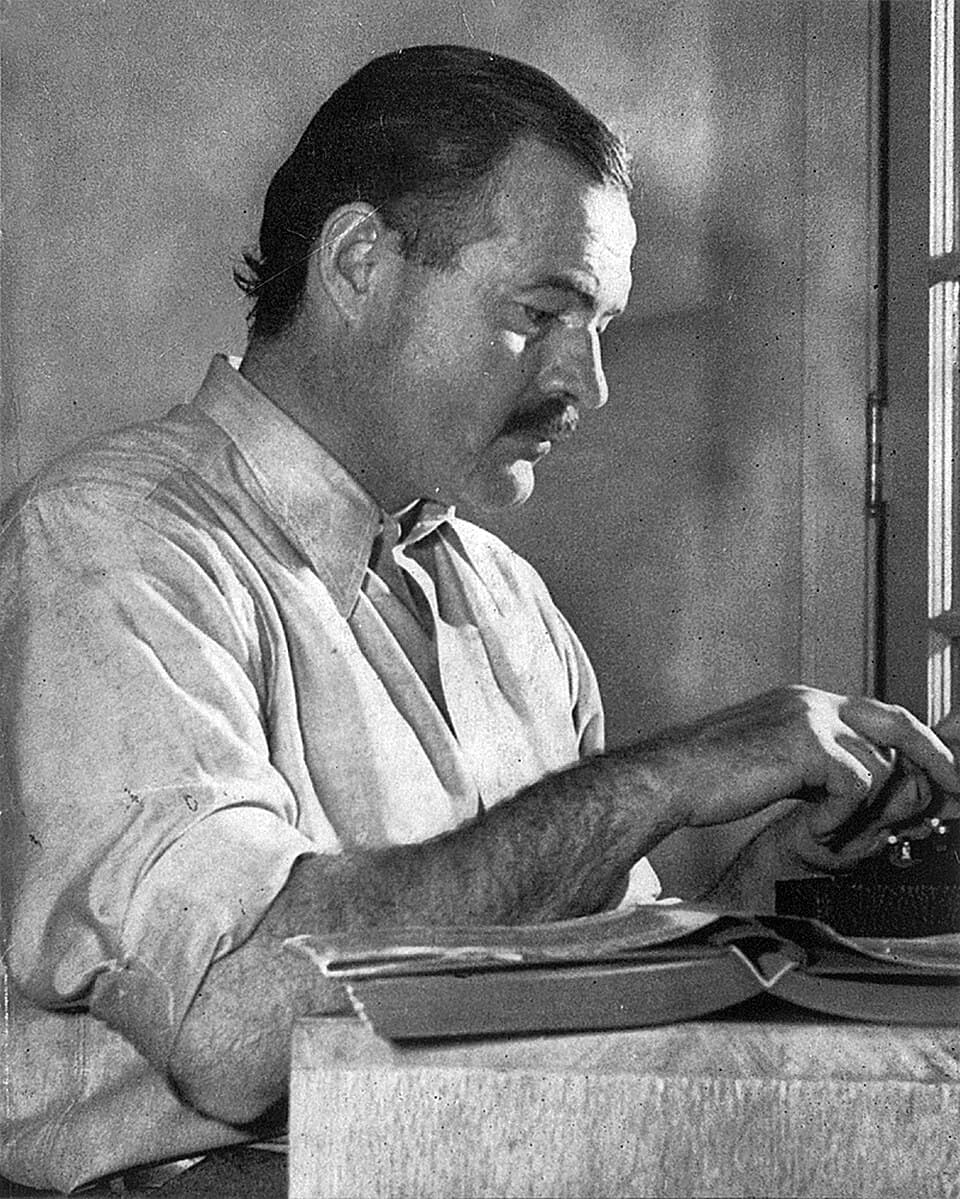

Everyone tells you Hemingway is simple. Clean sentences, short words, no adjectives. My students read "Hills Like White Elephants" and half of them say "nothing happened." And I just sit there thinking - everything happened. You just weren't listening.
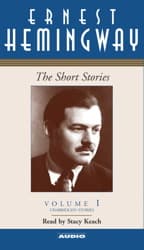
Stacy Keach gets this. That's the thing that knocked me sideways about this collection.
The Iceberg Has a Voice Now
I put this on during a Saturday morning walk along the lakefront with Denise. She had her own podcast going, I had Keach reading "The Short Happy Life of Francis Macomber," and somewhere around the moment Macomber finally stops being afraid - that flicker of pride and bewilderment and doom all compressed into a few lines - I actually stopped walking. Just stood there on the path while joggers swerved around me. Denise had to double back.
Here's what Keach does that most narrators wouldn't dare: he trusts the silence. Hemingway's iceberg theory - the idea that the dignity of movement in a story comes from what you leave out - requires a narrator who won't fill the gaps with vocal gymnastics. Keach reads these stories with this low, weathered authority that feels like a man who's seen the things Hemingway wrote about and doesn't need to prove it. I had a similar reaction to the RSC recording of Macbeth - that same sense of a narrator who inhabits the darkness rather than performing it. His voice on "The Snows of Kilimanjaro" carries this restrained grief that never tips into melodrama. You feel the dying man's regret in Keach's tone before you fully register it in the words.
This reminds me of what Hemingway said about prose being architecture, not interior decoration. Keach narrates like an architect. No ornament.
The Volume Problem Nobody Warns You About
But - and this is a real but - Keach's approach has a cost. His dynamic range is enormous. He'll drop to nearly a whisper for intimate dialogue, then come back to full projection for narration. On the lakefront, with wind off Lake Michigan and the occasional cyclist bell, I lost whole sentences. I had to relisten to chunks of "A Clean, Well-Lighted Place" because the old man's quiet desperation was literally too quiet.
This is a narrator trained for stage. He won an Emmy nomination and a Golden Globe for playing Hemingway himself, and you can hear that theatrical instinct in every story. In a quiet room at 11 PM while grading sophomore essays on The Great Gatsby? Stunning. In a car with the AC running? You'll be jabbing the volume button like it owes you money.
There's also this opening music situation. It's too long. It's unnecessary. It sits there before the stories like a dinner guest who won't stop talking about their drive over. Skip past it.
What the Author Is Really Saying (and Why Short Stories Matter)
Let's talk about what makes this collection worth the frustrations. Volume I includes the heavy hitters - "Francis Macomber," "Kilimanjaro," "Hills Like White Elephants" - but also some genuinely fascinating early work. You get "The Judgment of Manitou," which Hemingway wrote in high school. High school. I've read thousands of high school stories. I can tell you with absolute certainty that none of my students have written anything remotely close to this, and honestly, neither did I.
What's remarkable about hearing these stories chronologically is tracking how Hemingway learned to subtract. The early work is competent but full - too many words doing too many jobs. By the time you reach the mature stories, every sentence has been stripped to the load-bearing walls. Keach navigates this evolution beautifully, giving the early pieces a slightly looser energy and tightening as Hemingway tightens.
The prose deserves to be savored. I listened at 1.0x because rushing Hemingway is like fast-forwarding through a photograph. The whole point is the stillness.
Who Gets the Assignment and Who Gets Excused
This is for people who want to actually listen. Not background audio. Not gym fuel. Not road trip entertainment unless your road is very quiet and your passengers are very patient. If you loved Cormac McCarthy's spare brutality or Raymond Carver's domestic silences, this is their spiritual ancestor doing it first and doing it with a narrator who genuinely understands the material.
If you find Hemingway's machismo exhausting - the hunting, the drinking, the women who exist primarily to complicate men - I won't argue. Some of these stories have aged like milk in certain ways. But the craft? The craft is still the craft.
My students would hate this. I love it.
The Red Pen Stays Down
Keach's performance was a 2003 Audie Award Finalist, and I understand why it didn't win outright - that volume fading issue is a genuine accessibility problem for an audiobook. But when conditions are right, when you're in a quiet room and the world cooperates, this is performance art. Keach doesn't just read Hemingway. He interprets the pauses between the words, and the narrator understands that pause is punctuation.
Worth pausing the faculty meeting for. Just make sure you're somewhere quiet enough to hear it.