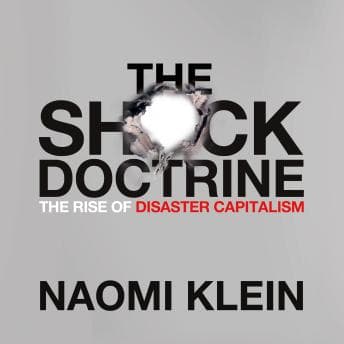

Look, I'm going to be straight with you - this book made me uncomfortable. And not in the way Klein probably intended.
I spent twenty-five years in the Army watching policy decisions get made in real-time during crises. I've seen the fog of war up close. So when someone comes along and draws neat little lines connecting every disaster to some grand capitalist conspiracy, my BS detector starts pinging. But here's the thing - and this is where it gets complicated - she's not entirely wrong either.
When the Research Hits Different
Klein's homework is impressive. I'll give her that. The woman clearly spent years digging through archives, interviewing sources, connecting dots from Chile in the 70s to Iraq in 2003. Some of this stuff I lived through. I was in Baghdad when Bremer's Coalition Provisional Authority was making decisions that - yeah, in hindsight - look pretty damn questionable. Privatizing everything while the country burned? I remember thinking that was strange even then.
But here's where Klein loses me sometimes. She builds these linguistic bridges that feel more like rhetorical sleight of hand than actual causation. "This happened, then this happened, therefore conspiracy." That's not how the world works. Sometimes it's just incompetence. Sometimes it's opportunism without a master plan. Having watched senior officers and civilians make decisions under pressure, I can tell you - most of the time, nobody's playing 4D chess. They're just trying not to drown.
Jennifer Wiltsie Keeps You Locked In
Nine hours is a serious commitment for a political economy book. Wiltsie earns her paycheck here. Her delivery is clean, professional, and she knows when to let Klein's more damning evidence speak for itself without overselling it. No dramatic pauses where they don't belong. No breathless urgency that would make the whole thing feel like a podcast rant.
I listened to most of this during a long drive to a client site in Houston - three hours each way. The narration kept me engaged even when I was arguing with Klein in my head. That's the mark of a good narrator. She's not trying to convince you of anything; she's just presenting the material and letting you wrestle with it yourself.
The Parts That Made Me Think
The sections on torture and psychological shock as economic metaphor? Those hit different when you've seen what stress positions do to a human being. Klein draws parallels between CIA interrogation techniques and economic shock therapy that are... uncomfortable. Not because they're wrong, necessarily, but because they force you to look at familiar events through a lens you might not want to use.
The Iraq stuff was hardest for me. I was there in 2004. I believed in the mission. Still do, mostly. But watching contractors make fortunes while my guys were getting blown up by IEDs - that part of her argument doesn't require any rhetorical tricks. That part I saw with my own eyes.
Where the Argument Breaks Down
Klein wants everything to fit her thesis. Every crisis, every policy decision, every privatization - it all has to connect back to Milton Friedman and the Chicago Boys. Reality's messier than that. Some of what she describes as coordinated disaster capitalism is just garden-variety corruption. Some of it is genuine belief that markets solve problems better than governments. Wrong belief, maybe, but belief nonetheless.
Some listeners have called this book propagandistic, and I get that criticism. There's a difference between investigative journalism and advocacy journalism, and Klein doesn't always stay on the right side of that line. She's making a case, not presenting evidence neutrally. Know that going in.
Mission Debrief
Worth your time? If you want to understand how economic policy gets made during crises - and you're willing to filter Klein's ideological lens - this is valuable intelligence. The historical research alone is worth the listen. Chile, Argentina, Poland, Russia, Iraq, Katrina - she covers a lot of ground, and most of it is well-documented. For a different perspective on American policy decisions, Farewell Address offers Washington's own warnings about foreign entanglements—warnings we clearly didn't heed.
But don't take it as gospel. Read it like an intelligence brief from a source with known biases. Extract the useful data, note the spin, form your own conclusions.
Ranger slept through most of this one - too much economics, not enough action. But I kept listening. That says something.
Who's this for: Anyone in security consulting, policy work, or international business. Understanding how others perceive American economic intervention - even if you disagree with that perception - is operationally relevant. Skip it if: You need your political economy served without a side of ideology, or you're looking for balanced analysis rather than a prosecutorial brief.







![Steve Jobs [unabridged audiobook] audiobook cover](/_next/image?url=https%3A%2F%2Fcovers.audiobooks.com%2Fimages%2Fcovers%2Ffull%2F9788499923406.jpg&w=1920&q=75)