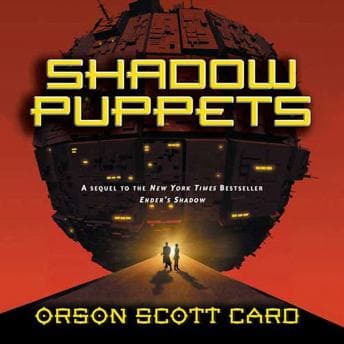

Everyone tells you Ender's Game is the peak of this universe. They're wrong. The Shadow series (Bean's story) is where the real complexity lives. But let's be real—Shadow Puppets is the awkward middle child of the saga. I expected high-stakes tactical genius; instead, I got a lot of teenagers arguing about geopolitics in a Winnebago.
And yet, I couldn't stop listening. Finished this on a Tuesday, somewhere between the Redwood City and Mountain View stops, and I realized exactly why.
When the Narrator Sounds Like a Burned-Out Sysadmin
I usually listen at 1.5x speed because my brain runs on caffeine and anxiety, but I actually slowed this down for David Birney. Here's the thing: Peter Wiggin (the Hegemon) is supposed to be this brilliant, manipulative mastermind. But Birney voices him with this specific, brittle exhaustion that hit way too close to home. He sounds like a Senior Staff Engineer who's been paging through a production outage for 48 hours straight. It's not "heroic" tired. It's "I hate all of you incompetent people" tired.
Stefan Rudnicki is here too, doing the interstitials and the deep, cloak-and-dagger stuff. If you've listened to any sci-fi in the last decade, you know Rudnicki. The man's voice is basically a warm server room. He handles the email exchanges and political documents with this gravity that makes boring administrative tasks sound like impending doom. (Which, honestly, they usually are.)
The Messy Middle-Child Syndrome
Look, the plot is messy. It's basically Bean and Petra on the run, trying to have kids (it's complicated, genetics, don't ask), while Peter tries to unify Earth. Less "space opera," more "political thriller with angry geniuses."
Card gets preachy here. There were moments where I literally rolled my eyes on the train. The dialogue can turn into these long philosophical lectures that feel like a blog post the author really wanted to write about society. If you're looking for the tight, efficient pacing of Ender's Shadow, this isn't it. This is the refactoring phase where the code is ugly but necessary to get to the next release.
But the character dynamics? Still gold. Watching Bean try to navigate a relationship while being the smartest person in the room (and knowing his clock is ticking) is gut-wrenching. The "science" of the Battle School kids integrating into real-world politics is fascinating, even if the execution drags sometimes.
Who's This For (And Who Should Skip)
If you're invested in Bean's tragic arc, you have to listen to this—it's the bridge to Shadow of the Giant. But if you bounced off the political maneuvering in Shadow of the Hegemon, this one doubles down on that. Skip if you want action; stay if you're here for the slow-burn tragedy of genius kids trying to fix a broken world.
My Stop's Coming Up
Is it perfect? No. It's talky. It wanders. But the production quality saves it. The multi-narrator approach keeps your brain engaged even when the plot slows to a crawl. Solid commute listen—you can zone out for a minute while dodging a tourist with a massive suitcase, tune back in, and they're probably still arguing about the same treaty.
Birney continues that same exhausted-genius energy in Shadow of the Giant, and honestly, by that point he sounds like he's ready to retire from saving humanity entirely. Just maybe keep your finger near the +30s skip button for the monologues.