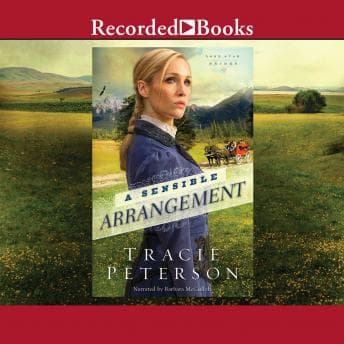

This is a marriage-of-convenience romance that forgot to put the romance in.
Okay, that's a little harsh. Let me back up. I was finishing a logo redesign at 2 AM last Thursday — the kind of project where you've been staring at kerning so long the letters start looking like alien symbols — and I needed something cozy and predictable to keep me company. Frida was asleep on my keyboard (helpful as always), and I figured a historical Christian romance about a Texas widow and a Denver banker sounded like exactly the right energy. Warm. Low-stakes. Maybe a little weepy.
And for about the first three hours, Sensible Arrangement delivered on that promise. Marty Dandridge Olson is grieving, she's stubborn, she's running from Texas because the place is soaked in loss for her. Jake Wythe needs a wife to satisfy a bank board requirement, which — absurd? Yes. But also very 1880s. They agree: no love, no mess, just a practical arrangement. I was in. I love a good "feelings weren't part of the deal" setup. Abuela would have been on the edge of her recliner.
When the Arrangement Stays a Little Too Sensible
Here's where it got complicated for me. The book spends a LOT of time on Denver high-society maneuvering and the banking subplot — missing money, accounting problems, Jake trying to prove he's not a thief. Which is fine as a B-plot! But it eats so much page time that Marty and Jake barely interact in meaningful ways for huge stretches. They live in the same house and somehow feel like neighbors who wave from across the yard. McCulloh pulls off much better emotional connectivity in Worthy Pursuit, where her narration does the heavy lifting the writing refuses to do here.
There's a moment — I think it's around hour six — where they basically acknowledge they have feelings for each other, and I genuinely paused my headphones and said out loud, "Wait, when did that happen?" Diego looked at me like I'd lost it. But seriously. The emotional shift from "this is a business arrangement" to "I think I love this man" happens almost entirely off-screen. You get told about it more than you feel it. And for someone like me, who listens specifically to feel things, that gap hurt.
I wanted to ugly-cry. I was ready to ugly-cry. The ingredients were there — a widow terrified of loving again, a man too proud to admit he's lonely, a secret ranch in Texas that represents everything Marty is running from. That ranch reveal should have been devastating! Instead it lands with a thud because the emotional groundwork between these two just isn't there yet.
Barbara McCulloh Earned That Audie Nomination Though
Here's what saved this from being a total letdown: Barbara McCulloh's narration. She got an Audie nomination for this performance, and honestly? I get it. Her voice has this warm, slightly scratchy quality — like a woman who's seen some things and has opinions about all of them. She gives Marty this quiet determination that the text sometimes undersells, and her Jake has a steadiness that made me like him even when the writing wasn't giving him enough to do.
She's particularly good with the secondary characters — there's a sharpness she brings to the Denver society women that made me smirk more than once. And her pacing during the faith-struggle scenes (Marty is angry at God, which, same girl) felt genuinely tender without tipping into preachy. McCulloh understood the assignment even when the material left gaps. Her work on Secrets has that same sharp ear for secondary characters, though it's a moodier listen overall.
That said — and this is minor — some of the male voices blur together a bit. Jake and the other men at the bank sounded similar enough that I occasionally had to rewind to figure out who was talking. Not a dealbreaker, but noticeable during those banking investigation scenes.
The Faith Thread Worked Better Than the Romance
Something I didn't expect: Marty's spiritual journey actually moved me more than the love story. Her anger at God for taking everyone she loved — her husband, her stability, her sense of home — felt raw in a way the romance didn't quite achieve. There's a scene where she's sitting in a church pew basically having it out with God internally, and McCulloh delivers it with this quiet, broken quality that finally — FINALLY — made my eyes sting. One crying session. Just one. (My spreadsheet is disappointed.)
The book is explicitly Christian fiction, so if that's not your thing, fair warning. But Peterson handles the faith elements with more complexity than I expected. Marty isn't gently guided back to belief — she fights it. I respected that.
Who This Is For (and Who Should Keep Scrolling)
If you love marriage-of-convenience setups and don't mind the romance being more of a gentle simmer than a slow burn — like, we're talking LOW heat here — you might enjoy this. If you're a Christian fiction reader who wants historical setting and a faith arc with some actual struggle, McCulloh's narration elevates this into a pleasant listen. And if you'd rather skip the historical aisle entirely, The Life She Wants delivers a much stronger emotional payoff. But if you're here for the romance? If you want that ache-in-your-chest, "just kiss already" tension? This book will leave you wanting.
My Heart Said Maybe, My Spreadsheet Said 1/47
I wanted to love this more than I did. The bones of a great story are here — the Texas ranch secret, the marriage built on practicality cracking open into something real, a woman learning to stop running. But the execution keeps the two leads at arm's length for too long, and by the time they come together, I'd already emotionally checked into the banking subplot (which, credit where it's due, was actually kind of interesting?). McCulloh's performance is the real draw. She made me care about characters the writing sometimes forgot to develop together. Abuela would have liked Marty's stubbornness, but she would've been yelling at the screen for these two to just talk to each other already.