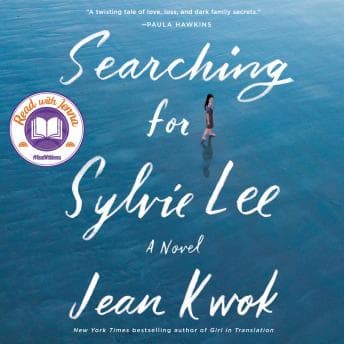

Everyone kept telling me this was a beach read. A page-turner. Something you devour in a weekend and forget by Monday.
They're wrong. Or at least, they're only half right.
I started this one during a faculty meeting about standardized testing protocols—Principal Martinez, I promise I was absorbing everything through osmosis—and finished it three nights later at 1 AM, grading forgotten, red pen dry. But calling this a beach read feels like calling *The Joy Luck Club* a mother-daughter bonding story. Technically accurate. Spiritually insufficient.
The Immigrant Story We Don't Tell Enough
Here's what Jean Kwok understands that too many contemporary novels miss: the immigrant experience isn't one story. It's at least three, running parallel, sometimes colliding, rarely fully understood by the people living them.
Sylvie, the golden eldest daughter, sent away to relatives in the Netherlands because her parents couldn't afford to keep her. Amy, the American-born baby who grew up in Sylvie's protective shadow. And Ma, their mother, carrying decades of guilt and sacrifice in a language her children barely speak. Three women. Three truths. Three narrators.
This is why we still read the classics—because they teach us that perspective is everything. The Light We Lost plays with perspective too, though in a completely different register—less about cultural fracture, more about the stories we tell ourselves about love. Kwok does something Faulkner would appreciate here (my students would hate this comparison, but I love it): she gives us the same family through fractured lenses, and the truth only emerges in the gaps between their stories.
Three Voices, Two Successes, One Problem
The audiobook production makes an ambitious choice: Angela Lin voices Sylvie, Samantha Quan voices Amy, Caroline McLaughlin voices Ma. Each narrator owns her character completely.
Angela Lin's Sylvie carries this careful, controlled quality—the voice of someone who learned early that perfection is armor. When Sylvie's chapters shift between her polished American self and her Dutch-raised past, Lin adjusts her accent work with the kind of precision that rewards careful listening. You hear the code-switching. You feel the exhaustion of it.
Samantha Quan's Amy is the emotional anchor. There's a scene—I won't spoil it—where Amy discovers something about her sister that reframes their entire childhood. Quan's voice cracks in exactly the right places. Not theatrical. Just... human. The terror, the humor, the desperate love of a younger sister who finally understands she never really knew her protector.
But then there's Caroline McLaughlin as Ma. And look, I understand the production decision. Maybe they wanted clarity. Maybe they worried about caricature. But Ma—a woman who immigrated from China, who raised daughters in a language she never fully mastered, whose entire character exists in the space between what she can say and what she feels—speaks with no accent whatsoever.
It's jarring. Every time Ma's chapters began, I had to mentally recalibrate. This woman who the text tells us struggles with English, who thinks in Chinese, who carries the weight of cultural displacement in every sentence—sounds like she grew up in Connecticut. The narrator brings a weightier, more poetic quality that works beautifully for the character's depth. But the inconsistency pulls you out of the immersion that the other two narrators work so hard to create.
When the Mystery Becomes the Least Interesting Part
The premise is simple: Sylvie disappears in the Netherlands. Amy goes to find her. Secrets emerge.
But Kwok isn't really writing a thriller. She's writing about the impossibility of knowing the people you love most. I'm Still Standing wrestles with that same impossibility—how the people closest to us can be carrying entire worlds we never see. Kwok explores how families build myths around their golden children. What happens when the protective older sister was actually the one who needed protection all along.
The mystery plot does lose some steam in the Venice section—there's a stretch in the final quarter where I found myself grading papers between chapters instead of ignoring them entirely. Something of the urgency dissipates when the story shifts from "where is Sylvie" to "who was Sylvie." But honestly? The second question is more interesting. It just doesn't have the same propulsive energy.
This reminds me of what Hemingway said about the iceberg theory—the dignity of movement of an iceberg is due to only one-eighth of it being above water. Kwok's novel works the same way. The mystery is above water. The real story is everything beneath: the sacrifices, the resentments, the love that looks like control and the control that looks like love.
Who This Is (and Isn't) For
If you want a propulsive thriller that never lets up, the pacing in the final act might frustrate you. Skip this one if you need your mysteries solved with a neat bow. But if you loved *The Joy Luck Club*, this is its spiritual successor—darker, more suspenseful, and with a mystery structure that keeps you moving forward even when the emotional weight makes you want to pause.
Class Dismissed
Denise asked me what I was listening to when I came home that first night looking, apparently, "like someone had just explained your favorite book was actually problematic." (Her words.) I told her it was a story about sisters. About mothers. About the distance between the person you show the world and the person you actually are.
She said that sounded heavy for a Tuesday.
She wasn't wrong.
The prose deserves to be savored. Listen at 1.0x. Let the three voices wash over you. Accept that one of them won't quite fit, and let the other two carry you through anyway.
The bonus podcast interview with Jean Kwok at the end is worth your time too. She talks about choosing the narrators, about writing immigrant mothers, about the secrets families keep. It's the kind of author insight that makes you want to start the whole thing over again.
I might. After I finish these papers. And after I explain to Principal Martinez why I don't remember anything about standardized testing protocols.