
Nora Roberts writes romance the way my wife Denise makes her Sunday gumbo — you know what's coming, you've had it before, and it still gets you every single time.
I need to be upfront: I came to Sea Swept sideways. Denise has been after me for years to try a Roberts novel, and I've been dodging with the practiced skill of a man who's spent two decades deflecting student excuses about why they didn't read Great Expectations. But I was stuck grading forty-three essays on The Scarlet Letter at 11 PM on a Tuesday, and I needed something to keep me from writing "Did you actually read this?" in red ink on every single paper. So I queued it up.
And here's the thing — I didn't stop at one sitting.
Cameron Quinn Is Basically Every Byronic Hero My Students Refuse to Recognize
Let's talk about what Roberts is really saying with Cameron. On the surface, he's the stock prodigal son: champion boat racer, champagne lifestyle, running from domestic responsibility like it's a burning building. But Roberts does something smart. She doesn't let him have a clean redemption arc. Cameron comes home to care for Seth — this angry, wounded kid who reminds Cameron of his own rough childhood — and he's terrible at it. Not charmingly bad. Actually, genuinely bad. He can't cook. He resents his brothers. He treats the whole situation like an inconvenience for the first third of the book, and Roberts lets you sit with how uncomfortable that is.
This reminds me of what Hemingway said about prose being like an iceberg — what's underneath matters more than what's on the surface. The Quinn brothers' bickering isn't just comic relief (though it is pretty funny). It's three men who were all adopted from broken situations, trying to figure out if the love they were given was enough to make them capable of giving it to someone else. That's the real question Roberts is circling. Seth just makes it urgent.
David Stuart and the Art of the Imperfect Read
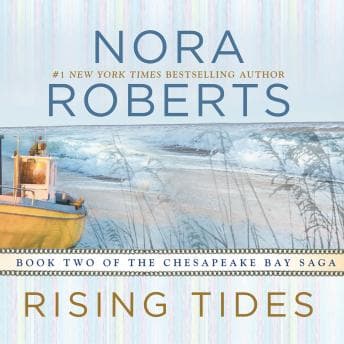
David Stuart's narration is — let me find the right word — earnest. He gives Cameron this rough, slightly impatient voice that works beautifully during the domestic chaos scenes, and he differentiates the three Quinn brothers well enough that I stopped checking who was talking by hour two. Ethan gets a slower, more deliberate cadence. Phillip sounds smoother, more urbane. Cameron stays clipped and restless. The narrator understands that pause is punctuation, especially in the quieter moments between Cameron and Seth where neither character wants to say what they're feeling. I am curious whether David Stuart gives the next Quinn brother that same patience in Rising Tides.
But — and this is where I have to be honest — Stuart stumbles with accents. There are moments where a secondary character's voice lands somewhere between mid-Atlantic and nowhere in particular, and a couple of mispronunciations that pulled me out of scenes. Nothing catastrophic. More like a student reading aloud in class who hits an unfamiliar word and just... commits to the wrong pronunciation with total confidence. You notice it, wince slightly, and move on.
His handling of Anna Spinelli, the social worker and love interest, is solid if unspectacular. He gives her enough firmness to sell the professional authority but doesn't quite nail the warmth underneath. The romantic scenes between Cameron and Anna work better when they're arguing than when they're tender — Stuart's comfort zone is clearly tension and banter, not vulnerability.
Why a Literature Snob Is Recommending a Nora Roberts Novel
Look, I teach Austen and Brontë. I know romance. And what Roberts does here isn't so different from what those writers did — she builds a world (the Chesapeake Bay setting is practically a character), creates people with genuine flaws, and lets the love story grow out of proximity and shared purpose rather than some contrived meet-cute. If you loved Persuasion, this is its spiritual successor in modern dress. The prose isn't Austen — nobody's prose is Austen — but the emotional architecture is familiar. Roberts returns to that dependable marriage of danger and feeling in Angels Fall, though I found this family's quieter stakes more convincing.
My students would hate this. I love it. Not because it's deep in the way I'd need it to be for a syllabus, but because it does what good genre fiction should do: it respects its own conventions while actually caring about its people.
At eleven hours, it's a comfortable listen. Not a single chapter felt padded. I finished the last hour walking the lakefront with Denise on Saturday morning, and when it ended, she looked at me and said, "Told you."
She was right. She usually is.
Who Gets the Assignment
If you want literary fiction with a capital L, this isn't your book. If you think romance means lightweight, you're wrong, but you also won't be convinced by me telling you that. This is for readers who appreciate character-driven stories where the family dynamics are just as important as the love story — maybe more so. Fans of Susan Elizabeth Phillips or Kristan Higgins will feel right at home. And if you're a fellow lit snob sneaking into the romance section? Welcome. The water's fine.
Worth Pausing the Faculty Meeting For
Denise gets the last word on this one. She was right: Roberts can write, Stuart can narrate (accent wobbles and all), and Cameron Quinn's messy, reluctant journey into responsibility hit harder than I expected at 11 PM on a school night. I've already got Rising Tides queued up. Don't tell my AP English students.