
What happens when the monster holding you captive turns out to be the one person who actually sees you?
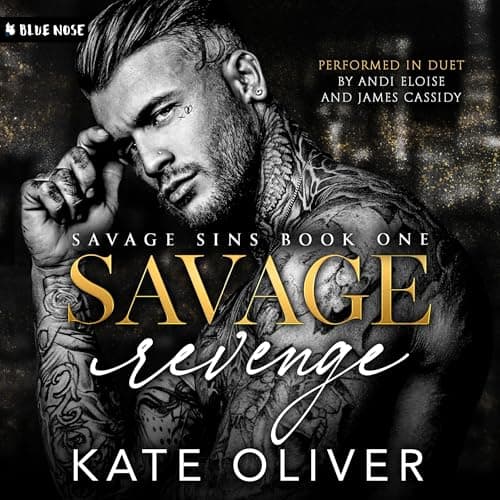
I was on a late-night walk with Luna through our neighborhood - that stretch where the streetlights thin out and the jasmine from somebody's yard hits you all at once - when Cash Savage started unraveling his revenge plot in my ears. And look, I went into this knowing exactly what it was. Kidnapping romance. Daddy Dom author. Vegas underworld. I had my guard up. Because when dark romance handles trauma carelessly, it's not just bad writing - it's the same dismissal my kids face when adults minimize what they've survived.
But Kate Oliver did something I wasn't expecting.
The Trauma Under the Trope
Cash's whole identity is built around avenging his father's murder, and Jordyn's whole identity is built around performing perfection for a father who doesn't deserve it. On paper, that's standard dark romance architecture. In practice, Oliver writes their damage with a specificity that caught me off guard. Cash doesn't just rage - he cycles through hypervigilance and emotional shutdown in patterns I recognize from session work. Jordyn's compliance isn't weakness; it's a survival mechanism she developed under an abusive parent, and the story actually names that instead of romanticizing it as "being good."
This character feels like one of my kids. Not Cash specifically - but Jordyn. That desperate need to be easy, to take up less space, to earn love through obedience. Oliver peels that back layer by layer rather than fixing it with one magical declaration of love, and I respect the hell out of that choice.
The power exchange between them walks a razor line. There were moments where I paused the audio, checked in with myself, and decided: okay, the narrative knows this is complicated. It's not pretending captivity is cute. Cash's possessiveness is framed as both his coping mechanism AND something he has to reckon with. Whether that reckoning goes deep enough is debatable - this is book one of a series, and some threads stay deliberately open.
Dual Narration That Actually Earns the Split
Andi Eloise and James Cassidy handle the alternating POVs, and here's where I have to be honest about what I know versus what I don't. Research didn't surface specific vocal quirks or standout moments from either narrator. What I can tell you is that the dual format works for this story structurally - you need both perspectives to understand why neither of these people is purely villain or victim. At 8 hours and change, the pacing stays tight. I listened at 1.25x (my default - I need to catch every emotional beat) and nothing felt rushed or dragged.
The Vegas setting comes through more in atmosphere than geography. Oliver's from the Pacific Northwest, and the desert heat reads more symbolic than lived-in. That's fine for what this book is doing, but if you want gritty Sin City texture, temper your expectations.
Performative vs. Authentic - Where It Lands
Here's my complicated truth about this one. The abuse themes and the Daddy Dom dynamics exist in the same book, and Oliver mostly handles that intersection with care. Jordyn's attraction to Cash's dominance isn't presented as a direct result of her father's abuse - the book actually draws a line between those things, which matters enormously. Too many authors in this space conflate the two and call it "edgy." Oliver seems to understand the difference.
But - and this is a real but - the resolution leans toward fantasy fulfillment in ways that undercut some of the psychological groundwork. Healing doesn't happen because someone loves you hard enough. It happens in boring therapy offices and on walks at 2 AM when you can't sleep and in the ten thousandth conversation where you say the same fear out loud and it finally loses some of its teeth. The book gestures toward real recovery but ultimately prioritizes romantic payoff. For the genre, that's expected. For me, it left a small ache.
The 4.74 reader rating tracks. This is extremely well-executed for its lane - fans of this specific subgenre are getting exactly what they want, done better than most. For contrast, Baxter Family Christmas sits at the gentler end of my reading rotation - same emotional investment, none of the razor-wire tension.
Luna's Verdict (She Stayed Close for This One)
Luna approved the emotional safety of this one - with caveats. If you're in a stable place and you understand that dark romance is fantasy with real feelings underneath, this hits. If you're in active crisis around abuse or captivity trauma, sit this one out for now. No shame in that. Skip it too if you need your dark romance heroes to fully reckon with their harm inside a single book - that arc isn't complete here.
Kate Oliver writes like someone who's done her homework on how people break and how they start putting pieces back. The "start" part is key - this isn't a complete healing arc, it's the messy, contradictory beginning of one. And honestly? That's more realistic than most.