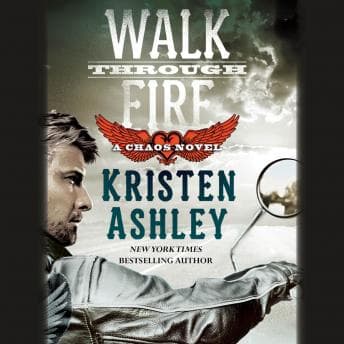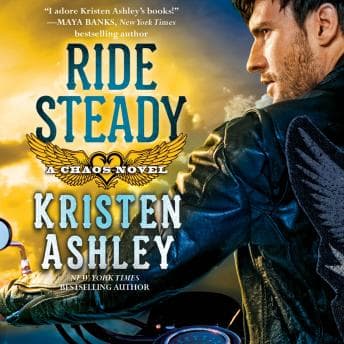

So here's the thing everyone told me about Ride Steady: it's a big, swoony motorcycle club romance with a heart of gold. And sure, yeah, it is that. But I found myself asking: why does this particular formula work when so many others in the genre fall flat? I was chopping onions for a chana masala at 9 PM on a Tuesday - already emotional, thanks to the onions - when Joker's backstory started unfolding, and I had to set down the knife. Not because of the tears. Because psychologically, Kristen Ashley actually gets something right that most romance writers fumble.
Joker - Carson Steele, if we're being formal - is textbook avoidant attachment. Abandoned, abused, raised in chaos (lowercase c, though the Chaos MC gives him the uppercase version). The kid who watched Carissa Teodoro from across the high school hallway and decided she was too good, too clean, too everything for someone like him. The protagonist exhibits classic idealization-avoidance patterns: he puts her on a pedestal specifically so he never has to risk the vulnerability of actually reaching for her. That's not just romance novel brooding. That's real psychology. And when they finally connect years later - she's a broke single mom with a flat tire, he's a patched-in biker who goes by Joker now - the power dynamic has shifted in ways that feel earned rather than manufactured.
The Fairy Tale That Knows It's a Fairy Tale
Carissa's arc is where it gets interesting for me. She's explicitly framed as someone who believed in the princess narrative - money, marriage, the whole package - and got destroyed by it. Her ex-husband is the kind of controlling, financially abusive villain who's terrifyingly common in real life. What makes this character compelling is that Ashley doesn't let Carissa off the hook for her own naivety. She chose the safe, shiny option. She ignored red flags. And now she's rebuilding from zero with a baby (Travis, who Kate Russell voices with these little babbles that are honestly adorable and slightly unhinged in their commitment to realism).
The psychological throughline is clear: Carissa's journey is about dismantling the good-girl script she was raised on. Joker's journey is about believing he deserves something good. When those two arcs collide, it actually works. The research actually shows that people with complementary attachment wounds often find each other - anxious meets avoidant, the whole dance. Ashley might not frame it in clinical terms, but she understands the mechanics.
At 17 hours, though? This book is long. Like, really long. There are stretches where the Chaos MC politics and various subplots pull focus from the central relationship, and I'll be honest - I hit 1.25x speed around hour 10 during a particularly extended club drama sequence. Not bad, just... a lot of real estate for a romance.
Kate Russell and the Problem of Biker Voices
Here's where I diverge from popular opinion. A lot of listeners rave about Russell's narration, and I get it - her emotional delivery during the heavy scenes (Joker revealing his childhood abuse, Carissa's custody fears) is genuinely affecting. The timbre of her voice has this warm, slightly husky quality that suits both the tenderness and the heat. She made me tear up during a scene I could see coming from three chapters away. That takes skill.
But. The male voices. Specifically the Chaos members. Russell gives several of the bikers this gravelly old-man quality that doesn't track for me - these are supposed to be intimidating, vital men in their 30s and 40s, and some of them sound like they're ordering the early bird special. It's a common problem with single-narrator romance audiobooks: you've got one woman voicing an entire motorcycle club, and the differentiation strategy (make them all sound gruff and raspy) creates this homogeneous wall of growl. I could tell Joker apart from the others most of the time, but Tack, Hop, and some of the secondary guys blurred together.
Not a dealbreaker. But noticeable.
Who's Riding and Who's Walking
If you love MC romance and you're already a Kristen Ashley reader, this is probably your thing and you already know it. If you're new to the genre, Ride Steady is actually a decent entry point because Carissa functions as the outsider - she's learning the club culture as you are.
If you need airtight plotting and zero melodrama, walk away. There's a custody battle subplot that stretches plausibility, and some of the dialogue runs purple in ways my inner editor wanted to flag. But psychologically? The character motivations hold up better than 90% of the romance I've consumed this year.
My therapist would have thoughts about Joker. Mostly good ones.
Case Study: Closed (With a Lingering Smile)
This is a fascinating case study in how genre fiction can get attachment theory right without ever naming it. Ashley writes from instinct, clearly, but her instincts about why broken people reach for each other - and what it costs them - are sharper than they get credit for. The romance genre occasionally surprises me this way — I noticed something similar when I reviewed Romancing Mister Bridgerton, where the emotional architecture underneath the swoony surface was doing far more sophisticated work than the framing suggested. The audiobook is a solid experience, docked slightly for length bloat and those biker voices that didn't quite land. But when it hits? It hits like a Harley at full throttle on an open highway.
(My mother would be horrified that I spent 17 hours on a biker romance. Maa, it was research.)