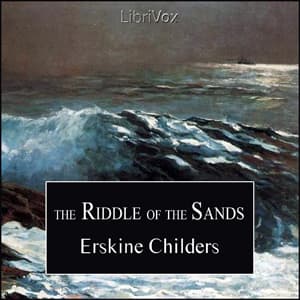

Everyone calls this the first modern spy novel and I went in expecting something like early le Carré - psychological tension, duplicity, the slow unraveling of trust. What I actually got was twelve hours of nautical navigation with a conspiracy attached. And somehow? I'm not even mad about it.
I was making my mother's rajma recipe on a Sunday afternoon - the kind that requires three hours of slow simmering and periodic stirring, so you need something to keep your brain occupied but not something so intense you forget to check the pot. Riddle of the Sands turned out to be weirdly perfect for that. Erskine Childers wrote a book that moves at the speed of tidal currents, and I mean that both as criticism and compliment.
Two Men in a Boat and the Psychology of British Repression
What makes this book genuinely interesting from a character perspective is the dynamic between Carruthers and Davies. Carruthers is the narrator - a Foreign Office clerk, status-conscious, slightly insufferable in the way that Edwardian gentlemen always are. Davies is his opposite: awkward, earnest, obsessed with his small yacht the Dulcibella, and terrible at explaining why he actually invited Carruthers along. The protagonist exhibits classic avoidant communication patterns - Davies clearly suspects a German invasion plot from the start but can't bring himself to just say it. He drops hints. He gestures vaguely at charts. He takes Carruthers through increasingly dangerous sailing maneuvers in the German Frisian Islands as if proximity to danger will do the explaining for him.
I found myself asking: why does Davies really need Carruthers there? It's not just backup for the spy mission. It's validation. Davies is a man who's stumbled onto something enormous and nobody in his life would believe him. He needs a witness, specifically one from the establishment. That's psychologically sharp for a novel published in 1903. The manipulation running underneath that dynamic — the way one person engineers a situation so someone else arrives at the "right" conclusion — is something I kept turning over in my head while reading Tell Me Lies, where that same architecture of engineered belief gets weaponized in a much more intimate context.
The research actually shows that Childers based the sailing details on his own expeditions along the German North Sea coast, and boy does it show. There are passages - long passages - where you're getting tide tables, channel depths, sandbank positions, the exact angle of approach to some godforsaken inlet I couldn't visualize to save my life. Listeners mention that maps are critical for following the action, and in audio format, obviously, you don't have maps. So there's a genuine accessibility problem here. Around hours 5 through 8 especially, you're navigating blind through what amounts to a geographical textbook with plot seasoning.
When Paranoia Was Prescient
Here's where my true crime brain lit up: this book isn't just fiction. Childers was essentially writing a warning disguised as adventure fiction. The German preparations he describes - secret channels mapped for a potential invasion fleet, infrastructure hidden in the Frisian Islands - were fictional but strategically plausible enough that Winston Churchill himself later credited this novel with influencing the Admiralty to establish naval bases at Scapa Flow and elsewhere. A novel. Influencing actual military strategy.
This is a fascinating case study in how narrative shapes policy. Childers understood something about persuasion that modern intelligence agencies still struggle with: people respond to stories, not briefings. You can write a white paper about German naval threats and it'll collect dust. Write a yacht adventure where two relatable Englishmen stumble onto invasion plans while freezing in the North Sea? Parliament pays attention.
The villain, Dollmann, is interesting too - a British expatriate who's defected and is helping the Germans. Psychologically, this doesn't track as cleanly as I'd like. Childers gives us motivations (greed, a new identity) but Dollmann remains more plot device than person. His daughter Clara gets even less psychological real estate. She exists primarily to give Davies a reason to be conflicted about exposing Dollmann. My therapist would have thoughts about a man who discovers treason but hesitates because of a crush.
Gesine Behind the Tiller
Gesine's narration is steady and clear - comfortable, easy to follow, not trying to perform the text so much as convey it. For a twelve-and-a-half-hour listen heavy on technical sailing language, that evenness is actually an asset. You're not fighting the narrator to understand what's happening. But - and this is the trade-off - during those extended geographical description stretches, that same evenness becomes soporific. There's no gear shift when the tension should spike. The discovery scenes in the later hours deserve more urgency than they get. I bumped playback to 1.25x during the middle third and honestly that's where it should stay for most of the book.
Who Should Brave the Frisian Tides
If you love nautical fiction, early espionage, or historical novels where the real-world consequences turned out to be staggering - this is your book. If you want fast-moving thriller mechanics, if you need constant action beats, or if the phrase "we anchored in two fathoms and waited for the flood" makes your eyes glaze - you're going to struggle with the middle stretch. This is a slow burn in the truest sense. The payoff exists but Childers makes you earn it through fog and sandbanks.
The Case File, Closed
I finished this around 10 PM, rajma long eaten, apartment smelling like cumin and bay leaves. And I sat there thinking about Erskine Childers - a man who wrote a spy novel so convincing it changed British naval strategy, then got executed by his own country during the Irish Civil War for being on the wrong side of a different fight. The real story behind the story is darker than anything in the book. Sometimes the author is the most compelling character.