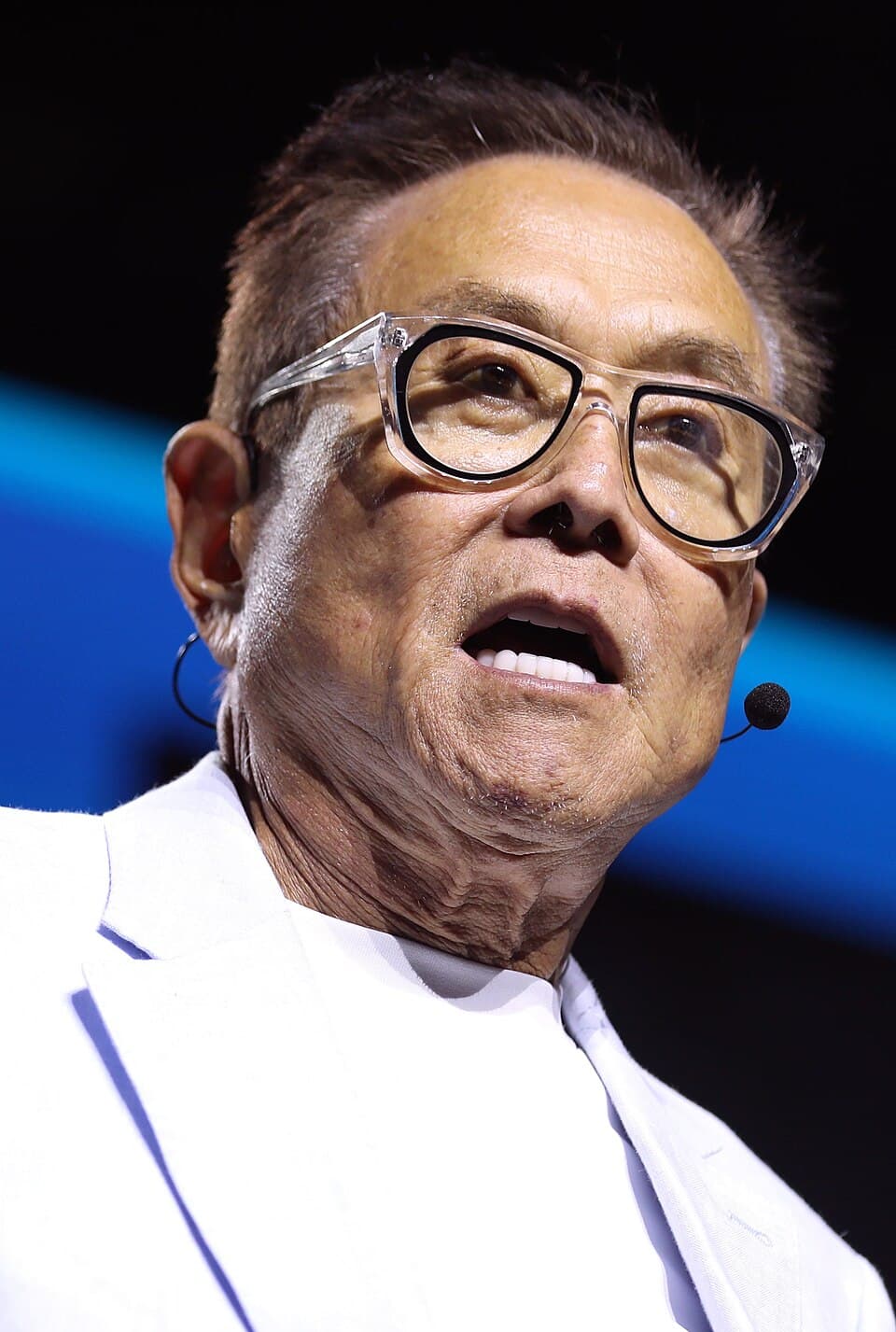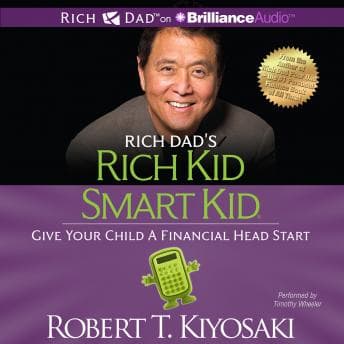

"The main reason people struggle financially is because they've spent years in school but learned nothing about money."
That line hit me around hour one, and I remember thinking: okay, Kiyosaki, you have my attention. I was on the 6:47 Caltrain, hadn't slept well because Kevin and I had been arguing about whether we'd actually teach our hypothetical future kids about compound interest before they could ride a bike. (His position: let them be kids. My position: kids deserve to understand why mommy's 401k match is free money.) So yeah, this book felt... timely.
The Blog Post Problem, Stretched to 9.5 Hours
Let me be honest upfront: this is a 9-hour-and-25-minute audiobook that contains maybe 3 hours of actual unique content. The rest is Kiyosaki repeating variations of the same core ideas from Rich Dad Poor Dad - assets vs liabilities, the ESBI cashflow quadrant, school doesn't teach financial literacy - but now with "for your kids" tacked on. If you've read the original Rich Dad Poor Dad, you already know about 60% of what's here. I reviewed the Spanish 25th anniversary edition of Padre Rico, Padre Pobre a while back, and the overlap is even bigger than 60%.
The genuinely useful parts? The concept of "financial field trips" - taking your kid to a bank, a real estate office, having them trace how a dollar moves through a business. The idea of using board games (specifically his own Cashflow game, which yes, is a product plug) to teach kids about passive income before they're old enough to have a lemonade stand. And there's a surprisingly decent chapter on identifying your child's learning style - visual, auditory, kinesthetic - and adapting financial lessons accordingly. That section felt like it was written by a different, more thoughtful author.
But then he circles back to another anecdote about Rich Dad and Poor Dad, and you're like... I know. I read the first book. We all read the first book.
I listened at 1.75x. Could've been a blog post. A long one, but a blog post.
Timothy Wheeler Does the Job (But Don't Expect Ray Porter)
Timothy Wheeler has narrated a bunch of Kiyosaki's catalog, and you can tell he's comfortable with the material. His tone is encouraging without being preachy - which is important because Kiyosaki's actual writing leans pretty hard into "the school system is broken and I'm the only one who sees it" territory. Wheeler smooths those edges. He's clear, well-paced, and easy to follow at higher speeds.
That said, there's nothing memorable about the performance. No vocal flourishes, no moments where the narration elevated a passage beyond what the text delivered. It's workmanlike. Competent. The audiobook equivalent of a well-configured load balancer - you don't notice it, which means it's doing its job, but nobody's writing blog posts about it.
(For reference: Ray Porter narrates this. Need I say more? ...Except he doesn't narrate this. And that's basically the difference between a 3 and a 4 on narrator rating for me.)
Where the Science Doesn't Hold Up
Here's my engineer brain kicking in: Kiyosaki makes broad claims about education and intelligence types that feel anecdotal rather than evidence-based. He references Howard Gardner's multiple intelligences theory, which - look, I'm not an education researcher, but even I know that theory has taken significant hits in peer review over the last two decades. He treats it as settled science. It's not.
The financial advice itself is fine - teach your kids about assets, liabilities, cash flow. Great. But the way he frames it as this radical alternative to formal education sometimes veers into "school is a conspiracy" territory that made me uncomfortable. My CS degree from UW was worth every penny, thankyouverymuch. The issue isn't education vs. financial literacy. It's education AND financial literacy. Kiyosaki occasionally acts like it's a zero-sum game, and that's where he lost me. Honestly, FAKE doubles down on that conspiratorial framing even harder, and it scored even lower on my patience meter.
Who Should Queue This Up (And Who Should Skip)
Perfect for: parents who've never read ANY Kiyosaki and want a starter guide to talking about money with their kids. If Rich Dad Poor Dad is in your blind spot, this actually covers a lot of that ground while adding the parenting angle.
Skip for: anyone who's already read Rich Dad Poor Dad. The ROI on this audiobook drops dramatically if you've already internalized the core framework. You'll spend 6+ hours hearing things you already know, padded with anecdotes that feel recycled.
Also skip if you want actionable, step-by-step curricula for teaching kids about money. This is more philosophy than playbook. It'll motivate you to teach your kid about investing but won't give you a lesson plan.
Perfect for: train, gym. Skip for: deep work.
Commute Math Says Borrow It
I finished this in about 5 commutes at 1.75x, and honestly I could've skipped the last two. The good ideas cluster in the first half. If you've got a Libby card or a streaming subscription, that's the move - don't burn a credit on this. The core message ("teach your kids about money early, schools won't do it for you") is valuable. The delivery just needed a ruthless editor.
Kevin, if you're reading this: yes, our future kids are learning about index funds before kindergarten. I'm not budging.